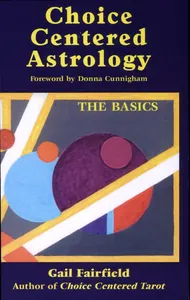
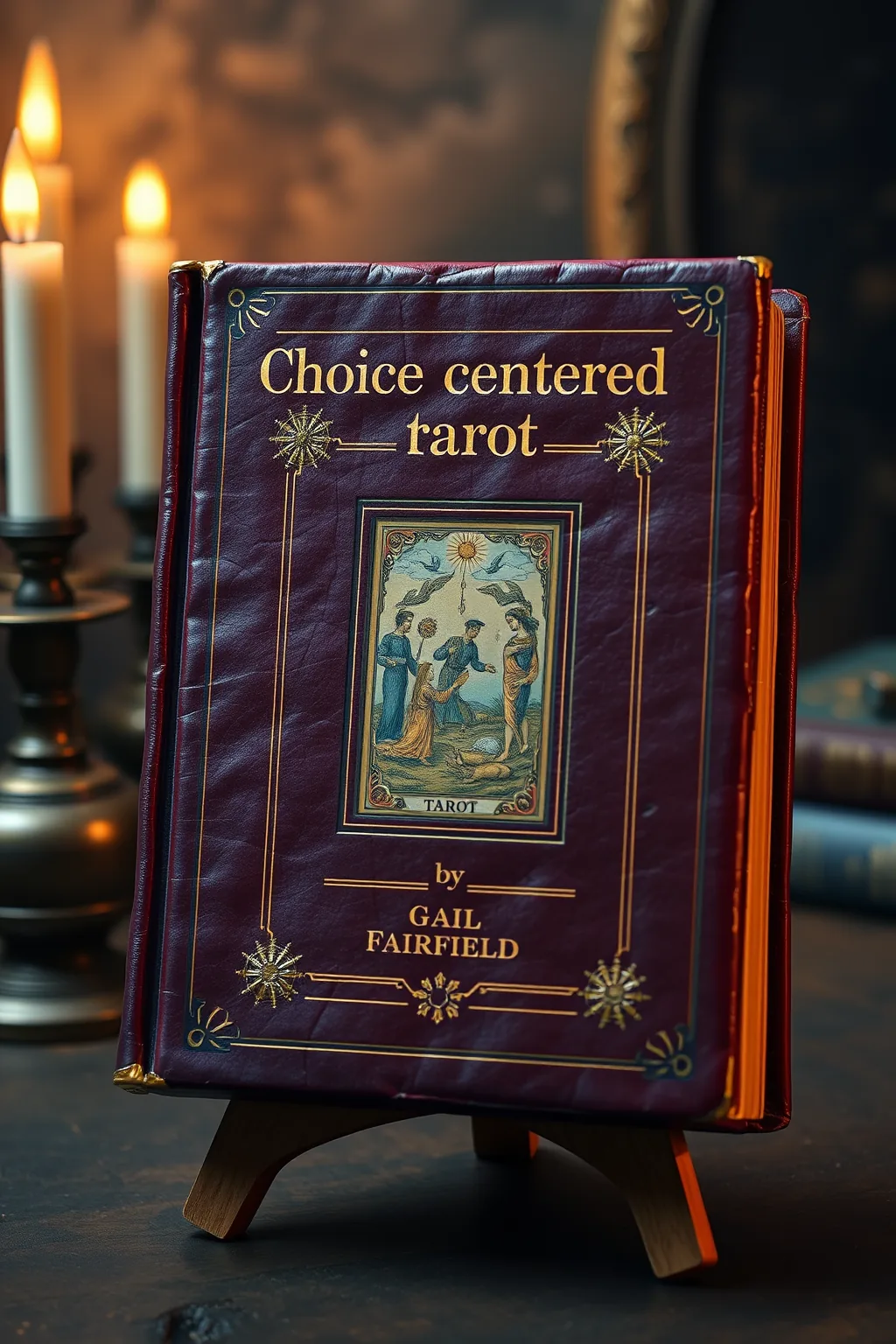
Choice centered tarot
 78
78

Choice centered tarot
Gail Fairfield's Choice Centered Tarot, from its 1984 debut, presents a commendable shift from deterministic tarot readings to an emphasis on personal agency. The strength of the work lies in its consistent framing of the cards as reflective tools, empowering the querent rather than dictating their fate. Fairfield's interpretation of the Fool card, for instance, as a symbol of embracing the unknown with conscious intent, rather than simply blind leaps, is particularly effective. However, the book's primary limitation is its occasional reliance on somewhat dated New Age vernacular, which can occasionally dilute the sharpness of its core message. Despite this, the consistent focus on choice makes it a valuable resource. Fairfield’s approach offers a liberating perspective on a practice often misunderstood.
📝 Description
78
### What It Is Choice Centered Tarot, first published in 1984 by Gail Fairfield, offers a distinct perspective on the venerable practice of tarot reading. This work moves beyond simple fortune-telling or prescriptive advice. Instead, it frames tarot as a tool for self-awareness and conscious decision-making. Fairfield's approach emphasizes the querent's agency, positioning the cards not as immutable fate, but as reflections of internal states and potential pathways. The book provides a framework for interpreting the seventy-eight cards of the traditional tarot deck through this lens of personal empowerment.
### Who It's For This book is best suited for individuals who have some familiarity with tarot but are seeking to deepen their personal connection to the practice. It appeals to those interested in psychological approaches to divination and esoteric systems. Readers who feel constrained by deterministic interpretations of the tarot will find Fairfield's focus on choice particularly engaging. It’s also valuable for students of esoteric philosophy who wish to explore how symbolic systems can inform personal development and ethical considerations.
### Historical Context Published in 1984, Choice Centered Tarot emerged during a period of significant popularization and diversification within the New Age movement. While authors like Rachel Pollack were exploring complex mythic narratives in tarot, Fairfield's work offered a more psychologically grounded and empowerment-focused interpretation. This era saw a broader interest in self-help and personal growth, which the book tapped into by reframing tarot from a passive predictive tool to an active instrument of self-reflection and decision-making. This contrasted with more traditional, often fate-oriented, interpretations prevalent in earlier occult circles.
### Key Concepts Fairfield's central thesis revolves around the concept of 'choice-centered' reading. This means the tarot spread is presented as a map of possibilities and current psychological landscapes, not a fixed destiny. The book explores the symbolism within the Major and Minor Arcana, encouraging readers to see how archetypal energies manifest in their lives and how they can consciously engage with these forces. It promotes an understanding of the cards as mirrors to the subconscious, facilitating insight and empowering the individual to make informed choices about their future.
💡 Why Read This Book?
• Gain a practical framework for using the seventy-eight tarot cards as instruments of self-reflection, moving beyond predictive readings as demonstrated by Fairfield's focus on the 'choice-centered' approach. • Understand how to interpret the archetypal energies of the Major Arcana, such as the symbolism of the Fool, not as fate but as a map of potential conscious choices. • Reframe your relationship with divination by learning to view tarot spreads as mirrors to your internal state, empowering informed decision-making as presented in the book's psychological interpretation.
⭐ Reader Reviews
Honest opinions from readers who have explored this book.
❓ Frequently Asked Questions
What is the core philosophy behind 'Choice Centered Tarot'?
The core philosophy is that tarot cards reflect internal states and potential future pathways, empowering the reader to make conscious choices rather than dictating an unchangeable destiny. It emphasizes agency over fate.
When was 'Choice Centered Tarot' first published?
'Choice Centered Tarot' by Gail Fairfield was first published in 1984, placing it within the popularization wave of New Age thought.
Does the book offer traditional tarot spreads?
While it uses traditional tarot cards, the book focuses on interpreting them through a choice-centered lens. Specific spread structures are presented to facilitate this self-reflective and empowering approach.
Is 'Choice Centered Tarot' suitable for beginners?
Yes, it is suitable for beginners who are interested in a more psychological and empowering approach to tarot, though some prior familiarity with the cards can enhance the reading experience.
What distinguishes Fairfield's approach from other tarot books?
Fairfield distinguishes her work by consistently framing tarot as a tool for active decision-making and self-awareness, rather than passive prediction or fortune-telling, highlighting the querent's inherent power.
What is the significance of the Fool card in this book's philosophy?
In 'Choice Centered Tarot,' the Fool card represents the conscious embrace of the unknown and the power to choose one's path, rather than simply an indicator of blind or fated action.
🔮 Key Themes & Symbolism
Personal Agency in Divination
The central tenet is that tarot is not about predetermined outcomes but about illuminating choices. Fairfield argues that the cards act as mirrors to the psyche, reflecting current energies and potential directions. This perspective empowers the individual by emphasizing their role in shaping their destiny. The seventy-eight cards are presented as a dynamic system for exploring the consequences of different decisions and understanding the archetypal forces at play in one's life, fostering a proactive rather than reactive stance towards fate.
Archetypal Psychology and Tarot
Fairfield integrates archetypal concepts into tarot interpretation, viewing each card as a manifestation of universal human experiences and psychological patterns. The Major Arcana, in particular, are explored as symbolic representations of life stages and core human drives. This approach encourages readers to connect the symbolic language of the cards to their own inner world, facilitating self-understanding. By recognizing these archetypes, individuals can gain insight into their motivations and behaviors, using the tarot as a psychological diagnostic tool.
Tarot as a Tool for Self-Awareness
Beyond prediction, the book positions tarot as a potent method for cultivating self-awareness. Each reading becomes an opportunity for introspection, prompting questions about one's desires, fears, and intentions. Fairfield guides readers to look inward, using the cards to uncover subconscious beliefs and patterns that influence their choices. This focus on internal exploration transforms the tarot from an external oracle into an intimate dialogue with the self, promoting personal growth and conscious living.
Ethical Implications of Choice
By centering choice, the book implicitly addresses the ethical dimensions of decision-making. When individuals understand the potential outcomes and their own agency, they are better equipped to make responsible choices. The work encourages a mindful approach to life's crossroads, where understanding the 'why' behind a choice is as important as the choice itself. This ethical consideration is woven into the fabric of interpretation, promoting a more conscious and accountable engagement with one's life path.
💬 Memorable Quotes
“The cards do not dictate fate; they illuminate the pathways of choice.”
— This encapsulates Fairfield's core philosophy, suggesting that tarot readings are maps of possibilities rather than fixed predictions, empowering the individual's agency.
“Each spread is a dialogue between the querent's inner world and the archetypal energies.”
— This highlights the psychological and symbolic depth of tarot in Fairfield's system, framing readings as introspective encounters with universal patterns.
“Understanding the Fool is not about blind faith, but about conscious engagement with the unknown.”
— This specific interpretation of a key card emphasizes the book's focus on intentionality and informed decision-making, even when facing uncertainty.
“The tarot becomes a mirror, reflecting the choices we have made and the choices we can still make.”
— This metaphor underscores the self-reflective function of the tarot as presented by Fairfield, focusing on past actions and future potential.
“True divination lies in the clarity gained, not in the certainty of prediction.”
— This statement prioritizes insight and self-understanding over mere fortune-telling, aligning with the book's psychological and empowerment-oriented approach.
🌙 Esoteric Significance
Tradition
Fairfield's work can be situated within the broader Hermetic and psychological branches of Western Esotericism. While drawing on the traditional seventy-eight-card structure of the Rider-Waite-Smith tarot, her interpretation departs from purely divinatory or ceremonial magic frameworks. It aligns more closely with psychological archetypism, influenced by figures like Carl Jung, emphasizing the tarot as a symbolic language of the psyche and a tool for self-actualization within a personal spiritual path.
Symbolism
Key symbols such as The Fool represent the conscious embrace of potential and agency, rather than mere blind chance. The concept of 'choice-centered' interpretation itself becomes a symbolic lens, reframing the entire deck not as a predictor of fate, but as a dynamic map of psychological landscapes and potential decisions. The Major Arcana are treated as archetypal signposts for life's journey, each offering opportunities for conscious engagement and growth.
Modern Relevance
Contemporary practices in modern witchcraft, Jungian tarot analysis, and self-development coaching often echo Fairfield's emphasis on personal agency and psychological insight. Therapists and counselors incorporating symbolic tools, as well as individuals seeking non-deterministic spiritual guidance, find value in her approach. The book's enduring relevance lies in its focus on empowering individuals to actively shape their lives through conscious understanding, a theme increasingly prominent in holistic and self-help circles.
👥 Who Should Read This Book
• Individuals new to tarot seeking an empowering and psychologically-grounded introduction, moving beyond fortune-telling. • Experienced tarot readers interested in shifting their perspective towards self-awareness and personal agency in their practice. • Students of esoteric philosophy and comparative religion exploring the intersection of symbolic systems and personal development.
📜 Historical Context
Published in 1984, Gail Fairfield's 'Choice Centered Tarot' emerged during a dynamic period for esoteric thought in the West. The New Age movement was gaining significant traction, fostering widespread interest in spiritual and self-help practices. While many contemporaries were exploring complex mythologies and historical occult traditions, Fairfield's work offered a distinctly psychological and empowerment-focused interpretation of tarot. This contrasted with earlier, more fatalistic approaches that dominated some traditional occult circles. The era saw a burgeoning self-help industry, and Fairfield's book resonated by reframing tarot from a passive predictive tool into an active instrument for personal growth and conscious decision-making. It aligned with a broader cultural shift towards personal responsibility and inner exploration, providing a modern, accessible framework for engaging with ancient symbolism.
📔 Journal Prompts
The Fool's journey: mapping conscious choices in the face of the unknown.
Archetypal energies reflected in the Minor Arcana: how do they manifest in your daily choices?
Reflecting on a recent 'choice-centered' reading: what internal states did the cards illuminate?
The relationship between the querent's inner world and the symbolic language of the spread.
How can the tarot act as a mirror to past decisions and future potential?
🗂️ Glossary
Choice-Centered Reading
A tarot interpretation method emphasizing the querent's agency, viewing cards as reflections of internal states and potential pathways rather than fixed destiny.
Archetypal Energies
Universal symbolic patterns and psychological forces, often represented by the Major Arcana, that influence human experience and decision-making.
Querent
The individual for whom a tarot reading is performed; the person seeking insight or guidance from the cards.
Major Arcana
The twenty-two trump cards of the tarot deck, typically representing significant life lessons, spiritual journeys, and archetypal forces.
Minor Arcana
The fifty-six cards of the tarot deck, divided into four suits (Wands, Cups, Swords, Pentacles), representing everyday events, challenges, and situations.
Symbolic Language
The visual and conceptual language of the tarot, where images and associations convey deeper meanings related to psychological states and life situations.
Self-Awareness
The conscious knowledge of one's own character, feelings, motives, and desires, facilitated through introspective tools like the choice-centered tarot.