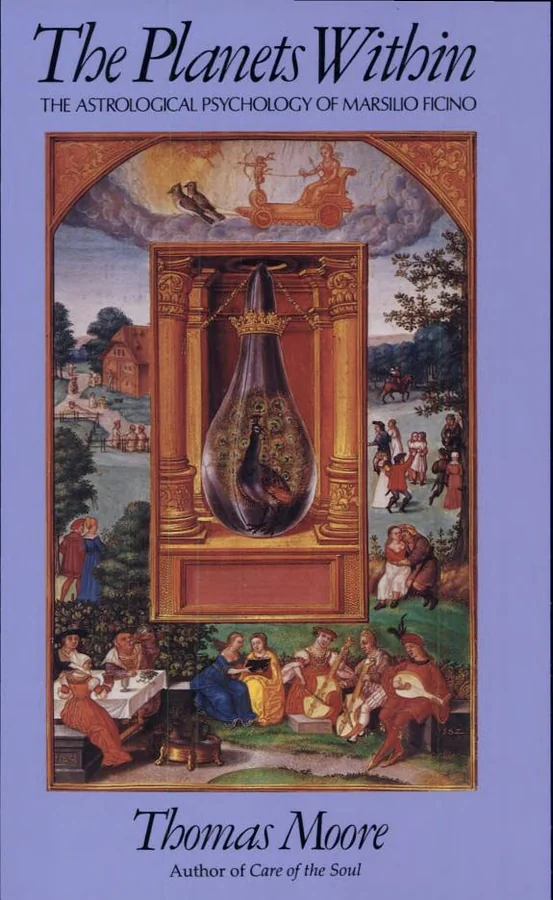
The Planets Within
 84
84

The Planets Within
Thomas Moore’s "The Planets Within" revisits Renaissance Italy not as a mere historical period but as a fertile ground for understanding the soul's inner topography. The work centers on Marsilio Ficino, a pivotal figure in the Florentine Academy, and his Neoplatonic explorations. Moore’s strength lies in translating complex philosophical ideas into accessible psychological landscapes. However, the book occasionally becomes so immersed in Ficino's specific intellectual milieu that it can feel dense for readers less familiar with Renaissance humanism. A particularly resonant section discusses Ficino's attempts to integrate Platonic philosophy with Christian theology, highlighting the intellectual courage required in the 15th century. It’s an exploration for those who seek to connect historical thought with contemporary self-understanding.
📝 Description
84
### What It Is ### Who It's For ### Historical Context ### Key Concepts
💡 Why Read This Book?
• Understand the psychological innovations of Renaissance Italy, particularly through the work of Marsilio Ficino in the 15th century, offering a unique lens on pre-scientific interiority. • Gain insight into Neoplatonic thought as applied to the individual psyche, moving beyond abstract philosophy to practical self-inquiry. • Discover how ancient ideas about the soul and its connection to the cosmos were re-examined during a period of intense intellectual rebirth, providing historical context for modern spiritual practices.
⭐ Reader Reviews
Honest opinions from readers who have explored this book.
❓ Frequently Asked Questions
When was Thomas Moore's 'The Planets Within' first published?
Thomas Moore's 'The Planets Within' was first published in 1990, offering a fresh perspective on Renaissance thought.
Who was Marsilio Ficino and why is he important in 'The Planets Within'?
Marsilio Ficino was a central figure of the Florentine Academy during the Renaissance. Moore highlights him as a key 'master of the interior life' who charted psychological territories through Neoplatonic philosophy.
What is the main focus of 'The Planets Within'?
The book focuses on Renaissance Italy, particularly the psychological and philosophical explorations of figures like Marsilio Ficino, urging a return to ancient wisdom with contemporary understanding.
Does 'The Planets Within' discuss planetary influences on the psyche?
Yes, the work explores how ancient and Renaissance thinkers, such as Ficino, viewed the planets not just astronomically but as symbolic influences on the human soul and inner life.
What kind of 'inner exploration' does the book suggest?
It suggests an exploration akin to 'inner Columbuses' charting psychological territories, drawing parallels between the discovery of new continents and the exploration of one's own inner world through philosophical and spiritual inquiry.
Is this book suitable for beginners in esoteric studies?
The book engages with complex Renaissance philosophy and Neoplatonism, making it most rewarding for those with some background in esoteric or philosophical thought, or a strong interest in historical psychology.
🔮 Key Themes & Symbolism
Renaissance Interiority
The book posits Renaissance Italy as a period of profound psychological discovery, where thinkers acted as 'inner Columbuses' charting the soul. It emphasizes the era's unique approach to understanding the self, distinct from modern scientific paradigms. Moore highlights how figures like Marsilio Ficino engaged with classical philosophies to map the inner life, offering a historical counterpoint to contemporary psychological models and suggesting that ancient wisdom holds keys to self-knowledge.
Neoplatonic Psychology
Central to the work is an exploration of Neoplatonism as a framework for understanding the human psyche. Moore examines how Ficino and his contemporaries utilized Platonic and Neoplatonic concepts to describe the soul's descent into the material world and its potential for ascent. This involves understanding the interconnectedness of the cosmos, the divine, and the individual, viewing the planets not merely as astronomical bodies but as symbolic forces influencing human experience and consciousness.
The Art of Living Well
Beyond theoretical philosophy, 'The Planets Within' touches upon the practical application of these ancient ideas to living a more meaningful life. It suggests that by understanding our inner landscape and its connection to broader cosmic principles, we can cultivate a richer existence. This involves a conscious engagement with the symbolic language of the soul and a recognition of the spiritual dimensions often overlooked in contemporary life, advocating for a more integrated approach to well-being.
💬 Memorable Quotes
Direct passages from the work, attributed to the author.
“Renaissance Italy… where a group of 'inner Columbuses' charted territories that still give us today a much-needed sense of who we are and where we have come from.”
— This highlights the book's central thesis: that the intellectual and spiritual explorations of the Renaissance offer a valuable map for understanding our own identity and origins, framing historical inquiry as a form of psychological cartography.
“The Planets Within asks us to return to antiquity with new eyes.”
— This suggests a re-evaluation of ancient wisdom, not as a relic, but as a living source of insight relevant to contemporary challenges, urging readers to approach historical philosophical traditions with fresh perspective and critical engagement.
“Chief among these masters of the interior life was Marsilio Ficino, presiding genius of the Florentine Academy.”
— This identifies Marsilio Ficino as a primary focus, positioning him as a key figure whose intellectual contributions to understanding the 'interior life' during the Renaissance are central to the book's exploration.
“The prescientific age… a group of 'inner Columbuses' charted territories that still give us today a much-needed sense of who we are and where we have come from.”
— This emphasizes the psychological and philosophical depth of the pre-modern era, suggesting that its thinkers engaged in a form of self-discovery comparable to geographical exploration, providing enduring insights into human nature.
“The right routes to take toward fertile and unexplored places.”
— This metaphor implies that the wisdom contained within the book offers guidance for personal growth and discovery, suggesting pathways towards new levels of self-understanding and spiritual development.
🌙 Esoteric Significance
Tradition
The work draws heavily from the Hermetic and Neoplatonic traditions, particularly as revived during the Renaissance. It positions Marsilio Ficino as a key interpreter of these ancient streams of thought, attempting to integrate them with a Christian worldview. Moore's approach departs from purely academic historical analysis by focusing on the psychological and spiritual implications, making these esoteric lineages accessible for contemporary self-exploration.
Symbolism
A core symbol is the 'inner Columbus,' representing the exploration of the soul's vast, uncharted territories. The planets themselves function symbolically, representing archetypal forces or influences that shape human consciousness and destiny, as understood through the lens of Renaissance astrology and cosmology. The concept of the 'interior life' itself serves as a central motif, signifying a sacred space for profound self-discovery and connection to the divine.
Modern Relevance
Contemporary thinkers in the fields of Jungian psychology, archetypal astrology, and depth psychology often cite or echo the themes found in 'The Planets Within.' Moore's work provides a bridge between historical philosophical systems and modern practices focused on soul-making and individuation, making Renaissance ideas about the psyche and cosmos relevant to current spiritual and therapeutic explorations.
👥 Who Should Read This Book
• Students of Renaissance intellectual history seeking to understand the psychological dimension of figures like Marsilio Ficino and the Florentine Academy. • Practitioners of esoteric traditions interested in the historical roots of Neoplatonic and Hermetic thought as applied to personal development. • Individuals exploring depth psychology and archetypal studies who wish to connect modern concepts of the soul with historical philosophical frameworks.
📜 Historical Context
Published in 1990, Thomas Moore's 'The Planets Within' emerged during a resurgence of interest in depth psychology and alternative spiritual traditions. It places itself within the intellectual currents of Renaissance Italy, a period marked by the rediscovery of classical texts and a flourishing of Neoplatonism. The work specifically focuses on figures like Marsilio Ficino, the leading light of the Florentine Academy, who sought to synthesize Platonic philosophy with Christian theology in the 15th century. This was a time when competing schools of thought, including scholasticism and burgeoning humanism, vied for intellectual dominance. While not explicitly detailing reception events, Moore's work implicitly engages with scholars who studied Ficino and Renaissance Neoplatonism, positioning his own interpretation within ongoing academic and esoteric dialogues about the era's philosophical legacy.
📔 Journal Prompts
The 'inner Columbuses' of Renaissance Italy: what unexplored territories within your own psyche await discovery?
Marsilio Ficino's integration of philosophy and faith: how do your own beliefs connect or diverge?
Reflect on the symbolic meaning of the planets in your personal cosmology.
Consider the 'right routes' to exploring your own fertile, unexplored inner places.
The concept of the 'interior life' as mapped by Renaissance thinkers: what is its significance for your daily existence?
🗂️ Glossary
Neoplatonism
A philosophical system originating in antiquity, heavily influenced by Plato, which emphasizes the existence of a supreme, transcendent 'One' from which all reality emanates. It often involves spiritual ascent and a mystical understanding of the cosmos.
Marsilio Ficino
A key Italian philosopher and humanist of the Renaissance, a leading figure in the Florentine Academy. He was instrumental in reviving Platonic and Neoplatonic thought in Western Europe during the 15th century.
Florentine Academy
Not a formal institution in the modern sense, but a circle of influential scholars and philosophers in Florence during the Renaissance, primarily under the patronage of the Medici family, dedicated to the study of Platonic and Neoplatonic philosophy.
Interior Life
Refers to the inner world of thoughts, feelings, spiritual experiences, and psychological processes. In the context of the book, it signifies the rich, often unexamined, range of the human soul.
Prescientific Age
A historical period before the widespread acceptance and dominance of modern scientific methods and worldview. This era often relied on philosophical, spiritual, and observational approaches to understanding the world and human nature.
Hermeticism
A religious, philosophical, and esoteric tradition based primarily upon writings attributed to Hermes Trismegistus. It emphasizes the interconnectedness of all things and the potential for human spiritual enlightenment.
Renaissance Italy
The historical and cultural period in Italy roughly from the 14th to the 16th century, characterized by a revival of classical art, literature, and philosophy, and significant intellectual and artistic innovation.
This book appears in 1 collection
🔮 Readers Also Liked
Browse all →









From the “Astrology” Collection
View all →








More Free Astrology & Cosmology Books
View all →