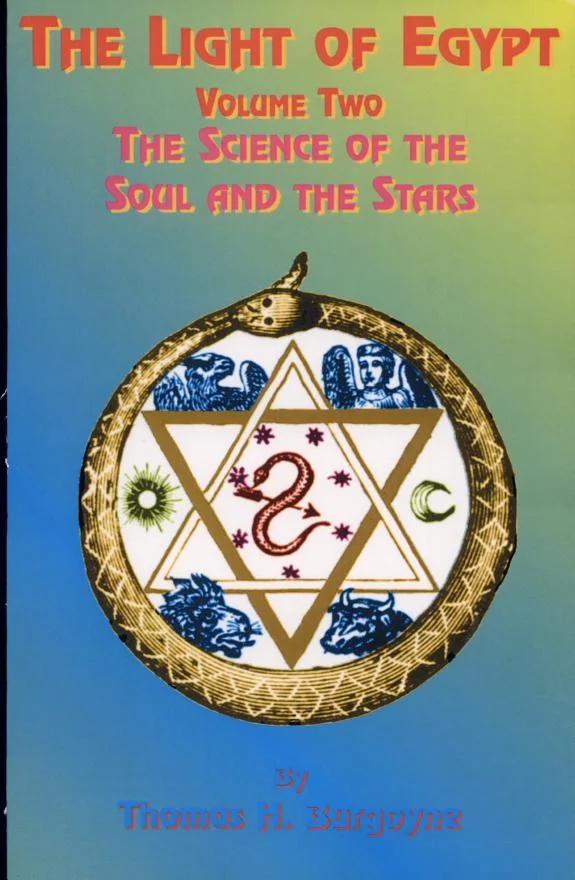
The Light of Egypt
 72
72

The Light of Egypt
Burgoyne's "The Light of Egypt, Volume Two" is dense, almost overwhelmingly so, but deliberately so. Unlike many contemporary esoteric texts that dilute concepts for accessibility, this volume insists on a rigorous engagement with its subject matter. The sheer volume of astrological data presented, particularly concerning its theological implications, is remarkable. The section detailing the spiritual significance of planetary alignments within the zodiacal framework offers a perspective that is both ancient and uniquely articulated. However, the prose can be dry, demanding significant reader effort to extract its full meaning. The lack of modern formatting or pedagogical aids might alienate those accustomed to more structured learning. Still, for the serious student of astro-theology, this book remains an unparalleled resource. It is a formidable, if challenging, exploration of celestial mechanics as a spiritual science.
📝 Description
72
Thomas H. Burgoyne's The Light of Egypt, Volume Two, published in October 1999, examines the zodiac's role in astro-theology.
This text, the second volume in Burgoyne's series, moves beyond introductory concepts to address the complex interplay between zodiacal signs and astro-theological doctrines. It is intended for readers who have already engaged with Volume One or possess a solid background in esoteric studies. The book focuses on spiritual truths, human existence in the cosmos, and the nature of life after physical death. Burgoyne presents advanced astrological information and occult principles for dedicated students of these subjects.
The material is best suited for those deeply involved in occultism, esoteric philosophy, or advanced astrological practice. It offers dense, scholarly content rather than basic explanations. Whether used for independent study or within a group, its thoroughness is apparent. The work appeals to serious seekers of hidden knowledge, especially those interested in how celestial patterns connect with spiritual teachings.
Burgoyne's "The Light of Egypt" appeared during a late 20th-century revival of interest in esoteric traditions. Its style and content show connections to earlier movements like Theosophy and Rosicrucianism. While published in 1999, the work draws from and echoes late 19th and early 20th-century esoteric literature. The detailed astrological and theological focus aligns with a period of renewed study into ancient wisdom systems, including Hermeticism and Neoplatonism, and their relevance to contemporary spiritual understanding.
💡 Why Read This Book?
• Gain an extensive understanding of astro-theology, learning how celestial movements are interpreted within spiritual doctrines, a focus particularly evident in the detailed zodiacal analyses. • Acquire advanced astrological knowledge beyond introductory levels, enabling a deeper comprehension of the spiritual implications of planetary positions as presented in the text. • Explore concepts of post-mortem existence and the soul's journey through the lens of esoteric astrology, a unique perspective not commonly found in mainstream spiritual literature.
⭐ Reader Reviews
Honest opinions from readers who have explored this book.
❓ Frequently Asked Questions
What is astro-theology as presented in "The Light of Egypt, Volume Two"?
Astro-theology in Burgoyne's work refers to the study of celestial bodies and their perceived influence on spiritual truths and divine narratives. It bridges astrology and theology, exploring how cosmic patterns reflect and inform understanding of God and humanity's place within the universe.
How does "The Light of Egypt, Volume Two" differ from Volume One?
Volume Two progresses to more advanced topics than Volume One, focusing on the zodiac and astro-theology at a higher conceptual level. It contains more astrological information than typically found in single esoteric texts.
Is "The Light of Egypt, Volume Two" suitable for beginners in occult studies?
No, this volume is intended for advanced students. Its dense information and complex astrological and theological concepts require prior knowledge and dedicated study, often used as a core text for serious esoteric learning.
What kind of information on the zodiac can be found in this book?
The book provides advanced information on the zodiac, presenting it not just for divination but as a framework for understanding spiritual evolution and human destiny. It explores its role within astro-theology.
Who was Thomas H. Burgoyne?
Thomas H. Burgoyne was an author in the esoteric and occult field. His work, "The Light of Egypt," first published in its entirety in October 1999, is recognized for its comprehensive approach to astrology and spiritual philosophy.
Can "The Light of Egypt, Volume Two" be used for group study?
Yes, the book is commonly used as a foundational text for esoteric knowledge groups. Its depth and breadth of information make it suitable for collaborative study and discussion among dedicated practitioners.
🔮 Key Themes & Symbolism
Astro-Theology
This volume looks at astro-theology, presenting a sophisticated framework that connects celestial phenomena with divine principles and spiritual laws. Burgoyne posits that the zodiac and planetary movements are not merely predictive tools but fundamental expressions of cosmic order. The work explores how these patterns inform our understanding of creation, humanity's role within it, and the spiritual journey beyond physical life, offering a theological interpretation of astrological science.
Advanced Zodiacal Study
Beyond basic astrological charts, "The Light of Egypt, Volume Two" offers an advanced perspective on the zodiac. It examines each sign and planetary influence as integral components of a larger spiritual curriculum designed for the soul's evolution. This section presents the zodiac as a complex symbolic language detailing the unfolding of consciousness and destiny, intended for those seeking a profound cosmological map.
Post-Mortem Existence
The book addresses the nature of life after death, integrating this concept with astrological and esoteric principles. Burgoyne explores how one's spiritual and material destiny, including experiences beyond physical demise, can be understood through the study of celestial configurations and universal spiritual laws. It provides a framework for contemplating the soul's continued journey and its cosmic connections.
Esoteric Knowledge Text
Positioned as a comprehensive occult library in itself, "The Light of Egypt, Volume Two" serves as a primary text for serious students of esoteric wisdom. Its dense, information-rich content makes it suitable for both individual study and use within organized groups seeking to master complex metaphysical and astrological doctrines. The work aims to impart spiritual truths not readily available elsewhere.
💬 Memorable Quotes
Direct passages from the work, attributed to the author.
“Volume Two continues where Part One left off within the areas of the zodiac and astro-theology.”
— This statement clearly delineates the advanced subject matter of the second volume, signaling a progression in complexity and focus for readers who have engaged with the initial part of Burgoyne's work.
“Advanced information, at a higher level than Volume One.”
— This highlights the escalating difficulty and depth of the material presented, indicating that the book is intended for those with a solid foundational understanding of esoteric principles.
“Contains more information on astrology than any book you are likely to see.”
— This bold claim emphasizes the comprehensive and detailed nature of the astrological content, positioning the book as an exceptional resource for astrological study within esoteric contexts.
“It is a small occult library in itself, commonly used as a text for esoteric knowledge.”
— This metaphor underscores the book's encyclopedic scope and its established role as a foundational reference for serious students and practitioners of occult and metaphysical disciplines.
“Both books contain spiritual truths not found elsewhere, mostly concerning mans place in the universe, both here and after death.”
— This asserts the unique value of Burgoyne's work, suggesting it offers original insights into fundamental questions of existence, cosmology, and the soul's journey, differentiating it from other spiritual literature.
🌙 Esoteric Significance
Tradition
The Light of Egypt, Volume Two, firmly sits within the Western Esoteric Tradition, specifically drawing heavily from Hermeticism and advanced astrological sciences. It aligns with Neoplatonic concepts of cosmic influence and divine order. While not explicitly Kabbalistic or Theosophical in its primary presentation, its exploration of celestial mechanics as a path to spiritual understanding echoes themes found across these interconnected lineages. Burgoyne's work synthesizes astrological lore with theological interpretations, offering a unique perspective on the soul's journey and its cosmic blueprint.
Symbolism
Key symbols include the Zodiac, not just as a calendrical or predictive tool, but as a cosmic map of spiritual evolution and divine law. Planets are depicted as potent forces influencing human destiny and consciousness. The Sun and Moon, as primary celestial bodies, likely represent core principles of consciousness and the subconscious, or perhaps the active and receptive principles in spiritual manifestation. The interplay between these symbols is central to understanding humanity's place in the universe.
Modern Relevance
Contemporary practitioners of evolutionary astrology and those exploring the intersection of spirituality and cosmology find value in Burgoyne's detailed approach. Thinkers who advocate for a re-enchantment of the cosmos through astrological interpretation might reference this work for its depth. It remains a reference for study groups dedicated to mastering complex esoteric doctrines, particularly those interested in a more theological or philosophical application of astrological principles beyond modern psychological astrology.
👥 Who Should Read This Book
• Advanced students of astrology and esoteric philosophy seeking a comprehensive text on astro-theology and the spiritual significance of the zodiac. • Occult study group facilitators looking for a dense, foundational text to guide discussions on cosmology and post-mortem existence. • Comparative religion researchers interested in how astrological systems have been integrated with theological concepts throughout history.
📜 Historical Context
Thomas H. Burgoyne's "The Light of Egypt," with its second volume published in October 1999, emerged during a period of renewed interest in esoteric traditions, drawing from late 19th and early 20th-century occult revivals. This era saw a resurgence in Hermeticism, Kabbalah, and Theosophy, movements that sought to synthesize ancient wisdom with contemporary understanding. Burgoyne's detailed approach to astro-theology and the zodiac reflects a scholarly engagement with these older systems, contrasting with the more popular, often simplified, New Age spiritualities that also characterized the late 20th century. The work's dense, text-heavy format and its focus on complex astrological correlations align it with a lineage of esoteric scholarship that valued rigorous study. While not directly engaging with a specific contemporary scholar by name in its initial reception, its content positions it within ongoing discussions about the spiritual significance of astrology and ancient cosmologies, a field that has seen continuous scholarly and popular exploration.
📔 Journal Prompts
The intricate relationship between the zodiac and astro-theology as presented.
Burgoyne's assertion of spiritual truths unique to his work.
The implications of planetary positions for post-mortem existence.
The concept of the zodiac as a map for spiritual evolution.
The role of "The Light of Egypt, Volume Two" as an occult library in itself.
🗂️ Glossary
Astro-theology
The study that seeks to understand divine truths and spiritual principles through the observation and interpretation of celestial bodies and their movements.
Zodiac
The band of the heavens containing the apparent paths of the sun, moon, and planets, divided into twelve signs, each representing distinct symbolic energies and archetypes for spiritual interpretation.
Esoteric Knowledge
Secret or hidden knowledge, typically concerning spiritual or mystical subjects, intended for initiates or those dedicated to advanced study beyond ordinary comprehension.
Occultism
A broad term encompassing the study and practice of hidden or secret arts and sciences, including magic, alchemy, astrology, and divination, often aimed at spiritual transformation or understanding.
Post-mortem existence
The state or condition of consciousness or being after physical death, explored within the text through astrological and spiritual frameworks.
Spiritual Truths
Fundamental principles or realities concerning the nature of spirit, consciousness, and the universe, often understood through revelation, intuition, or esoteric study.
Cosmos
The universe seen as a well-ordered whole, emphasizing the intricate relationships and underlying laws that govern celestial bodies and existence.
This book appears in 1 collection
🔮 Readers Also Liked
Browse all →








From the “Astrology” Collection
View all →



![[Medical and astrological texts : in English].](/img/thumb/medical-and-astrological-texts-in-english.webp)



More Free Astrology & Cosmology Books
View all →