The Internet Yellow Pages
 82
82

The Internet Yellow Pages
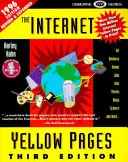
Harley Hahn’s *The Internet Yellow Pages* offers a fascinating, if dated, glimpse into the internet’s nascent years. Its strength lies in its ambition to map an uncharted territory, cataloging everything from academic archives to peculiar personal pages with a discerning eye. Hahn’s commentary on what makes a site 'useful' or 'bizarre' provides a unique authorial voice, a welcome departure from dry listings. However, the very nature of its subject means much of the content is irretrievably lost; links are broken, websites vanished. The specific passage detailing the early Usenet newsgroups, for instance, now reads as a historical artifact rather than a practical guide. It's a valuable document of digital archaeology, but its utility as a contemporary resource is, by definition, nil.
📝 Description
82
Published in 1996, The Internet Yellow Pages cataloged the World Wide Web before search engines dominated.
Harley Hahn's 1996 volume, The Internet Yellow Pages, serves as an early catalog of the World Wide Web. It categorizes and describes a wide array of internet resources available at the dawn of the commercial web. The entries span diverse subjects, offering a snapshot of information accessibility before the dominance of search engines as we know them today.
This book is aimed at historians of technology, digital archivists, and curious individuals interested in the early stages of the internet. It is a primary source for understanding early web navigation, information architecture, and the types of content deemed noteworthy in the mid-1990s. Researchers examining the evolution of online communities and resource discovery will find it valuable. Published during a critical period of internet expansion, the World Wide Web was rapidly transitioning from an academic tool to a public platform. This era predated sophisticated search algorithms, making curated directories and 'webrings' essential for discovery. Hahn's work reflects the decentralized, often serendipitous nature of early web exploration, before the web became a more centralized, commercially driven space.
The book introduces concepts crucial to early web navigation, such as the utility of Uniform Resource Locators (URLs) for direct access, the organization of information into hierarchical categories, and the identification of 'noteworthy' or 'bizarre' sites. It highlights the early internet's potential as a global library and a space for both serious research and eccentric digital expression.
While not esoteric in a mystical sense, this book functions as a guide to a nascent, almost arcane digital landscape. Its value lies in documenting a time when navigating the internet required a different kind of literacy, akin to deciphering ancient maps. Hahn's curated approach reflects an early attempt to impose order and meaning onto a chaotic new frontier, a characteristic often found in systems designed to make the complex knowable. It represents a unique record of how information was sought and organized before the rise of algorithmic curation.
💡 Why Read This Book?
• Learn how early internet pioneers navigated information before modern search engines, by examining Hahn's categorization of resources like agricultural databases and early digital art sites from 1996. • Understand the concept of 'web presence' as it evolved, by observing how Hahn identifies 'useful, bizarre, or otherwise noteworthy' online content, reflecting mid-90s digital culture. • Appreciate the evolution of online information architecture by studying the directory structure and descriptive methods used in this 1996 guide, contrasting it with today's algorithmic approaches.
⭐ Reader Reviews
Honest opinions from readers who have explored this book.
❓ Frequently Asked Questions
What is the primary purpose of Harley Hahn's 'The Internet Yellow Pages'?
The book serves as an early directory and description of internet resources available in 1996, cataloging useful, bizarre, and noteworthy websites across a vast range of subjects.
When was 'The Internet Yellow Pages' first published?
The book was first published in 1996, capturing the internet landscape during a period of rapid growth and before the widespread adoption of dominant search engines.
What kind of subjects does the book cover?
It covers an extensive spectrum of subjects, from agriculture to zoology, aiming to provide a comprehensive overview of the information and curiosities available online at the time.
Is the information in 'The Internet Yellow Pages' still relevant today?
While the specific links and websites are largely defunct, the book is historically relevant for understanding early internet culture, navigation, and information organization.
Who is Harley Hahn and why did he write this book?
Harley Hahn was an author and computer educator known for his early engagement with the internet. He likely wrote the book to help users discover and understand the growing World Wide Web.
Does the book offer practical advice for using the internet in 1996?
Yes, it describes and categorizes internet resources, implicitly guiding users on how to find and utilize information available on the World Wide Web during that era.
🔮 Key Themes & Symbolism
Digital Cartography
This work functions as an early map of the nascent digital frontier. In 1996, the internet was a less navigable space, relying on curated lists and directories rather than sophisticated search algorithms. Hahn's categorization—from agriculture to zoology—provides a framework for understanding how information was organized and accessed. It highlights the 'bizarre' and 'noteworthy' sites, revealing the emerging digital culture and the human impulse to share eclectic content globally.
Information Archaeology
As a product of 1996, the book is a critical document for information archaeologists. It preserves the memory of websites and online communities that likely no longer exist, offering a tangible record of the early World Wide Web. The act of cataloging these resources speaks to the perceived value and ephemerality of digital content even in the internet's infancy, prompting reflection on what constitutes a lasting digital artifact.
The Serendipity Engine
Before the era of hyper-personalized search results, discovering information online often involved serendipity. Hahn's guide embraces this, pointing out sites that are not just practically useful but also uniquely strange or interesting. This approach reflects a pre-algorithmic internet where exploration and accidental discovery were key components of the user experience, fostering a sense of wonder and the unexpected.
Defining the 'Web' Identity
The book implicitly explores the burgeoning identity of the World Wide Web itself. By selecting and describing specific resources, Hahn contributes to defining what the internet was becoming: a repository of knowledge, a space for peculiar self-expression, and a global communication network. His commentary on 'bizarre' sites, in particular, captures the experimental and often idiosyncratic nature of early web creators.
💬 Memorable Quotes
Direct passages from the work, attributed to the author.
“Lists and describes Internet resources on subjects ranging from agriculture to zoology...”
— This phrase captures the book's core function: acting as an early index and guide to the vast, unorganized field of the World Wide Web in its formative years.
“...pointing out those that are useful, bizarre, or otherwise noteworthy.”
— This highlights Hahn's editorial discernment, identifying not just functional resources but also those that reveal the unique, often eccentric, character of early internet culture.
“The World Wide Web is a vast and ever-growing collection of information.”
— A foundational observation from the era, this statement underscores the scale and dynamic nature of the internet as perceived by early users and catalogers.
“Many early websites reflected the personality and specific interests of their creators.”
— This interpretation points to the unique, often non-commercial, nature of early web content, where personal expression and niche topics flourished prominently.
💡 Key Ideas
Editorial paraphrase of the work's core concepts — not direct quotes.
Finding resources required more than just a simple search; it involved exploration and curated discovery.
This paraphrased concept reflects the navigation methods of the mid-1990s, emphasizing the role of directories and guides like Hahn's before sophisticated search engines became ubiquitous.
🌙 Esoteric Significance
Tradition
While not explicitly esoteric in the traditional sense, *The Internet Yellow Pages* engages with the Hermetic principle of 'As Above, So Below' by mapping the microcosm of the early internet to the macrocosm of human knowledge and curiosity. It reflects a Gnostic impulse to catalogue and understand a new form of 'divine' information, seeking order within the digital chaos.
Symbolism
The 'Yellow Pages' format itself symbolizes a new form of 'index' or 'key' to an unseen realm, akin to alchemical or Kabbalistic texts that provide symbolic maps. The categorization of subjects—from agriculture to zoology—represents an attempt to impose terrestrial order onto the boundless digital ether, mirroring ancient attempts to classify the cosmos.
Modern Relevance
Contemporary digital humanities scholars and researchers studying the history of information retrieval draw directly from works like Hahn's. Practices like digital archiving and the study of 'born-digital' materials owe a debt to early cataloging efforts. Thinkers focused on the evolution of communication and the sociology of the internet cite such guides to understand the transition from a decentralized, community-driven web to the platform-dominated internet of today.
👥 Who Should Read This Book
["• Historians of technology: Gain primary source material on internet structure and content from the mid-1990s, essential for understanding the web's evolution.", '• Digital archivists: Understand the challenges and methods of early web resource cataloging, informing preservation strategies for digital heritage.', '• Curious internet users: Appreciate the foundational era of the web and how information discovery has transformed since 1996.']
📜 Historical Context
Published in 1996, *The Internet Yellow Pages* arrived at a central moment. The World Wide Web was rapidly expanding beyond academic and military circles, entering the public consciousness. This period predated Google's dominance (founded 1998) and relied heavily on hierarchical directories like Yahoo! and manually curated lists for navigation. The internet was less commercialized, fostering a culture where personal homepages and niche information sites, often described as 'bizarre' or 'noteworthy' by Hahn, were common. Competing with the nascent web directories, Hahn's work offered a more descriptive and opinionated approach to resource discovery. While not subject to significant censorship, the sheer pace of growth meant any printed guide quickly risked obsolescence, a fate common to similar publications of the era like early editions of the O'Reilly Network guides.
📔 Journal Prompts
The cataloging of 'useful, bizarre, or otherwise noteworthy' sites.
The transition from curated directories to algorithmic search.
Early perceptions of the World Wide Web's scale and potential.
The definition of 'information' in the context of the 1996 internet.
The impulse to map and organize digital space.
🗂️ Glossary
World Wide Web (WWW)
A global information system connecting documents and other resources via hypertext links, accessed through protocols like HTTP. Popularized in the mid-1990s.
URL (Uniform Resource Locator)
The address of a resource on the internet, specifying its location and the protocol used to access it (e.g., http://www.example.com).
Directory (Web Directory)
A website that lists and categorizes other websites, often curated manually, serving as an early method for web navigation before search engines became dominant.
Hypertext
Text displayed on a computer or other electronic device with references (hyperlinks) to other text that the reader can immediately access.
Usenet
A worldwide distributed discussion system available to internet users. It consists of a set of files, known as newsgroups, in which users can post messages.
Home Page
The main page of a website, often serving as an introduction or table of contents for the rest of the site's content.
Information Architecture
The practice of organizing, structuring, and labeling content in an effective and sustainable way to help users find information and complete tasks.
This book appears in 1 collection
🔮 Readers Also Liked
Browse all →









From the “Vedic Astrology” Collection
View all →








More Free Astrology & Cosmology Books
View all →