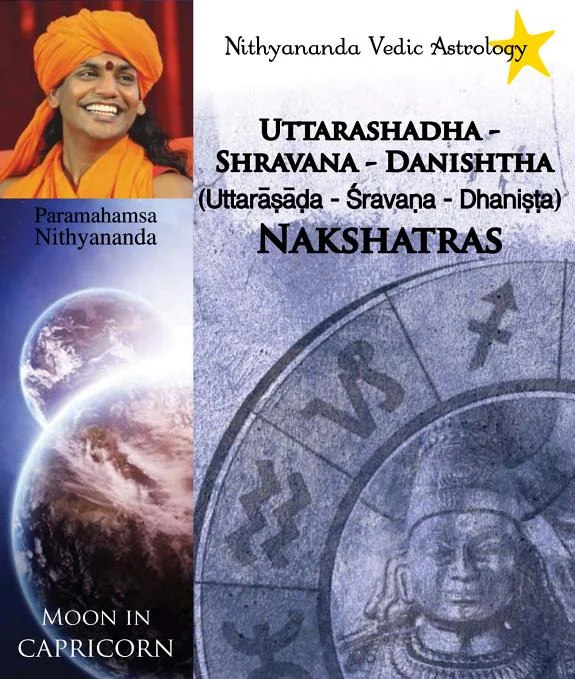
Nithyananda Vedic Astrology: Moon in Capricorn
 78
78

Nithyananda Vedic Astrology: Moon in Capricorn
Paramahamsa Nithyananda's "Moon in Capricorn" offers a focused examination of a specific astrological configuration within the Vedic system. The strength of this work lies in its detailed exploration of the interplay between the Moon and Capricorn, providing specific behavioral and psychological markers for individuals born under this influence. For instance, the discussion on Saturn's influence as the ruler of Capricorn on the Moon's emotional expression is particularly illuminating, highlighting a common theme of emotional discipline often sought by these individuals.
However, the book's primary limitation is its inherent narrowness. While the depth on this single placement is valuable, readers seeking a broader astrological overview may find it too specialized. The text could benefit from more comparative analysis with other lunar placements or astrological houses to provide a richer context. Nevertheless, the work serves as a valuable resource for those specifically interested in the Capricorn Moon from a Vedic perspective, offering practical insights into emotional manifestation and life path.
📝 Description
78
Paramahamsa Nithyananda's 2015 book analyzes the Moon in Capricorn within Vedic astrology.
Nithyananda Vedic Astrology: Moon in Capricorn examines the astrological placement of the Moon within the zodiac sign of Capricorn. Published in 2015, this work details the specific psychological, emotional, and behavioral characteristics associated with this lunar position. It discusses how the Moon's emotional nature is expressed through Capricorn's structured, ambitious, and reserved qualities.
This book is for individuals interested in Vedic astrology, particularly those with the Moon in Capricorn or those studying this placement in others. It serves students of astrology who want to understand planetary influences and zodiacal expressions within the Jyotish system. The text may also appeal to followers of Paramahamsa Nithyananda and his views on Indian sciences.
Paramahamsa Nithyananda's work engages with the Vedic astrological tradition, Jyotish, which has a long history in India. While contemporary astrology often mixes Western and Vedic ideas, Nithyananda's approach stays true to classical Jyotish principles. This book focuses on a detailed analysis of one lunar position, a method common in traditional astrological texts that offer granular interpretations of celestial placements.
Jyotish, the Vedic astrological tradition, is an ancient Indian science with roots stretching back millennia. Paramahamsa Nithyananda's work, published in 2015, engages with this system by focusing on the granular interpretation of celestial placements. Unlike approaches that blend traditions, this text adheres to classical Jyotish principles. It examines the interplay between the Moon, representing mind and emotions, and Capricorn, a sign associated with structure, discipline, and responsibility, offering a detailed analysis of this specific combination.
💡 Why Read This Book?
• Learn the specific emotional expression and psychological tendencies of the Moon in Capricorn, understanding how Saturn's rulership influences these traits, as detailed in the text's analysis of the Moon-Saturn axis. • Gain practical insights into managing emotional challenges and leveraging inherent strengths associated with this placement, drawing from Nithyananda's emphasis on discipline and responsibility. • Understand the foundational principles of Vedic astrology concerning planetary significations and zodiacal energies, using the Moon in Capricorn as a specific case study to grasp Jyotish concepts.
⭐ Reader Reviews
Honest opinions from readers who have explored this book.
❓ Frequently Asked Questions
What are the primary characteristics of the Moon in Capricorn in Vedic astrology?
Individuals with the Moon in Capricorn in Vedic astrology often exhibit emotional maturity, a strong sense of responsibility, and ambition. They tend to approach life practically and may experience a drive for achievement and recognition, influenced by Saturn's rulership.
How does Saturn influence the Moon in Capricorn according to Nithyananda?
Paramahamsa Nithyananda's work likely details how Saturn, as the ruler of Capricorn, imposes discipline, structure, and a measured approach to the Moon's emotional nature. This can manifest as emotional reserve, a focus on long-term goals, and a karmic approach to personal feelings.
Is this book suitable for beginners in Vedic astrology?
The book focuses intensely on one specific placement, making it ideal for beginners seeking to understand a particular aspect of Vedic astrology in depth, rather than for those seeking a comprehensive overview of the entire system.
What is the significance of the Moon in Vedic astrology?
In Vedic astrology, the Moon represents the mind, emotions, inner peace, and subconscious. Its placement in a zodiac sign and house significantly influences an individual's psychological makeup and emotional responses to life events.
When was Nithyananda Vedic Astrology: Moon in Capricorn first published?
Nithyananda Vedic Astrology: Moon in Capricorn was first published on February 5, 2015, offering a contemporary interpretation of ancient Jyotish principles.
What are the core themes explored regarding Capricorn's influence on the Moon?
The book explores themes of ambition, discipline, emotional control, and a practical, often serious, approach to life. It examines how these Capricornian traits shape the native's inner world and outward expression of feelings.
🔮 Key Themes & Symbolism
Saturn's Influence on the Psyche
The work highlights the lasting impact of Saturn, the ruler of Capricorn, on the Moon's significations in Vedic astrology. This theme explores how Saturn's principles of discipline, structure, and karma shape the emotional landscape, leading to traits like emotional reserve, a strong sense of duty, and a pragmatic approach to life. Individuals with this placement are often depicted as seeking emotional maturity and long-term stability, viewing their feelings through a lens of responsibility and consequence.
Emotional Maturity and Discipline
A central theme is the development of emotional maturity and self-discipline for those with the Moon in Capricorn. The book likely discusses how this astrological configuration fosters an inherent capacity for control over emotional impulses, encouraging a structured and organized expression of feelings. This theme emphasizes the journey towards achieving emotional balance through hard work, perseverance, and a realistic understanding of life's challenges, rather than through spontaneous emotional release.
Ambition and Life Path
This theme focuses on the drive for ambition and achievement that characterizes the Moon in Capricorn. The book likely connects this lunar placement with a strong desire for success, recognition, and a well-defined career path. It explores how the individual's emotional world is often intertwined with their professional aspirations, suggesting that fulfilling their emotional needs is frequently linked to accomplishing tangible goals and establishing a secure position in the world.
Practicality in Emotional Expression
The text examines the tendency towards practicality in how individuals with the Moon in Capricorn express their emotions. Rather than overt displays of sentiment, their feelings may manifest through actions, commitments, and a focus on tangible outcomes. This theme examines how responsibility, duty, and a grounded perspective shape their emotional interactions and their approach to nurturing relationships and personal well-being.
💬 Memorable Quotes
Direct passages from the work, attributed to the author.
“Saturn's discipline shapes the native's inner world, fostering emotional control.”
— This interpretation highlights the core dynamic of the Moon in Capricorn, where the inherent qualities of Saturn, the sign's ruler, impose a framework of order and restraint upon the native's emotional and mental faculties.
“A practical outlook guides the expression of feelings for the Capricorn Moon.”
— This interpretation emphasizes that emotional displays from individuals with this placement are typically grounded and action-oriented, focusing on duty and tangible results rather than overt emotional displays.
💡 Key Ideas
Editorial paraphrase of the work's core concepts — not direct quotes.
The Moon in Capricorn imbues the native with a serious approach to emotional matters.
This paraphrase suggests that individuals with this astrological placement tend to handle their feelings with gravity and thoughtfulness, prioritizing practicality and responsibility over fleeting emotional reactions.
Ambition is often a key driver for emotional fulfillment in this placement.
This paraphrase points to the strong connection between career goals and personal satisfaction for those with the Moon in Capricorn, suggesting that achieving success is intrinsically linked to their sense of emotional well-being.
Responsibility is paramount when the Moon resides in Capricorn.
This paraphrase underscores the significant role that duty and accountability play in the emotional life and decision-making processes of individuals born with the Moon in Capricorn.
🌙 Esoteric Significance
Tradition
This work is firmly rooted in the Vedic astrological tradition, known as Jyotish. It adheres to the classical framework of planetary rulerships, zodiacal signs, and their combinatorial effects on human psychology and destiny. While Vedic astrology itself is an ancient esoteric science, Nithyananda's interpretation adds a layer reflecting his specific spiritual lineage and teachings, potentially emphasizing yogic discipline and spiritual realization as outcomes of astrological understanding.
Symbolism
The primary symbols are the Moon and Capricorn. The Moon represents the mind, emotions, subconscious, and mother, embodying fluidity and receptivity. Capricorn, ruled by Saturn, symbolizes structure, discipline, ambition, responsibility, and karma. The synthesis of these symbols explores the tension between emotional fluidity and the need for structure, representing the journey towards emotional maturity and the practical manifestation of inner states.
Modern Relevance
Contemporary practitioners of Vedic astrology, particularly those interested in detailed psychological profiling and life path analysis, continue to draw upon such focused texts. Nithyananda's work, despite controversies surrounding his personal life, remains accessible to a segment of the spiritual community seeking practical astrological guidance. It appeals to modern interests in self-improvement, emotional intelligence, and understanding one's inherent capabilities and challenges through ancient wisdom systems.
👥 Who Should Read This Book
• Students of Vedic astrology seeking in-depth analysis of specific planetary placements, particularly the Moon in Capricorn, to enhance their interpretive skills. • Individuals interested in understanding their own or others' psychological tendencies and emotional patterns as indicated by the Moon in Capricorn, looking for practical applications. • Those curious about Paramahamsa Nithyananda's teachings and his specific approach to interpreting ancient Indian esoteric sciences, particularly Jyotish.
📜 Historical Context
Published in 2015, Paramahamsa Nithyananda's "Moon in Capricorn" enters the field of Vedic astrology (Jyotish), a system with roots stretching back millennia in Indian subcontinent traditions. This work engages with classical Jyotish principles, which often prioritize detailed analyses of planetary positions and their effects. In an era where astrological discourse frequently mixes Western and Vedic elements, Nithyananda's text remains grounded in traditional Jyotish interpretations. The era saw a resurgence of interest in esoteric sciences globally, with many seeking spiritual and self-understanding through ancient systems. While there isn't a widely documented specific reception event like a major review or ban for this particular book, its publication falls within a period where Indian gurus increasingly disseminated their interpretations of traditional knowledge via print and digital media, often attracting both dedicated followers and critical academic scrutiny regarding the authenticity and application of their teachings.
📔 Journal Prompts
The Moon in Capricorn's inherent sense of duty: How does this manifest in your daily life?
Saturn's influence on emotional expression: Reflect on moments of self-discipline in managing feelings.
Ambition as a fulfillment of emotional needs: Identify one professional goal that deeply motivates you.
Practicality in emotional responses: Describe a situation where you prioritized action over overt emotional display.
The Capricorn Moon's drive for structure: How do you create order in your emotional world?
🗂️ Glossary
Jyotish
The traditional Vedic system of astrology originating from ancient India. It uses a sidereal zodiac and planetary periods (dashas) to analyze an individual's life path, personality, and future.
Moon (Chandra)
In Vedic astrology, the Moon represents the mind, emotions, intuition, subconscious, mother, and general well-being. Its placement is crucial for understanding an individual's psychological makeup and emotional responses.
Capricorn (Makara)
The tenth sign of the zodiac in Vedic astrology, ruled by Saturn. It is associated with ambition, discipline, responsibility, structure, karma, and a practical, often serious, approach to life.
Saturn (Shani)
The ruling planet of Capricorn and Aquarius in Vedic astrology. Saturn represents discipline, limitations, karma, duty, structure, time, and the lessons learned through hardship and perseverance.
Sidereal Zodiac
The zodiac used in Vedic astrology, which is fixed to the constellations of stars. It differs from the tropical zodiac used in Western astrology by accounting for the precession of the equinoxes.
Placement
In astrology, refers to the position of a planet within a specific zodiac sign and house at the time of birth, which determines its influence on the individual.
Rulership
The astrological concept where a planet is considered the 'owner' or primary significator of a particular zodiac sign, influencing its characteristics and expression.
This book appears in 1 collection
🔮 Readers Also Liked
Browse all →![[Elements. English. Selections] Elements of geometry; containing the first six books of Euclid, with two books on the geometry of solids. To which are added, elements of plane and sperical trigonometry. By John Playfair. 1795](/img/thumb/elements-english-selections-elements-of-geometry-containing-the-first-six-books-of-euclid-with-two-books-on-the-geometry-of-solids-to-which-are-added-elements-of-plane-and-sperical-trigonometry-by-joh.webp)

![Animadversio astrologica: or, a discourse touching astrology. To which are added, these considerations, I. Of the mutability of sublunary beings. ... IV. The causes of several phenomena's [sic] ... By D. Irish, ... 1701](/img/thumb/animadversio-astrologica-or-a-discourse-touching-astrology-to-which-are-added-these-considerations-i-of-the-mutability-of-sublunary-beings-iv-the-causes-of-several-phenomena-s-sic-by-d-irish-1701-iris.webp)






From the “Vedic Astrology” Collection
View all →









More Free Astrology & Cosmology Books
View all →