Introduction of Astrology at University Level (27-Jul-2001)

 82
82

Introduction of Astrology at University Level (27-Jul-2001)

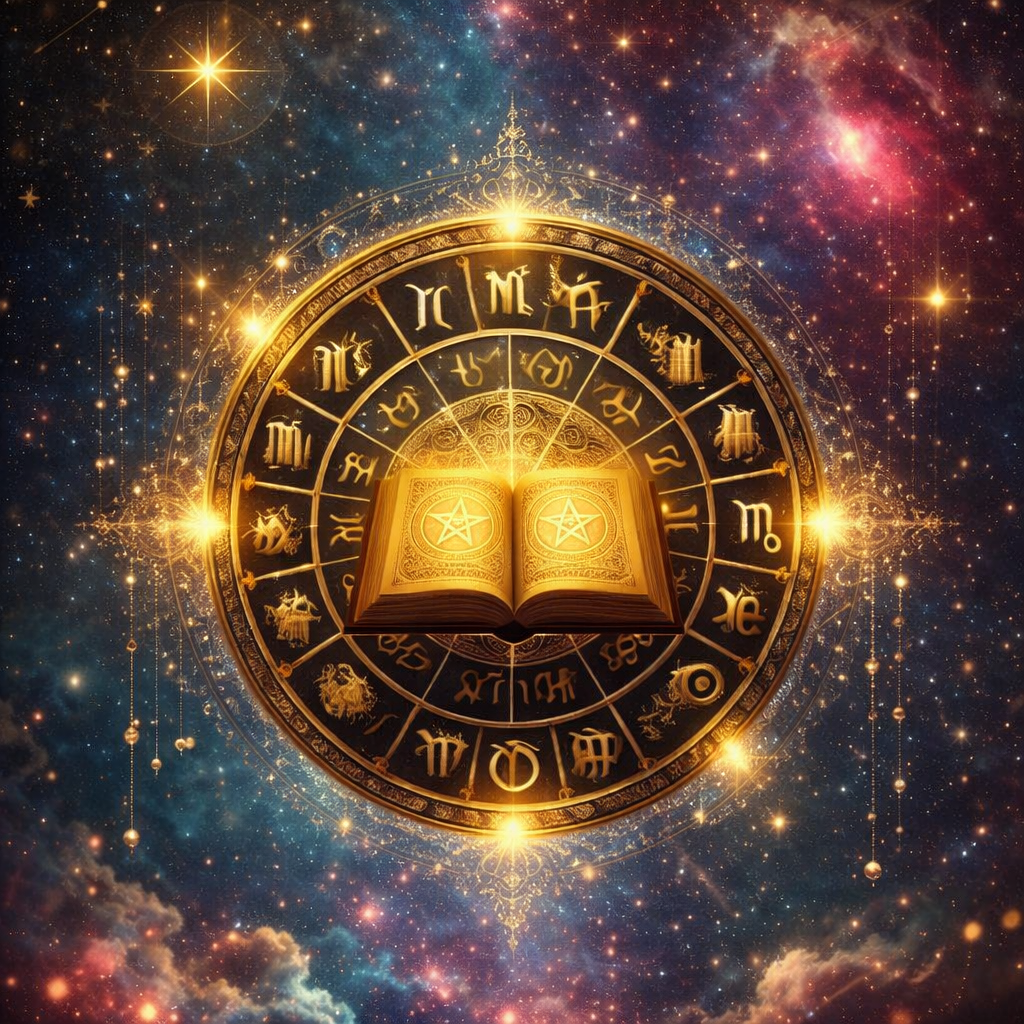

Sophia Crane (Associate Editor) — This seminal work, 'Introduction of Astrology at University Level,' masterfully bridges the gap between esoteric lore and academic inquiry. The Rajya Sabha Secretariat presents a scholarly yet accessible exploration of astrological principles, highlighting its deep philosophical roots and symbolic richness. It offers a rare glimpse into how this ancient art can be integrated into higher learning, appealing to both novice stargazers and seasoned practitioners seeking a structured understanding. The text is particularly adept at illuminating the hidden connections between celestial movements and human experience, making it an invaluable resource for anyone drawn to the profound mysteries of the cosmos.
📝 Description
82
Published on July 27, 2001, this text aims to introduce astrology at a university level.
This book, authored by the Rajya Sabha Secretariat, presents astrology not as simple fortune-telling, but as a system that connects celestial movements with earthly events. It examines the historical belief that the stars contain hidden knowledge accessible through interpretation. The text covers the symbolic language of celestial bodies and the underlying philosophies of astrological practice, which has influenced human societies over long periods. It is written for students, academics, and those beginning to study astrology. The goal is to make the study of subtle energies and their role in the cosmos understandable.
This work situates astrology within a tradition that views the cosmos as a meaningful text, not merely a collection of physical objects. It engages with the idea of hidden knowledge encoded in celestial patterns, a concept found in various hermetic and philosophical traditions. The book addresses the symbolic interpretation of planetary positions and stellar arrangements, a core practice in Western and Eastern astrological systems. It connects this practice to a long history of civilizations using celestial observation for understanding human affairs and the natural world.
✍️ Author
Rajya Sabha Secretariat
The Rajya Sabha Secretariat is the administrative body of the Rajya Sabha, the upper house of India's Parliament.
💡 Why Read This Book?
Embark on a journey of self-discovery and cosmic connection. 'Introduction of Astrology at University Level' offers a rare academic perspective on a foundational esoteric art. Ideal for seekers of hidden wisdom, scholars of ancient traditions, and practitioners seeking to deepen their understanding of astrological symbolism and its philosophical implications. Unlock the ancient language of the stars and perceive the universe with new, enlightened eyes.
⭐ Reader Reviews
Honest opinions from readers who have explored this book.
❓ Frequently Asked Questions
What is the primary focus of this book?
This book primarily focuses on introducing astrological principles and their potential integration into university-level curricula, exploring its philosophical underpinnings and symbolic language.
Who is the intended audience?
The intended audience includes students, scholars, educators, and individuals interested in a structured, academic approach to understanding astrology and its historical significance.
Does the book cover practical astrological techniques?
While it lays a strong theoretical and philosophical foundation, the focus is more on the introduction and conceptual understanding rather than in-depth practical technique instruction.
What is the historical context of this publication?
Published in 2001, it reflects a period of renewed interest in integrating traditional knowledge systems into modern academic discourse, particularly within the Indian context.
Is this book suitable for beginners?
Yes, its introductory nature makes it highly suitable for beginners who wish to grasp the fundamental concepts and significance of astrology from a comprehensive viewpoint.
🔮 Key Themes & Symbolism
The Celestial Map of Consciousness
This theme studies the profound concept of astrology as a symbolic language reflecting the architecture of human consciousness. It explores how planetary positions and cosmic configurations are not merely predictive tools but mirrors to our inner landscapes, archetypal patterns, and karmic predispositions. The text illuminates the idea that understanding the heavens is akin to understanding the self, revealing the intricate connections between the microcosm and the macrocosm.
Astrology as a Philosophical Framework
This section examines astrology not just as a practice, but as a comprehensive philosophical system that has shaped human thought for millennia. It discusses its role in understanding causality, free will versus destiny, and the cyclical nature of time. The book explores how astrological principles offer a unique lens through which to ponder existential questions, ethical considerations, and the overarching order of the universe, thereby providing a rich intellectual and spiritual framework for inquiry.
The Esoteric Art of Symbolism
Here, the focus shifts to the collection of astrological symbolism. Each planet, sign, and aspect is presented as a potent glyph carrying layers of meaning, representing specific energies, psychological drives, and life lessons. The text emphasizes the importance of deciphering this symbolic language to unlock deeper truths about human nature and cosmic interconnectedness. It highlights how mastering this symbolic lexicon is key to accessing the hidden knowledge embedded within astrological charts.
💬 Memorable Quotes
Direct passages from the work, attributed to the author.
“Cosmic order is reflected in the human soul.”
— This highlights the core tenet of astrology: the belief that the macrocosm (universe) is mirrored in the microcosm (individual), implying a deep interconnectedness.
“Understanding the celestial dance reveals the terrestrial path.”
— This emphasizes the practical application of astrology, suggesting that by comprehending cosmic patterns, one can better navigate and understand their own life journey.
“Astrology: the language of the divine architecture.”
— This elevates astrology to a sacred science, portraying it as the means by which the fundamental structure and intent of the universe can be comprehended.
“The chart is a map, not a decree.”
— This crucial distinction underscores that astrological readings indicate potentials and tendencies, not fixed destinies, empowering individuals with agency.
💡 Key Ideas
Editorial paraphrase of the work's core concepts — not direct quotes.
The stars are not mute witnesses, but silent teachers.
This quote suggests that celestial bodies possess inherent wisdom, offering guidance and lessons to those who learn to observe and interpret their movements and positions.
🌙 Esoteric Significance
Tradition
This work is deeply rooted in the Vedic astrological tradition of India, known as Jyotisha. It draws upon centuries of accumulated wisdom concerning the influence of celestial bodies on terrestrial events and human lives. The esoteric significance lies in its portrayal of astrology as a sacred science, a tool for understanding divine will and cosmic karma, and a pathway to spiritual growth and self-realization by aligning one's life with universal rhythms.
Symbolism
The symbolism in this text is vast, with each planet, constellation, and astrological house representing distinct archetypal energies and life functions. The Sun embodies the soul and ego, the Moon represents emotions and the subconscious, while Mars signifies action and drive, and Venus governs love and harmony. These symbols are not merely abstract concepts but dynamic forces that, when interpreted collectively in a natal chart, reveal the intricate blueprint of an individual's potential and challenges.
Modern Relevance
In the modern era, this book's relevance lies in its ability to offer a holistic perspective on life, counteracting the fragmentation often found in purely materialistic worldviews. It provides a framework for understanding personal challenges within a larger cosmic context, fostering a sense of interconnectedness and purpose. For contemporary seekers, it offers tools for self-awareness, ethical reflection, and a deeper appreciation of the subtle energies that shape our reality, bridging the gap between ancient wisdom and contemporary lived experience.
👥 Who Should Read This Book
This book is a vital resource for a diverse audience. **Beginners** will find a clear and structured entry point into the profound world of astrology, explaining its core principles. **Scholars and academics** will appreciate its thoughtful examination of astrology as a philosophical and historical discipline, particularly within the Indian context. **Spiritual seekers** will discover a profound tool for self-exploration, understanding cosmic patterns, and deepening their connection to the universe. **Aspiring practitioners** will benefit from the foundational knowledge, providing a solid basis for further study and application.
📜 Historical Context
Published in 2001, 'Introduction of Astrology at University Level' emerges from a period where discussions around integrating traditional knowledge systems into formal education gained traction, particularly in India. This era saw a growing awareness of the philosophical and scientific underpinnings of ancient Indian sciences, including Jyotisha (Vedic Astrology). The work's origin within the Rajya Sabha Secretariat signifies a unique moment where parliamentary discourse engaged with the academic and societal relevance of astrology. It reflects a broader intellectual movement to re-evaluate and re-contextualize esoteric practices, moving them from the periphery of popular belief towards a more structured, scholarly examination, acknowledging their historical influence and potential contribution to understanding human experience.
📔 Journal Prompts
How does the concept of 'cosmic order' resonate with your personal sense of order and chaos?
Reflect on a time you felt a strong connection to the cycles of nature or the cosmos. What did this experience reveal to you?
If planets are 'silent teachers,' what lesson do you feel a particular planet or celestial body might be trying to impart to you now?
Consider your natal chart not as a decree, but as a map. What paths does this map suggest, and where do you feel empowered to deviate or explore?
How can understanding the symbolic language of astrology enhance your self-awareness and relationships with others?
🗂️ Glossary
Jyotisha
The traditional Indian system of astrology, encompassing the study of celestial bodies and their influence on earthly affairs and human lives. It is considered a Vedanga (limb of the Vedas).
Natal Chart
A symbolic map of the positions of the Sun, Moon, planets, and other celestial bodies at the exact moment and location of a person's birth.
Archetype
A universal, archaic symbol or motif that derives its meaning from the collective unconscious, often represented by figures in mythology and astrology.
Microcosm
The small world or universe, often referring to an individual human being, seen as a reflection or miniature representation of the larger universe (macrocosm).
Macrocosm
The great world or universe, considered as a whole, encompassing all of existence. Astrology posits a correspondence between the macrocosm and the microcosm.
This book appears in 1 collection
🔮 Readers Also Liked
Browse all →









More by Rajya Sabha Secretariat
All books →





From the “Astrology” Collection
View all →








More Free Astrology & Cosmology Books
View all →