Chinese Horoscopes
 71
71

Chinese Horoscopes
Debbie Burns’s *Chinese Horoscopes* provides a structured and accessible entry into a complex system. Its strength lies in its clear organization, breaking down the attributes of each zodiac animal with commendable detail. The compatibility charts, a significant component, offer practical insights for understanding interpersonal dynamics, moving beyond simple archetypes. However, the book occasionally leans towards broad generalizations; for instance, the assertion that all individuals born in a specific year share identical core traits overlooks the subtle, yet crucial, influence of the Five Elements and other astrological factors not always elaborated upon with equal depth. The section on the Dragon, often seen as the most powerful sign, is particularly illustrative of the book's detailed approach, yet could benefit from more exploration of its elemental variations. Despite this minor limitation, Burns delivers a competent and informative guide to the zodiac.
📝 Description
71
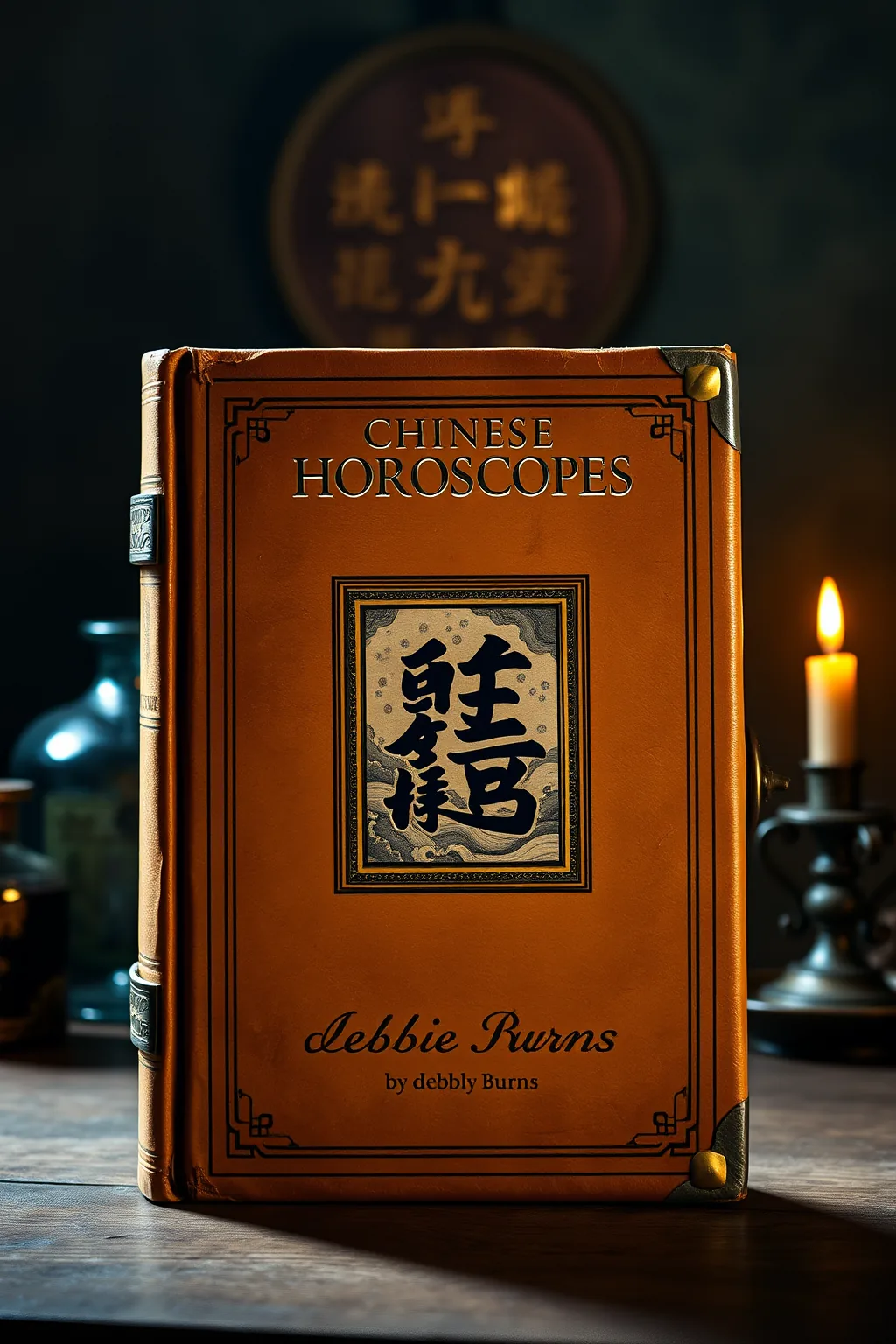
Debbie Burns's Chinese Horoscopes, published in 2003, details the twelve animals of the Chinese zodiac.
This book examines the twelve animals of the Chinese zodiac, explaining their characteristics, compatibility, and influences on life. It looks at the cyclical nature of the Chinese calendar and how it connects to personality and fate.
The text covers the 12 Earthly Branches, with each animal sign. Burns explains how lunar cycles assign specific virtues, challenges, and relationships to individuals born under each sign. The book also discusses the interaction of the Five Elements—Wood, Fire, Earth, Metal, and Water—with these animal signs.
It is written for those interested in Eastern astrology, people seeking self-understanding through their birth year animal, and anyone curious about cultural divination systems. The book offers a clear introduction for beginners and insights for those already familiar with the subject.
Chinese astrology is a practice with roots stretching back centuries, tied to traditional Chinese philosophy and calendar systems. Burns's 2003 work focuses on this specific element of Chinese metaphysics, a tradition that saw increasing interest in Western interpretations during the early 2000s. The book details how lunar cycles and the Five Elements shape the characteristics and destinies associated with the twelve zodiac animals.
💡 Why Read This Book?
• Gain insight into the distinct personalities and inherent traits associated with each of the 12 Chinese zodiac animals, understanding how your birth year animal shapes your character. • Explore the complex dynamics of compatibility between different zodiac signs, learning practical applications for relationships and social interactions based on the animal pairings. • Grasp the influence of the Five Elements (Wood, Fire, Earth, Metal, Water) on the animal signs, offering a more nuanced understanding than singular animal archetypes alone.
⭐ Reader Reviews
Honest opinions from readers who have explored this book.
❓ Frequently Asked Questions
When was Debbie Burns's Chinese Horoscopes first published?
Debbie Burns's *Chinese Horoscopes* was first published in 2003, making it a contemporary guide to this ancient astrological system.
What are the 12 animals of the Chinese zodiac mentioned in the book?
The book details the 12 animals: Rat, Ox, Tiger, Rabbit, Dragon, Snake, Horse, Goat, Monkey, Rooster, Dog, and Pig, explaining the characteristics associated with each.
Does the book discuss compatibility between zodiac signs?
Yes, *Chinese Horoscopes* includes sections on compatibility, exploring how the different animal signs interact and influence relationships.
What is the role of the Five Elements in Chinese Horoscopes?
The work explains how the Five Elements—Wood, Fire, Earth, Metal, and Water—interact with the zodiac animals, adding layers of complexity to personality and destiny.
Is this book suitable for beginners in astrology?
Absolutely. Burns presents the concepts in a clear, structured manner, making it an accessible introduction for those new to Chinese astrology.
What historical period does Chinese astrology typically reference?
Chinese astrology is rooted in ancient Chinese traditions, with its systems evolving over centuries, often tied to the lunar calendar and traditional philosophies.
🔮 Key Themes & Symbolism
Animal Archetypes
The core of Chinese Horoscopes lies in the distinct personalities ascribed to the twelve zodiac animals. Each animal, from the industrious Ox to the charismatic Monkey, is presented with a set of virtues, potential flaws, and inherent tendencies. Burns details how these archetypes manifest in an individual's character, career path, and social interactions, offering a framework for self-reflection and understanding others based on their birth year's animal sign.
Inter-Sign Compatibility
Beyond individual animal traits, the book extensively covers the intricate relationships and compatibility between the signs. This theme explores how certain animal pairings are naturally harmonious, while others may present challenges. Burns outlines specific combinations, such as the strategic alliance between the Rat and the Monkey, or the potential friction between the assertive Horse and the introspective Goat, providing practical guidance for relationships.
The Five Elements Theory
Chinese Horoscopes integrates the fundamental concept of the Five Elements: Wood, Fire, Earth, Metal, and Water. The work explains how these elements are not only associated with specific years but also influence the inherent nature of each zodiac animal. The cyclical interaction of these elements (generative and destructive cycles) adds a crucial layer of depth, moving beyond simple animal characteristics to a more nuanced understanding of destiny and personality.
Lunar Calendar Cycles
The book is grounded in the principles of the traditional Chinese lunar calendar, which dictates the sequence and timing of the zodiac animals. Burns elucidates how the lunar cycle's progression through the twelve Earthly Branches forms the basis of the astrological system. Understanding these cycles is presented as key to deciphering the influences that shape an individual's life from birth.
💬 Memorable Quotes
Direct passages from the work, attributed to the author.
“The Rat is intelligent, adaptable, and ambitious.”
— This expresses the core attributes assigned to the Rat sign, highlighting its quick wit, ability to adjust to new circumstances, and drive for success as foundational characteristics.
“The Dragon is a symbol of power and good fortune.”
— This highlights the potent symbolism associated with the Dragon sign in Chinese culture, as presented in the book, linking it directly to concepts of strength and auspiciousness.
“Each element influences the animal's expression.”
— This statement emphasizes the interconnectedness of the Five Elements and the zodiac animals, indicating that an animal's traits are modified and nuanced by its elemental association.
💡 Key Ideas
Editorial paraphrase of the work's core concepts — not direct quotes.
Compatibility is not about finding a perfect match, but understanding potential dynamics.
This paraphrased concept suggests that the book views relationships through a lens of awareness rather than predestination, emphasizing that understanding inherent traits helps navigate interactions.
The Ox possesses strength, patience, and a strong sense of justice.
This paraphrase outlines the key virtues attributed to the Ox sign, presenting it as a steadfast and principled individual within the zodiac framework.
🌙 Esoteric Significance
Tradition
Chinese Horoscopes is firmly rooted in the ancient Chinese metaphysical tradition, specifically within the field of cosmological divination and philosophy. It draws heavily from Taoist principles concerning the cyclical nature of the universe and the interconnectedness of all things. Unlike Western Hermeticism or Kabbalah, its lineage is indigenous to China, focusing on the interplay of Yin and Yang, the Five Elements (Wu Xing), and the celestial bodies as they map onto earthly time and human destiny.
Symbolism
The primary symbolism revolves around the twelve animals of the zodiac: Rat, Ox, Tiger, Rabbit, Dragon, Snake, Horse, Goat, Monkey, Rooster, Dog, and Pig. Each animal is not merely a representation but a potent symbol embodying specific qualities, energies, and archetypal roles. The Dragon, for instance, symbolizes imperial power, good fortune, and strength, while the Rabbit often represents gentleness, creativity, and caution. The Five Elements (Wood, Fire, Earth, Metal, Water) are also critical symbolic motifs, representing fundamental forces that interact with and modify the characteristics of the animal signs.
Modern Relevance
Contemporary practitioners of Eastern spirituality, self-help enthusiasts exploring diverse divination systems, and individuals interested in comparative cultural studies often engage with works like Burns's. The book's accessible format makes the principles of Chinese astrology relevant for modern life, offering tools for personal growth, relationship understanding, and career guidance. Thinkers and practitioners in fields like transpersonal psychology and cultural anthropology also find value in its detailed examination of a significant global esoteric tradition.
👥 Who Should Read This Book
• Individuals fascinated by the 12 animals of the Chinese zodiac seeking to understand their birth year's significance and associated traits. • Those interested in exploring relationship compatibility from an Eastern astrological perspective, learning about harmonious and challenging pairings. • Students of comparative divination systems looking for a clear and structured introduction to the principles of Chinese astrology and its connection to the Five Elements.
📜 Historical Context
Published in 2003, Debbie Burns's *Chinese Horoscopes* emerged during a period of increasing global interest in Eastern esoteric traditions. While Chinese astrology itself is an ancient practice, dating back over two millennia and deeply embedded in Chinese culture and philosophy, its popularization in the West gained momentum in the late 20th and early 21st centuries. This era saw a surge in accessible guides to various forms of divination and self-understanding. Burns's work entered a market where systems like Vedic astrology and Western esoteric practices were also widely explored. Contemporary authors such as Stephen Karcher were also contributing to the discourse on Eastern philosophies. The reception of such books typically focused on their clarity and practical application for a Western audience curious about these ancient systems, often framed as complementary to, rather than replacing, Western astrological frameworks.
📔 Journal Prompts
The influence of the Rat on your personal ambition.
Reflecting on the compatibility between your sign and a significant person in your life.
How the element associated with your birth year shapes your core nature.
Challenges and strengths of the Tiger in navigating career paths.
The symbolic meaning of the Dragon in relation to personal power.
🗂️ Glossary
Zodiac Animals
The twelve creatures (Rat, Ox, Tiger, Rabbit, Dragon, Snake, Horse, Goat, Monkey, Rooster, Dog, Pig) that represent years in the Chinese lunisolar calendar, each associated with distinct personality traits and influences.
Earthly Branches
The twelve divisions of the ecliptic used in Chinese astrology and other traditional Chinese sciences, each corresponding to one of the zodiac animals and a specific period of time.
Five Elements (Wu Xing)
The fundamental forces in Chinese philosophy—Wood, Fire, Earth, Metal, and Water—that interact in generative and destructive cycles, influencing the characteristics of the zodiac animals and broader cosmic phenomena.
Compatibility
The degree of harmony or potential conflict between different Chinese zodiac signs, based on their inherent characteristics and elemental associations, often used to assess relationships.
Lunar Calendar
A calendar based on the cycles of the Moon's phases, used as the basis for the Chinese zodiac system, which determines the timing of the animal years.
Yin and Yang
The dualistic, complementary forces central to Chinese philosophy, representing opposing yet interconnected principles (e.g., passive/active, dark/light) that influence the balance within the zodiac and the elements.
Dragon
One of the twelve zodiac animals, often symbolizing power, charisma, good fortune, and imperial authority in Chinese culture and astrology.
🔮 Readers Also Liked
Browse all →









More by Debbie Burns
All books →

More Free Astrology & Cosmology Books
View all →