Chinese Astrology
 80
80

Chinese Astrology
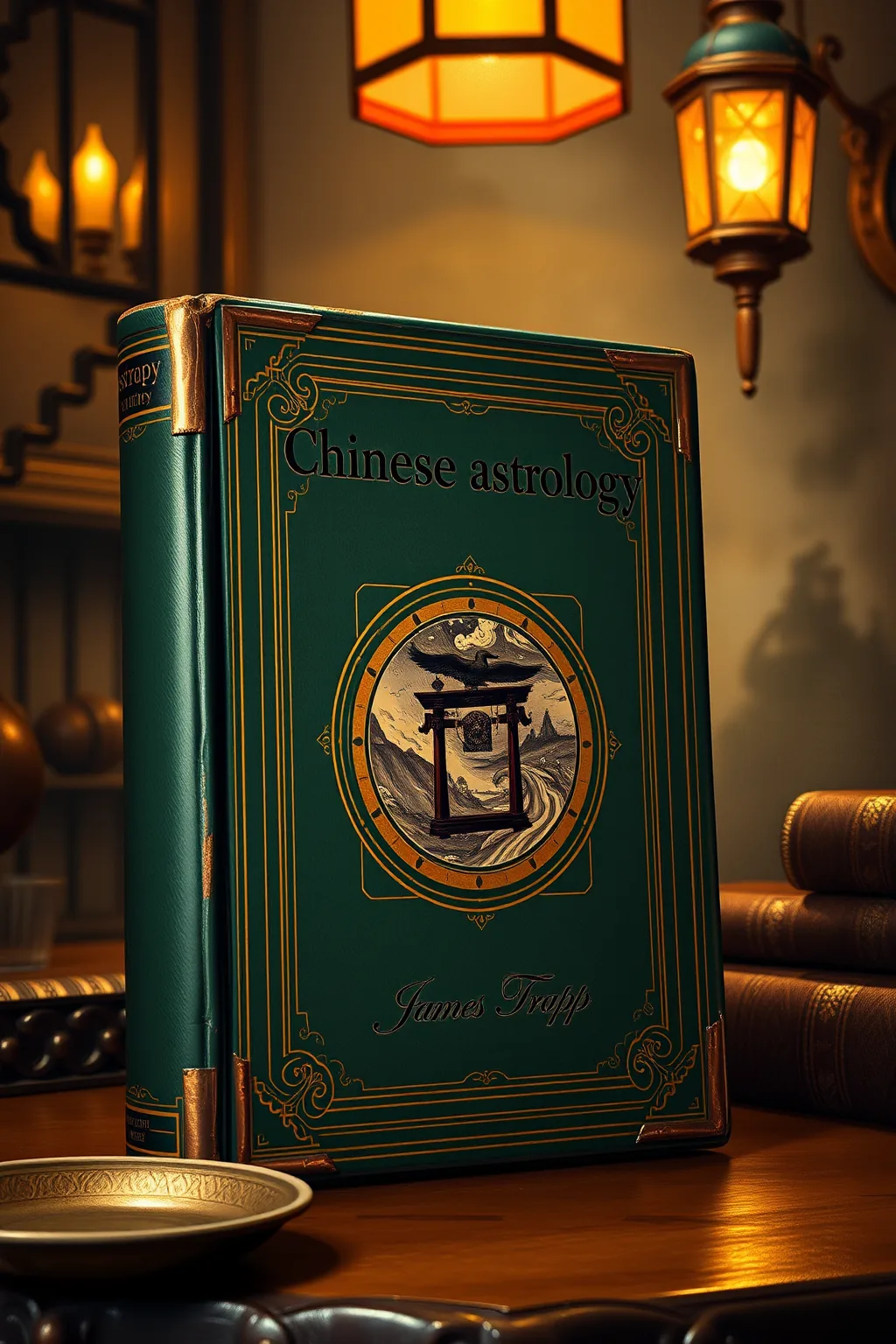
James Trapp's *Chinese Astrology* offers a refreshingly clear exposition of a system often perceived as arcane. Its primary strength lies in its visual presentation and methodical approach, breaking down the complex interplay of animals and elements into digestible components. The guide's success hinges on its ability to translate the symbolic richness of the Chinese zodiac for a Western audience, a task it largely accomplishes through straightforward language and illustrative examples. However, in its pursuit of accessibility, the book occasionally simplifies nuances that are critical to a deeper understanding of the system's philosophical underpinnings. For instance, while it explains the Five Elements, it doesn't fully capture the dynamic philosophical debates surrounding their interactions as explored in classical Chinese texts. Nevertheless, the section detailing the 'Four Pillars' (Ba Zi) provides a solid foundation for readers interested in personal astrological readings. Trapp's work serves as a competent and visually appealing primer for the curious novice.
📝 Description
80
James Trapp's 2015 book demystifies Chinese zodiacal and elemental calculations.
Published in 2015, James Trapp's *Chinese Astrology* serves as a clear introduction to the system of Chinese zodiacal and elemental calculations. The book moves from identifying basic animal signs to examining more complex astrological interactions. It details the principles of the Chinese lunar calendar and its twelve associated zodiac animals, giving readers instructions to find their own signs and those of others. The work explains the symbolic language of the system, covering the meaning of each character and its impact on personality and destiny.
This guide is for anyone interested in Chinese astrology, especially beginners or those wanting a straightforward reference. It suits readers who prefer illustrated guides and practical, step-by-step methods over dense theory. The book can help readers understand their astrological profile, explore relationship dynamics through the zodiac, or gain basic knowledge of this practice. It is also useful for those comparing different astrological systems and cultural views on celestial influence.
Chinese astrology connects to ancient Chinese philosophy and its lunisolar calendar. Its development is tied to how time was understood cyclically and the observation of stars. Unlike Western astrology, it centers on a twelve-year animal cycle and the five elements: Wood, Fire, Earth, Metal, and Water. This system has historically been used for fortune-telling and understanding relationships.
💡 Why Read This Book?
• Gain a foundational understanding of the twelve Chinese zodiac animals and their associated personality traits, as detailed in the book's early chapters, enabling you to identify your own sign and those of friends and family. • Learn how the Five Elements (Wu Xing) interact with the zodiacal animals to create a more complex astrological profile, moving beyond simple animal sign interpretations as explained in the section on elemental cycles. • Discover the significance of the 60-year cycle, formed by the combination of Heavenly Stems and Earthly Branches, to appreciate the layered temporal and symbolic structure of Chinese astrology, a concept elaborated upon within the guide.
⭐ Reader Reviews
Honest opinions from readers who have explored this book.
❓ Frequently Asked Questions
When was James Trapp's Chinese Astrology first published?
James Trapp's *Chinese Astrology* was first published on June 19, 2015, making it a relatively contemporary guide to this ancient practice.
What are the main components of Chinese Astrology discussed in the book?
The book focuses on the twelve animal signs of the Chinese zodiac and the Five Elements (Wood, Fire, Earth, Metal, Water), explaining their individual characteristics and interactions.
Does the book explain how to determine one's Chinese zodiac sign?
Yes, *Chinese Astrology* provides easy-to-use instructions to help readers determine their own animal sign based on their birth year within the Chinese lunar calendar.
What is the significance of the Five Elements in Chinese Astrology?
The Five Elements (Wu Xing) are crucial as they interact with the animal signs, influencing personality, relationships, and fortune. Their cycles of generation and destruction add depth to the astrological interpretations presented in the book.
Is this book suitable for complete beginners to astrology?
Absolutely. The book is designed as a beautifully illustrated guide with clear, step-by-step instructions, making it ideal for those with no prior knowledge of Chinese astrology.
What is the '60-year cycle' mentioned in Chinese Astrology?
The 60-year cycle arises from the combination of the twelve Earthly Branches (animal signs) and the ten Heavenly Stems (elements). This cycle provides a more detailed astrological framework than the animal sign alone, as explained in the book.
🔮 Key Themes & Symbolism
The Twelve Zodiac Animals
The book meticulously details each of the twelve animals—Rat, Ox, Tiger, Rabbit, Dragon, Snake, Horse, Goat, Monkey, Rooster, Dog, and Pig—that form the core of the Chinese zodiac. It explores the unique traits, strengths, potential weaknesses, and inherent characteristics associated with individuals born under each sign. Understanding these archetypes allows readers to gain insight into their own nature and the dynamics of their relationships with others, forming the primary layer of astrological interpretation presented.
The Five Elements (Wu Xing)
Beyond the animal signs, *Chinese Astrology* introduces the fundamental concept of the Five Elements: Wood, Fire, Earth, Metal, and Water. These elements are not static but engage in dynamic cycles of creation and destruction, profoundly influencing the expression of each zodiac animal. The book explains how an individual's elemental affinity, determined by birth year and other factors, modifies their primary animal sign characteristics, adding significant complexity and nuance to their astrological profile.
Interplay of Animals and Elements
A central theme is the synergistic relationship between the zodiac animals and the Five Elements. The text illustrates how the elements modify the inherent nature of each animal. For instance, a Wood Dragon will possess different qualities than a Fire Dragon. This interaction creates a more personalized astrological reading, moving beyond generalizations. The book guides readers through understanding these combinations, revealing how they impact personality, compatibility, and life events.
The 60-Year Cycle
The book elaborates on the sophisticated 60-year cycle, a foundational element of Chinese calendrical and astrological systems. This cycle is generated by the combination of the twelve Earthly Branches (the animal signs) and the ten Heavenly Stems (associated with the Five Elements in a yin/yang duality). Understanding this cycle allows for a more precise charting of time and destiny, providing a framework for deeper astrological analysis beyond the individual animal sign.
💬 Memorable Quotes
Direct passages from the work, attributed to the author.
“Each animal sign possesses a distinct set of inherent qualities and potential challenges.”
— This highlights the core premise that one's birth year animal influences personality traits, offering a framework for self-understanding and recognizing patterns in behavior.
“The Five Elements are not separate but interact in a constant cycle of generation and destruction.”
— This points to the dynamic nature of Chinese cosmology, emphasizing that elemental forces are in perpetual flux, shaping and influencing each other in predictable patterns.
“Understanding the interplay between your animal and element provides a richer astrological portrait.”
— This suggests that a comprehensive Chinese astrological reading requires considering more than just the zodiac animal, integrating the elemental influences for a nuanced interpretation.
“The Chinese calendar is lunisolar, with months based on moon cycles and years aligned with celestial observations.”
— This explains the fundamental difference from the Gregorian calendar and underscores the ancient, nature-based origins of the astrological system.
“Compatibility between signs is influenced by their elemental relationships.”
— This indicates that harmonious or conflicting relationships between individuals can often be understood through the lens of how their respective zodiac animals and elements interact.
🌙 Esoteric Significance
Tradition
Chinese astrology belongs to a distinct lineage rooted in ancient Chinese cosmology and Taoist philosophy, rather than the Hermetic, Gnostic, or Theosophical traditions common in Western esotericism. It emphasizes cyclical time, the balance of Yin and Yang, and the Five Elements (Wu Xing) as fundamental forces shaping the universe and human destiny. While distinct from Western systems, it shares a common goal of understanding cosmic influences on earthly life and individual character, functioning as a sophisticated form of divination and self-knowledge within its cultural context.
Symbolism
The primary symbols are the twelve animals of the zodiac (Rat, Ox, Tiger, etc.), each representing archetypal energies and qualities. Equally significant are the Five Elements (Wood, Fire, Earth, Metal, Water), which symbolize different phases of growth, transformation, and decay. The interaction between animals and elements creates complex symbolic layers, with the 60-year cycle (derived from Heavenly Stems and Earthly Branches) representing a grand cosmic rhythm. These symbols are not merely decorative but are integral to the predictive and interpretive power of the system.
Modern Relevance
Contemporary thinkers and practitioners across various fields, including psychology, comparative religion, and New Age spirituality, draw upon Chinese astrology. Its emphasis on cyclical patterns, elemental balance, and archetypal symbolism offers a different perspective on human nature and destiny compared to Western astrological systems. Modern interpretations often focus on its utility for self-awareness, relationship counseling, and personal development, making it a relevant tool for individuals seeking holistic understanding in a fast-paced world.
👥 Who Should Read This Book
['• Aspiring practitioners of Chinese astrology seeking a clear, illustrated introduction to the fundamental concepts of animal signs and the Five Elements, enabling them to begin personal chart analysis.', '• Readers interested in comparative mythology and cosmology who wish to understand a major non-Western system of divination and its philosophical underpinnings.', '• Individuals exploring self-discovery and personal growth who are looking for alternative frameworks to understand their personality, relationships, and life path through the lens of the Chinese zodiac.']
📜 Historical Context
James Trapp's *Chinese Astrology*, published in 2015, enters a field with millennia of history. The system it describes evolved alongside Chinese philosophy, medicine, and cosmology, becoming deeply integrated into cultural practices. Its roots can be traced back to the Han Dynasty (206 BCE – 220 CE), where early forms of astrology were developed. Unlike the Hellenistic astrology that influenced Western traditions, Chinese astrology is primarily based on the cycles of the moon, the twelve animal signs, and the five elements (Wu Xing). These concepts were further codified and integrated into a complex system of divination and calendrical science. By 2015, Chinese astrology was widely practiced globally, often competing for attention with its Western counterpart. While not facing direct censorship, its popularization in the West has been a gradual process, with authors like Trapp aiming to make its intricacies accessible, moving beyond the esoteric circles that traditionally guarded its knowledge. Its continued relevance speaks to enduring human fascination with cosmic order.
📔 Journal Prompts
The inherent characteristics of your birth year animal sign.
Your personal elemental affinity and its influence.
How the Wood element manifests in your life.
The relationship dynamics between your animal sign and a loved one's.
The significance of the 60-year cycle in understanding personal destiny.
🗂️ Glossary
Animal Signs
The twelve zodiac animals (Rat, Ox, Tiger, Rabbit, Dragon, Snake, Horse, Goat, Monkey, Rooster, Dog, Pig) that represent years in a twelve-year cycle, each associated with specific personality traits.
Five Elements (Wu Xing)
The fundamental forces of Wood, Fire, Earth, Metal, and Water, which interact in cyclical patterns of generation and destruction, influencing the zodiac animals and aspects of life.
Heavenly Stems
A set of ten cyclical characters, often associated with the Five Elements in their Yin and Yang forms, used in combination with Earthly Branches for detailed astrological calculations.
Earthly Branches
The twelve signs of the Chinese zodiac, each represented by an animal, forming the basis of the twelve-year cycle and the foundation of many astrological calculations.
Lunisolar Calendar
A calendar system that is based on both the cycles of the moon (months) and the apparent position of the sun (years), which is foundational to Chinese astrology.
Ba Zi (Four Pillars)
A complex astrological chart based on the year, month, day, and hour of birth, using Heavenly Stems and Earthly Branches to provide a detailed profile.
Yin and Yang
The complementary and interdependent dualistic principles that represent opposite yet interconnected forces, fundamental to Chinese philosophy and influencing astrological interpretations.