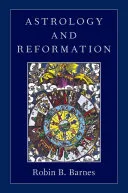
Astrology and Reformation
 75
75

Astrology and Reformation
Robin B. Barnes's Astrology and Reformation offers a meticulously researched account of how celestial lore became entangled with the religious upheaval of the sixteenth century. The book's strength lies in its detailed exposition of how astrological imagery functioned as a vernacular language for theological and political discourse, particularly within the German territories. Barnes compellingly argues that this was not merely a backdrop but an active participant in shaping the Reformation's character. A point of particular interest is the discussion of how Lutheran reformers, while publicly decrying judicial astrology, privately employed its symbolic language to frame their revolutionary message. If there's a limitation, it's that the dense academic prose occasionally obscures the vividness of the historical moments described. The analysis of the 1524 conjunction and its interpretation by figures like Melanchthon is a prime example of the work's depth, yet the surrounding narrative could benefit from more direct engagement with the emotional tenor of the era. Overall, Barnes provides an essential, if demanding, contribution to understanding the esoteric currents beneath the surface of early modern religious change.
📝 Description
75
Robin B. Barnes's 2019 book connects celestial prognostication with early modern European religious shifts.
Astrology and Reformation examines the significant, though often overlooked, relationship between celestial forecasting and the major religious changes in early modern Europe. Robin B. Barnes traces how astrological ideas and imagery were woven into theological discussions. This influenced the cultural and intellectual climate that preceded the Protestant Reformation and continued to shape German Christian identity through the seventeenth century.
The book moves beyond a basic historical overview. It analyzes the symbolic language of the stars as understood and utilized by key individuals and within the broader societal consciousness. The study is situated in the tumultuous sixteenth and seventeenth centuries, a time of intense religious conflict, the rise of printing, and complex interactions between established beliefs and emerging scientific thought.
Astrology was not a minor practice; it was a core part of intellectual life, consulted by leaders and academics. Barnes's work specifically addresses how this widespread attention to celestial patterns offered a way to comprehend divine will and historical shifts. It became a vital component of the ideological ferment that led to and followed Martin Luther's Ninety-five Theses in 1517.
This work situates astrological practice within the intellectual currents of the Renaissance and Reformation. It treats astrology not as a marginal belief system but as a form of cosmology deeply integrated with theological and philosophical inquiry. The book shows how individuals used celestial patterns to understand divine will and historical events, aligning with traditions that viewed the cosmos as a text to be read for divine messages or omens, a practice common across various esoteric and philosophical schools of the period.
💡 Why Read This Book?
• Gain insight into how astrological concepts, such as the interpretation of celestial conjunctions in 1524, provided a symbolic language that reformers and their opponents used to understand and articulate divine will during a period of intense religious transformation. • Understand the specific role of printed materials and woodcuts in disseminating astrological imagery and its connection to religious ideas, influencing public perception of the Reformation's progress and divine sanction. • Discover how figures like Philipp Melanchthon, a key associate of Martin Luther, navigated the complex relationship between theological doctrine and astrological interpretation, demonstrating how celestial prognostication was integrated into early Protestant thought.
⭐ Reader Reviews
Honest opinions from readers who have explored this book.
❓ Frequently Asked Questions
What specific astrological events does Barnes discuss in relation to the Reformation?
Barnes frequently references significant celestial events such as conjunctions, comets, and eclipses. A notable example is the great conjunction of 1524, which was widely interpreted as a harbinger of major upheaval, including flood or religious change.
How did astrology influence the common people during the Reformation?
Astrology permeated popular culture through printed pamphlets, almanacs, and woodcuts. These materials often depicted celestial events alongside religious or political commentary, framing the Reformation in cosmic terms and influencing popular understanding and anxiety.
Were all reformers anti-astrology?
No, the relationship was complex. While many reformers condemned judicial astrology's deterministic aspects, some, like Philipp Melanchthon, engaged with astrological symbolism to interpret historical events and God's providence, integrating it into their theological frameworks.
What is the significance of German Christian culture mentioned in the blurb?
The book explores how astrological ideas contributed to a distinct German Christian cultural identity during the Reformation era. This involved interpreting national or regional destiny through celestial patterns, intertwined with emerging Lutheran theology.
Does this book focus on the astrological practices of Martin Luther himself?
While the book discusses Luther's context and associates, it primarily focuses on how astrological concepts and imagery were used by reformers and their contemporaries, particularly figures like Philipp Melanchthon, to shape the broader discourse of the Reformation.
What period does 'early seventeenth century' cover in this context?
In the context of Barnes' study, the 'early seventeenth century' refers to the period roughly from 1600 to 1630. This allows the book to trace the lingering influence of astrological thought on German Christian culture in the decades following the initial outbreak of the Reformation.
🔮 Key Themes & Symbolism
Celestial Omen and Divine Will
Barnes demonstrates how astrological phenomena, such as conjunctions and comets, were not merely observed but interpreted as divine messages or portents during the Reformation. This theme explores how celestial events provided a framework for understanding God's plan, historical change, and the legitimacy of religious movements. The work highlights how figures within the Reformation, including reformers and their intellectual circles, actively engaged with these omens to legitimize their actions or warn against perceived threats, imbuing the cosmos with theological significance.
Astrology as Vernacular Language
This theme focuses on how astrological concepts and imagery functioned as a shared symbolic language accessible to both learned elites and the broader populace. Through printed materials like pamphlets and woodcuts, celestial prognostication became a means of communicating complex religious and political ideas in an accessible manner. Barnes illustrates how this 'vernacular astrology' helped to shape public opinion, foster a sense of shared destiny, and frame the Reformation’s challenges and triumphs within a cosmic narrative understood by many.
Reformers' Engagement with Celestial Lore
Barnes meticulously details the nuanced relationship between key Reformation figures and astrological beliefs. It goes beyond a simple dichotomy of acceptance or rejection, showing how individuals like Philipp Melanchthon grappled with astrological lore. While publically critical of deterministic astrology, some reformers utilized its symbolic language to legitimize their theological innovations and interpret historical unfolding as divinely guided, thereby integrating celestial frameworks into their reformist discourse and the emerging German Christian culture.
The Shaping of German Christian Culture
This theme examines the lasting impact of astrological thought on the formation of German Christian identity during and after the Reformation. The work illustrates how celestial interpretations became interwoven with emerging Lutheran theology and national consciousness. By analyzing how the stars were invoked to understand collective destiny and divine favor, Barnes reveals a crucial, often underappreciated, element in the development of a distinct religious and cultural landscape in early modern Germany.
💬 Memorable Quotes
Direct passages from the work, attributed to the author.
“The astrological imagination provided a crucial symbolic vocabulary for understanding divine action and historical change.”
— This highlights the central argument that celestial patterns weren't just observed but actively used as a form of communication, a way to interpret God's will and the unfolding of significant historical events like the Reformation.
“Printed woodcuts often depicted celestial events alongside biblical or reformist imagery, making cosmic portents accessible to a wide audience.”
— This points to the mass dissemination of astrological ideas. The visual nature of woodcuts allowed complex celestial interpretations to reach the general populace, linking the stars directly to the religious and political currents of the time.
“Philipp Melanchthon's writings reveal a complex negotiation between theological orthodoxy and the symbolic power of astrology.”
— This suggests that even prominent reformers engaged with astrology in many-sided ways, not always outright rejecting it but adapting its symbolic potential to fit their theological and historical narratives.
“The widespread belief in celestial omens fostered a sense of collective destiny and divine oversight during the Reformation.”
— This interpretation emphasizes the social and psychological impact of astrological beliefs, showing how they contributed to a shared understanding of historical events as part of a larger, divinely orchestrated plan.
“The Reformation's cultural impact was shaped by its integration with pre-existing symbolic systems, including astrological ones.”
— This statement underscores that the Reformation did not occur in a vacuum but absorbed and transformed elements from the existing intellectual and cultural milieu, with astrology being a significant component of that inherited symbolic world.
🌙 Esoteric Significance
Tradition
This work engages with the Western Esoteric tradition, specifically the Hermetic and Neoplatonic currents that were resurgent during the Renaissance and Reformation. It positions astrology not merely as a predictive science but as a symbolic language deeply intertwined with theological and cosmological understandings prevalent in these traditions. Barnes shows how these symbolic systems provided a framework for interpreting divine will and historical events, aligning with Hermetic principles of correspondence between the celestial and terrestrial realms.
Symbolism
Key symbols explored include the great conjunction of 1524, interpreted as a harbinger of significant earthly and religious change, and the imagery of comets and eclipses, often seen as divine omens or warnings. The book also examines the symbolic representation of planets and constellations in printed materials, illustrating how these celestial motifs were used to communicate theological arguments and legitimize reformist movements within a divinely ordered cosmos.
Modern Relevance
Contemporary scholars of esotericism and intellectual history continue to draw on Barnes's work to understand the historical roots of Western occult traditions and their influence on major historical movements. Thinkers interested in the history of science and magic, particularly the integration of seemingly disparate belief systems, find value in its analysis. Modern practices within Western Hermeticism and ceremonial magic, which often incorporate astrological principles, can gain a deeper historical perspective on how these elements were historically employed in broader cultural and religious contexts.
👥 Who Should Read This Book
• Students of early modern European history: Gain a nuanced understanding of the cultural and intellectual forces, including esoteric beliefs, that shaped the Reformation beyond purely theological disputes. • Researchers in religious studies: Explore the complex relationship between religious doctrine and popular belief systems, specifically how astrological imagery served theological and rhetorical purposes. • Scholars of the history of science and magic: Investigate the continuity and transformation of astrological thought and its integration into both academic and popular discourse during an important historical period.
📜 Historical Context
Robin B. Barnes's Astrology and Reformation is deeply embedded in the intellectual ferment of the sixteenth and seventeenth centuries, a period marked by the Protestant Reformation and the burgeoning print revolution. The era witnessed a complex interplay between theological innovation, humanist scholarship, and a pervasive belief in the influence of celestial bodies. Astrology was not a marginal pursuit but an integrated part of learned discourse, consulted by rulers and theologians alike. Barnes’s work addresses the specific context of German territories, where figures like Martin Luther initiated seismic religious changes beginning in 1517. The book situates itself against competing intellectual currents, such as the growing emphasis on sola scriptura, while demonstrating how astrological frameworks were simultaneously employed to interpret divine providence and historical destiny. Contemporary scholars like Johannes Kepler, though more scientifically oriented, also engaged with astrological calculations, indicating the widespread acceptance of celestial influence. The reception of astrological ideas was generally broad, though often debated within theological circles.
📔 Journal Prompts
The symbolic vocabulary of celestial omens during the Reformation.
Philipp Melanchthon's interpretation of the 1524 conjunction.
The role of printed woodcuts in disseminating astrological ideas.
How astrological frameworks legitimized or challenged religious authority.
The integration of celestial symbolism into German Christian identity.
🗂️ Glossary
Judicial Astrology
A branch of astrology concerned with predicting future events and human affairs based on the positions and movements of celestial bodies. It was often debated during the Reformation for its deterministic implications.
Conjunction
An astrological aspect where two or more celestial bodies appear close together in the sky. Specific conjunctions, like the one in Pisces in 1524, were often interpreted as significant portents.
Providence
The protective care of God or of nature as a spiritual power. In the context of the book, astrological events were often interpreted as manifestations of divine providence.
Neoplatonism
A philosophical and religious system originating with the work of Plotinus in the 3rd century AD, which reinterpreted Plato's philosophy. It often incorporated ideas about cosmic harmony and the influence of celestial bodies.
Hermeticism
A religious, philosophical, and esoteric tradition based primarily upon writings attributed to Hermes Trismegistus. It emphasizes concepts like 'as above, so below' and often includes astrological and alchemical elements.
Sola Scriptura
A Protestant theological doctrine that the Bible is the sole infallible source of Christian faith and practice. This principle often stood in tension with interpretive systems like astrology.
Vernacular Language
The native language of a specific group of people. In this context, it refers to how astrological concepts became a shared, accessible language for communicating religious and political ideas.

![ERIC ED476541: Animals of the Chinese Zodiac. [Lesson Plan].](/img/thumb/eric-ed476541-animals-of-the-chinese-zodiac-lesson-plan-eric.webp)