A Little Bit of Astrology
 71
71

A Little Bit of Astrology
Colin Bedell's "A Little Bit of Astrology" approaches its subject with commendable directness, sidestepping the more esoteric jargon that often clouds introductory texts. The explanation of the twelve sun signs is particularly well-handled, offering digestible insights into each archetype. However, the book's brevity, while an asset for accessibility, sometimes feels like a missed opportunity; for instance, the treatment of planetary aspects, crucial for understanding the dynamics within a chart, is rather superficial. A passage detailing the Sun in Aries, describing it as "a spark of pure action," effectively captures the book's accessible tone. Ultimately, Bedell provides a functional, if not deeply revelatory, starting point for the astrologically curious.
📝 Description
71
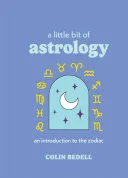
Colin Bedell's 2019 book, A Little Bit of Astrology, simplifies celestial principles for self-understanding.
Published in 2019, A Little Bit of Astrology by Colin Bedell acts as a clear introduction to astrological concepts. The book frames astrology not as a predictive tool, but as a method for personal insight. It walks readers through the primary elements of a birth chart, discussing how planetary placements at birth are thought to shape personality and life experiences. The author focuses on using astrological knowledge for individual development. This guide is designed for those new to astrology. People who have seen astrological ideas in popular culture but do not have a solid grasp will find a straightforward starting point here. It is useful for anyone curious about the zodiac, the twelve sun signs, and the interpretation of celestial movements. The clear writing and simple structure also help readers who want a fast review of basic astrological ideas without technical complexity. It offers a gentle entry for newcomers.
Astrology, which interprets the connection between celestial bodies and earthly events, has ancient origins. It significantly shaped Hellenistic Egypt and the Islamic Golden Age. A modern revival of interest, especially after the 20th century's New Age movements, led to many accessible guides. Bedell's 2019 work appears in this recent period, where online platforms and popular media have increased astrological discussion. It continues a long history of making complex esoteric systems understandable to a wider audience, similar to authors like Dane Rudhyar.
Astrology, as a practice connecting celestial bodies to earthly events, has roots stretching back millennia, notably influencing Hellenistic Egypt and the Islamic Golden Age. The modern resurgence of interest, particularly in the wake of the 20th century's New Age movements, saw a proliferation of accessible guides. Bedell's 2019 work emerges within this contemporary landscape, where digital platforms and popular media have amplified astrological discourse. It participates in a long tradition of making complex esoteric systems digestible for a wider audience, following in the footsteps of authors like Dane Rudhyar.
💡 Why Read This Book?
• Gain a foundational understanding of the twelve zodiac signs, moving beyond superficial stereotypes to grasp their core archetypes as presented in the book's sign descriptions. • Learn how to interpret the basic components of a natal chart, including the symbolic meaning of planets and their placement within the zodiac, as explained in the 'Key Concepts' section. • Discover a practical framework for self-reflection by exploring how astrological principles, such as the influence of sun signs, can offer symbolic insights into personal tendencies and life patterns.
⭐ Reader Reviews
Honest opinions from readers who have explored this book.
❓ Frequently Asked Questions
What is the primary goal of "A Little Bit of Astrology"?
The book aims to provide an accessible and straightforward introduction to the practice of astrology, demystifying its core concepts for beginners and offering a framework for self-understanding.
Does the book explain how to cast a birth chart?
While "A Little Bit of Astrology" explains the components of a birth chart, such as signs and planets, it does not provide detailed instructions on the technical process of casting one.
What historical period does the book reference regarding astrology?
The book touches upon the ancient origins of astrology and its resurgence in modern times, placing its own content within the context of contemporary astrological interest.
Are the twelve sun signs the only focus of the book?
No, the book covers the twelve sun signs but also introduces other fundamental elements like planets and their symbolic meanings within the astrological system.
Is "A Little Bit of Astrology" suitable for experienced astrologers?
This book is primarily designed for beginners. Experienced practitioners might find its coverage of complex astrological techniques too brief, though it serves as a good refresher on basic principles.
What is the publication year of Colin Bedell's book?
Colin Bedell's "A Little Bit of Astrology" was first published on January 15, 2019.
🔮 Key Themes & Symbolism
The Twelve Sun Signs
The book systematically explores the archetypal energies of the twelve zodiac signs, from the pioneering spirit of Aries to the compassionate nature of Pisces. Each sign is presented with its key characteristics, ruling planet, and elemental association. This section is crucial for understanding the foundational building blocks of personality as depicted in astrological theory. Bedell aims to move beyond simplistic sun-sign horoscopes to offer a more nuanced appreciation of each sign's role within the greater cosmic order.
Planets as Archetypal Forces
Beyond the signs, "A Little Bit of Astrology" introduces the planets as dynamic forces within the astrological framework. It explains that planets like Mars, Venus, and Mercury are not mere celestial bodies but represent specific psychological drives, desires, and modes of communication. Understanding the planets' symbolic language is key to interpreting how different energies interact within an individual's natal chart, providing a deeper layer of insight than the zodiac alone.
The Natal Chart as a Map
The work frames the natal chart as a symbolic blueprint of an individual's life potential and challenges. By examining the positions of the Sun, Moon, and planets at the moment of birth within the twelve zodiac signs and houses, an astrologer can construct a unique map. This concept underscores astrology's utility as a tool for self-discovery and personal development, suggesting that celestial patterns offer guidance and insight into one's path.
Astrology's Practical Application
Bedell emphasizes that astrology is more than theoretical knowledge; it is a practical art. The book suggests that understanding astrological principles can empower individuals to make more informed choices, navigate relationships, and recognize their innate strengths and weaknesses. This focus on tangible benefits aims to make astrology relevant to everyday life, positioning it as a guide for personal growth and self-awareness.
💬 Memorable Quotes
Direct passages from the work, attributed to the author.
“The zodiac is a circle of twelve signs that influence your personality.”
— This statement captures the book's core premise: that the zodiacal divisions are not arbitrary but possess a tangible, if symbolic, effect on individual character and disposition.
“Each planet represents a different facet of human experience.”
— This highlights the symbolic nature of planets in astrology, portraying them as archetypes that govern distinct psychological functions, drives, and areas of life.
“Your sun sign is just one piece of your astrological puzzle.”
— This interpretation suggests that while the sun sign is important, a complete astrological profile requires considering other celestial placements like the Moon and Ascendant for a fuller picture.
“The movements of stars and planets can divine the future.”
— This concept, present in the original blurb, refers to the divinatory aspect of astrology, where celestial patterns are interpreted to gain insight into potential future events or trends.
💡 Key Ideas
Editorial paraphrase of the work's core concepts — not direct quotes.
Astrology can help you understand yourself and others better.
This paraphrase points to the practical application of astrological knowledge, framing it as a tool for enhanced self-awareness and improved interpersonal relationships.
🌙 Esoteric Significance
Tradition
This work fits within the broad Hermetic and Neoplatonic lineage that views the cosmos as a meaningful, interconnected system reflecting divine order. While not explicitly Kabbalistic or Gnostic, it draws from the Hermetic principle of 'As Above, So Below,' suggesting a correspondence between celestial patterns and human experience. It departs from strictly deterministic ancient traditions by emphasizing psychological interpretation and personal growth, aligning with modern Western esoteric trends that prioritize individual consciousness.
Symbolism
The primary symbols are the twelve zodiacal archetypes, each representing distinct energies and stages of development. Planets, such as the Sun (ego, vitality) and Moon (emotions, subconscious), function as potent symbols of core psychological drives. The natal chart itself serves as a central symbol, a unique map or mandala representing the soul's potential and the energetic landscape at the moment of incarnation.
Modern Relevance
Contemporary thinkers and practitioners in psychological astrology, often influenced by figures like Carl Jung, continue to explore the archetypal language of the zodiac and planets. Online astrological communities, popular culture's engagement with horoscopes, and self-help methodologies that incorporate symbolic frameworks all demonstrate the ongoing relevance of the core concepts Bedell introduces. It informs a generation seeking meaning through symbolic systems.
👥 Who Should Read This Book
• Beginners curious about the basic structure of astrology, seeking to understand zodiac signs and planetary symbolism without advanced technicalities. • Individuals interested in self-discovery tools, looking for a framework to explore personality traits and life patterns through a symbolic lens. • Readers exploring comparative spirituality and esoteric traditions, wanting a straightforward introduction to Western astrological concepts.
📜 Historical Context
Colin Bedell's "A Little Bit of Astrology" (2019) emerges within a contemporary milieu where astrological interest has seen a significant resurgence, particularly since the mid-20th century's New Age wave. This period saw a departure from the more rigid, deterministic astrology prevalent in earlier eras, such as that found in the works of Ptolemy in the 2nd century CE, towards psychological and humanistic interpretations. Bedell's accessible approach aligns with a broader trend of democratizing esoteric knowledge, making complex systems digestible for a mass audience via books and online platforms. Unlike earlier astrological texts that might have been aimed at a scholarly or initiated few, this work seeks to engage a general readership. Its publication occurs in an era where astrology coexists with, and sometimes competes with, other self-help and spiritual modalities, without significant documented censorship or a specific scholarly reception event impacting its immediate release.
📔 Journal Prompts
The symbolic meaning of your Sun sign archetype.
How the influence of Mars manifests in your daily actions.
Reflecting on the core characteristics of the Leo archetype.
Identifying personal tendencies related to the Gemini archetype.
The role of the Moon in understanding emotional responses.
🗂️ Glossary
Zodiac
The twelve-part division of the ecliptic, the Sun's apparent path through the sky, each section associated with specific symbolic meanings and archetypes.
Sun Sign
The zodiac sign occupied by the Sun at the time of a person's birth, often considered a primary indicator of core personality traits and ego identity.
Planet
In astrology, celestial bodies (Sun, Moon, Mercury, Venus, Mars, Jupiter, Saturn, Uranus, Neptune, Pluto) that are seen as representing distinct psychological energies or archetypes.
Natal Chart
A circular diagram representing the positions of the Sun, Moon, planets, and astrological houses at a specific moment in time and location, typically a person's birth.
House
One of the twelve divisions of the celestial sphere, used in astrology to represent different areas of life experience, such as career, relationships, and home.
Archetype
A universal, inherited pattern of thought or imagery derived from the collective unconscious, often represented by figures or symbols in mythology and astrology.
Ascendant
The zodiac sign that was rising on the eastern horizon at the exact time and place of birth; it represents the outward personality and physical appearance.