The Rosicrucian Enlightenment
 74
74

The Rosicrucian Enlightenment
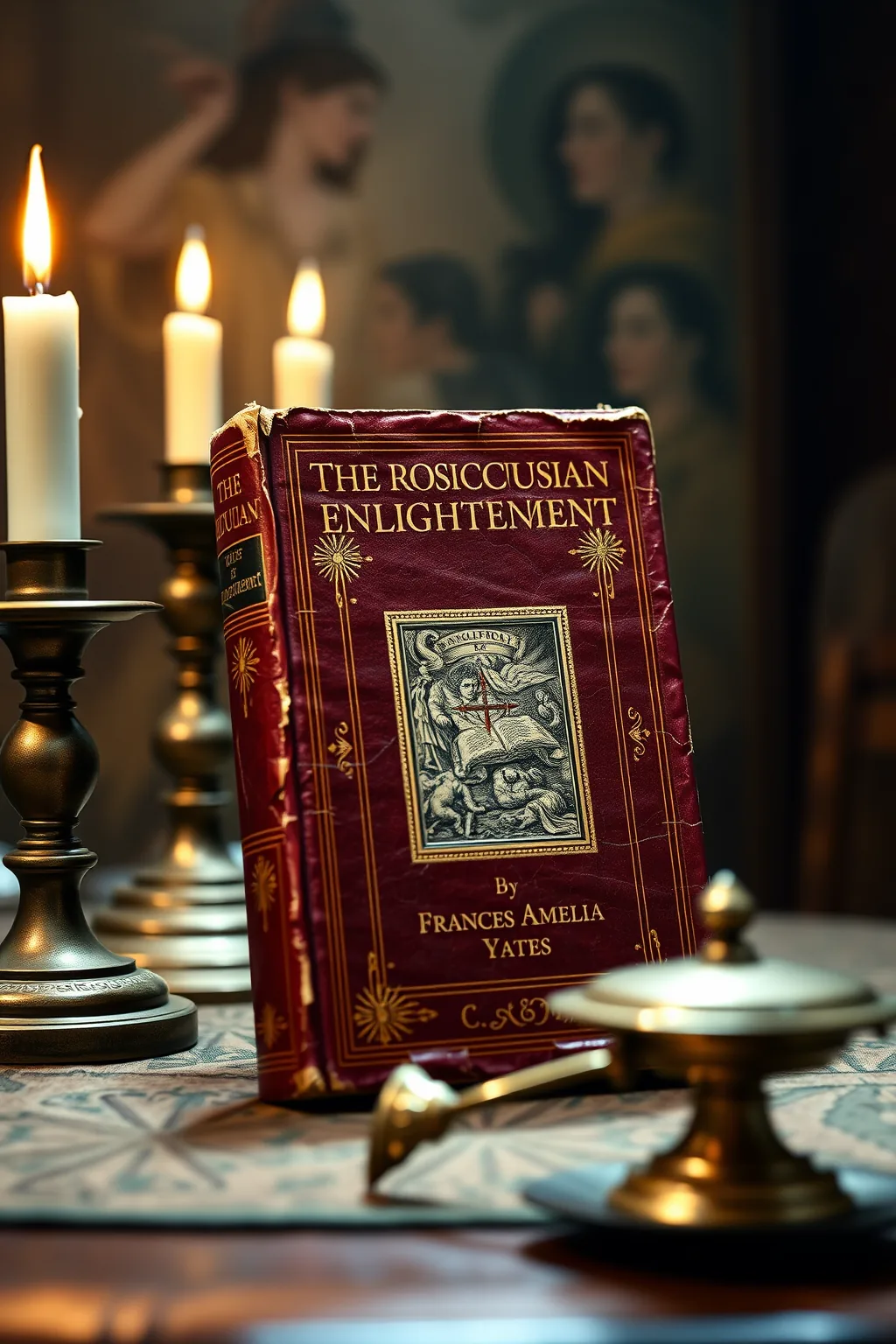
Frances Yates’s "The Rosicrucian Enlightenment" remains a cornerstone for understanding the intellectual ferment of the early 17th century, particularly the surprising emergence of the Rosicrucian manifestos. Yates masterfully connects the dots between the Bohemian exile of Frederick V and Elizabeth Stuart, the artistic and intellectual circles at their court, and the dissemination of radical reformist ideas. Her strength lies in demonstrating how a seemingly obscure set of pamphlets could ignite widespread speculation and influence figures across Europe. A particular strength is her deep dive into the role of German universities and the concept of a "Rosicrucian Enlightenment" as a precursor to the later Enlightenment. If there's a limitation, it's that the sheer density of her scholarship can make the text challenging for casual readers; the focus is squarely on historical causality and intellectual lineage rather than lived esoteric experience.
The book’s argument that the Rosicrucian impulse was a significant, albeit often misunderstood, force in the development of European thought is compelling and well-supported. It is a vital work for anyone serious about the history of ideas.
📝 Description
74
Frances Yates's 1972 book connects the early 17th century Rosicrucian manifestos to a broader intellectual shift in Europe.
Frances Yates's "The Rosicrucian Enlightenment" investigates the intellectual currents surrounding the Rosicrucian manifestos that appeared in the early 17th century. This is not a guide to Rosicrucian practices, but a scholarly study of how these ideas originated and affected Western esotericism. Yates follows the impact of figures like Giordano Bruno and the Bohemian court of Frederick V, showing how their concepts spread through European thought.
Yates situates the Rosicrucian movement within the turbulent intellectual and political climate of the late 16th and early 17th centuries. The manifestos' publication coincided with changes in cosmology, the growth of empirical science, and religious conflict. The book examines how these conditions fostered the reception of Rosicrucian ideals, which promised a reformed world through secret knowledge and spiritual renewal. The "Rosicrucian Enlightenment" is presented not as a societal change but as a specific intellectual movement. Yates emphasizes "Christian Cabala," the blending of Kabbalistic mysticism with Christian thought, and the roles of John Dee and Tycho Brahe. The work also details the influence of the manifestos on Robert Fludd and Michael Maier, who worked to realize Rosicrucian goals.
This book places the Rosicrucian movement within the context of Renaissance Hermeticism and the broader history of Western esotericism. It examines the intellectual milieu that produced and received the Rosicrucian manifestos, linking them to earlier traditions like Christian Cabala and the magical philosophy of figures such as John Dee. Yates's work analyzes how these esoteric currents intersected with scientific, political, and religious developments of the early 17th century, influencing thinkers and contributing to a specific intellectual phenomenon often termed the "Rosicrucian Enlightenment."
💡 Why Read This Book?
• Gain a precise understanding of the 1609-1616 Rosicrucian manifestos and their specific historical moment, moving beyond generalized notions of secret societies. • Explore the connections between the Bohemian court of Frederick V and Elizabeth Stuart and the dissemination of esoteric ideas across Europe in the early 17th century. • Grasp the concept of "Christian Cabala" as a significant intellectual current that informed early Rosicrucian thought and its influence on figures like Robert Fludd.
⭐ Reader Reviews
Honest opinions from readers who have explored this book.
❓ Frequently Asked Questions
When were the main Rosicrucian manifestos published?
The key Rosicrucian manifestos, which Frances Yates analyzes, were published between 1609 and 1616. These include the "Fama Fraternitatis," "Confessio Fraternitatis," and the "Chymical Wedding of Christian Rosencreutz."
Who was Frances Yates and what is she known for?
Frances Yates (1899-1981) was a highly influential British scholar of Renaissance intellectual history. She is renowned for her work on the influence of Renaissance magic, Hermeticism, and the Kabbalah on the development of modern science and philosophy.
What is the 'Rosicrucian Enlightenment' according to Yates?
Yates uses 'Rosicrucian Enlightenment' to describe the intellectual and cultural impact of the Rosicrucian manifestos in the early 17th century, suggesting it was a precursor to the later Age of Enlightenment, characterized by a desire for spiritual and scientific reform.
How did the Rosicrucian movement influence scientific thought?
Yates argues the Rosicrucian movement fostered an environment where ideas from Hermeticism, alchemy, and the Kabbalah were integrated with nascent scientific inquiry, influencing figures who sought a unified understanding of the cosmos.
What role did Giordano Bruno play in the Rosicrucian context?
While not a Rosicrucian himself, Giordano Bruno's execution in 1600 and his philosophical ideas, particularly his cosmology and advocacy for reform, created an intellectual climate that influenced the reception and interpretation of the Rosicrucian manifestos that appeared shortly after.
Is 'The Rosicrucian Enlightenment' a guide to practicing Rosicrucianism?
No, "The Rosicrucian Enlightenment" is a scholarly historical analysis of the origins and impact of the Rosicrucian manifestos and movement, not a practical manual for Rosicrucian rituals or philosophy.
🔮 Key Themes & Symbolism
The Rosicrucian Manifestos
Yates meticulously analyzes the foundational texts of the Rosicrucian movement: the "Fama Fraternitatis" (1614), "Confessio Fraternitatis" (1615), and "The Chymical Wedding of Christian Rosencreutz" (1616). She situates their publication within the specific intellectual milieu of the early 17th century, exploring how these seemingly disparate documents, advocating for spiritual renewal and reform, captured the imagination of European intellectuals and contributed to a burgeoning esoteric discourse. The work treats them not as mystical guides but as historical artifacts of profound cultural impact.
Christian Cabala and Hermeticism
A central focus is the integration of Jewish Kabbalah with Christian theology, a practice known as Christian Cabala, and the influence of Hermetic philosophy. Yates demonstrates how these traditions, particularly as revived during the Renaissance, provided a framework for understanding the divine order and the potential for human spiritual advancement. This synthesis offered a complex, symbolic language that resonated with the Rosicrucian quest for hidden wisdom and a reformed understanding of the universe.
The Bohemian Court
The book highlights the crucial role of the court of Frederick V, Elector Palatine, and his wife Elizabeth Stuart, daughter of King James I of England, in the dissemination of Rosicrucian ideas. Their exile to the Netherlands after the Battle of White Mountain in 1620 created a diasporic intellectual hub where discussions and interpretations of the Rosicrucian manifestos circulated. This court became a focal point for figures interested in esoteric philosophy and political reform.
Reformist Impulse
Yates argues that the Rosicrucian phenomenon represented a significant reformist impulse within European society and religion. It proposed a renewal of knowledge, a more spiritualized understanding of nature, and a critique of established scholastic and religious dogmas. This desire for a 'new' or 'improved' world, drawing on ancient wisdom and alchemical traditions, positioned the Rosicrucian movement as a precursor to later Enlightenment ideals, albeit through a distinctly esoteric lens.
💬 Memorable Quotes
Direct passages from the work, attributed to the author.
“The influence of Giordano Bruno's philosophy was pervasive in the intellectual climate preceding the Rosicrucian manifestos.”
— This interpretation emphasizes the intellectual lineage Yates traces, suggesting that Bruno's radical ideas about the cosmos and reform created fertile ground for the reception of the Rosicrucian concepts that emerged shortly after his death.
“The "Chymical Wedding" is a symbolic allegory, not a literal account of an event.”
— This interpretation clarifies Yates's scholarly approach to the Rosicrucian texts, understanding them as allegorical and symbolic works intended to convey deeper philosophical and spiritual truths rather than historical narratives.
💡 Key Ideas
Editorial paraphrase of the work's core concepts — not direct quotes.
The "Rosicrucian Enlightenment" has been understood as a movement which sought a reformed Christianity, a reformed science, and a reformed society.
This paraphrased concept highlights Yates's core argument: the Rosicrucian movement was not merely about arcane secrets but represented a comprehensive desire for renewal across religious, scientific, and social spheres in early modern Europe.
John Dee’s intellectual pursuits and his engagement with angelic communication formed part of the esoteric landscape that informed Rosicrucian thought.
This paraphrased concept points to the broader context of esoteric practices and beliefs, like John Dee's scrying and angelic magic, that contributed to the intellectual atmosphere from which the Rosicrucian movement sprang.
Robert Fludd was a key figure in popularizing and elaborating upon Rosicrucian ideas in the early 17th century.
This paraphrased concept underscores the importance of specific individuals like Robert Fludd in disseminating and developing the concepts introduced by the Rosicrucian manifestos, thereby amplifying their impact on European thought.
🌙 Esoteric Significance
Tradition
This work is central to the study of Western Esotericism, specifically within the Hermetic, Neoplatonic, and Alchemical traditions. Yates demonstrates how the Rosicrucian movement acted as a crucial bridge, synthesizing Renaissance Hermeticism and Kabbalistic thought with a reformist Christian agenda. It represents a departure from purely philosophical Hermeticism by embedding its ideals within a more overtly millenarian and socially reconstructive framework, influencing subsequent esoteric orders and thinkers seeking a unified spiritual and intellectual worldview.
Symbolism
Key symbols explored include the "Chymical Wedding," an elaborate allegorical narrative representing spiritual transformation and the union of opposites, often interpreted through alchemical and mystical lenses. The Rose and Cross symbol itself, representing the hidden spiritual heart of matter and the divine union, is fundamental. Yates also touches upon the symbolism inherent in the "Universal Reformation" proposed by the manifestos, which envisioned a world revitalized by secret, divine knowledge, reflecting an alchemical aspiration for perfection.
Modern Relevance
Contemporary esoteric practitioners and scholars of occultism continue to draw on Yates's foundational research. Her analysis of the Rosicrucian impulse provides context for modern Hermetic and Alchemical revivals, influencing groups that seek to understand the historical roots of their traditions. Thinkers exploring the relationship between magic, science, and religion in the early modern period also rely on her work, and her insights into the impact of symbolic language remain relevant for contemporary interpretations of esoteric texts and practices.
👥 Who Should Read This Book
• Students of Renaissance and Early Modern intellectual history seeking to understand the interplay of religion, science, and magic. • Scholars of Western Esotericism interested in the origins and impact of the Rosicrucian movement and its foundational manifestos. • Readers fascinated by the historical development of secret societies and their philosophical underpinnings during a period of significant European change.
📜 Historical Context
Frances Yates's "The Rosicrucian Enlightenment" emerged in 1986, revisiting a period of intense intellectual and religious upheaval in early 17th-century Europe. The work investigates the impact of the Rosicrucian manifestos, published between 1609 and 1616, a time marked by the late Renaissance and the burgeoning Scientific Revolution. Yates situates these pamphlets within a Europe grappling with the aftermath of the Reformation and the anxieties leading up to the Thirty Years' War (1618-1648). She contrasts the Rosicrucian ideal of esoteric reform with the more empirical, mechanical philosophy that would later dominate, citing figures like Francis Bacon as representing a different path. Yates's scholarship was groundbreaking in demonstrating the profound, albeit often misunderstood, influence of Hermeticism, Christian Cabala, and alchemical traditions on figures associated with the Rosicrucian movement, such as Robert Fludd and Michael Maier. The reception of the manifestos was complex, sparking both fascination and suspicion across the continent, influencing intellectual circles from Germany to England.
📔 Journal Prompts
The specific intellectual milieu surrounding the Rosicrucian manifestos.
The concept of "Christian Cabala" as a synthesizing force.
The role of the Bohemian court in disseminating esoteric ideas.
Robert Fludd's interpretation and expansion of Rosicrucian themes.
The "Chymical Wedding of Christian Rosencreutz" as an allegorical text.
🗂️ Glossary
Rosicrucian Manifestos
A series of influential pamphlets published anonymously in the early 17th century (circa 1609-1616) that announced the existence of a secret society, the Brotherhood of the Rosy Cross, dedicated to spiritual and scientific reform.
Christian Cabala
A tradition that sought to integrate Jewish Kabbalistic mysticism with Christian theology, interpreting Kabbalistic concepts and symbolism through a Christian lens to find hidden meanings in scripture and the natural world.
Hermeticism
A philosophical and religious tradition based on writings attributed to Hermes Trismegistus, emphasizing divine knowledge, the interconnectedness of the cosmos, and the potential for human spiritual ascent through understanding hidden principles.
Alchemy
An ancient practice and proto-scientific discipline focused on the transformation of matter, particularly the transmutation of base metals into gold, but also encompassing spiritual purification and the search for universal remedies.
Fama Fraternitatis
The first major Rosicrucian manifesto, published in 1614, which announced the supposed history and aims of the Brotherhood of the Rosy Cross and called for a universal reformation.
Chymical Wedding of Christian Rosencreutz
A complex allegorical narrative published in 1616, presented as the spiritual autobiography of the Rosicrucian founder, rich in alchemical and mystical symbolism, detailing a symbolic marriage ceremony.
Giordano Bruno
An Italian philosopher and cosmologist (1548-1600) whose radical ideas about an infinite universe and his synthesis of Hermeticism and other esoteric traditions significantly influenced the intellectual climate preceding the Rosicrucian movement.
🔮 Readers Also Liked
Browse all →![The ancient fragments; containing what remains of the writings of Sanchoniatho, Berossus, Abydenus, Megasthenes, and Manetho. Also the Hermetic Creed, the Old Chronicle, the Laterculus of Eratosthenes, the Tyrian Annals, the Oracles of Zoroaster […]](/img/thumb/the-ancient-fragments-containing-what-remains-of-the-writings-of-sanchoniatho-berossus-abydenus-megasthenes-and-manetho-also-the-hermetic-creed-the-old-chronicle-the-laterculus-of-eratosthenes-the-tyr.webp)






More by Frances Amelia Yates
All books →





More Free Alchemy & Hermeticism Books
View all →