Roman de la Rose
 78
78

Roman de la Rose
The Roman de la Rose presents a fascinating duality, with Lorris's graceful, if somewhat conventional, amatory quest giving way to Meun's sprawling, often acerbic, philosophical treatise. The strength lies in this very contrast, offering a unique window into shifting medieval sensibilities. Meun's dissection of societal hypocrisy and human foibles, particularly evident in his lengthy discourses on love and marriage, remains remarkably sharp, though his extended diatribes can feel ponderous today. A passage where Reason attempts to dissuade the narrator from his pursuit, only to be supplanted by Venus's more primal influence, perfectly encapsulates the poem's internal conflict. While Lorris’s portion is a clear representation of courtly ideals, Meun’s continuation challenges them with a raw, intellectual force that is both brilliant and unsettling. The poem is an essential, albeit challenging, artifact of late medieval thought.
📝 Description
78
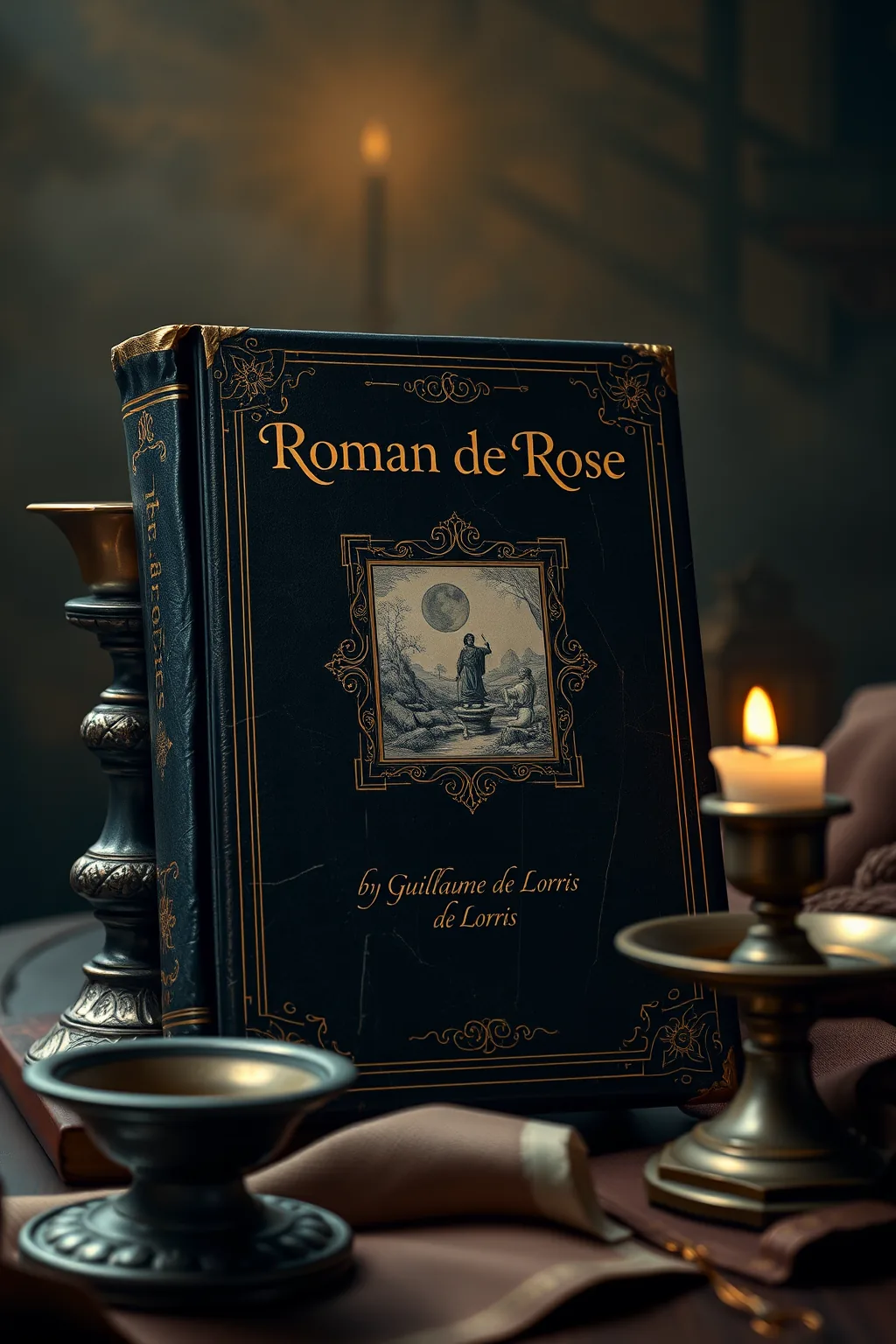
Guillaume de Lorris began the Roman de la Rose around 1230, establishing a foundational allegorical quest.
This allegorical poem exists in two distinct parts, reflecting a significant shift in its composition and purpose. Guillaume de Lorris's initial segment, written around 1230, presents an idealized courtly love narrative. It details the narrator's pursuit of a rose, a symbol for his beloved, within an enchanted garden populated by allegorical figures of virtues and vices. This section adheres closely to medieval romance conventions.
Jean de Meun continued the work around 1275, altering its tone and content significantly. His contribution introduces a more satirical, philosophical, and critical perspective on society and human nature. This continuation sparked considerable debate and influenced later writers like Boccaccio and Christine de Pizan, who notably defended women against Jean's more pointed remarks. The poem's creation thus spans a crucial period in French literary history, marking a transition in poetic and philosophical expression.
While not strictly a grimoire or occult manual, the Roman de la Rose engages with esoteric traditions through its elaborate allegory. The enchanted garden functions as a microcosm, mirroring the human psyche and the cosmos. Personified virtues and vices act as allegorical guides or obstacles, a common feature in medieval spiritual and philosophical writings. The quest for the Rose can be interpreted through Neoplatonic lenses of ascent and divine love, while Jean de Meun's later, more critical sections engage with alchemical and philosophical ideas concerning nature and human corruption, placing it within a broader intellectual current that touched upon hidden knowledge and symbolic interpretation.
💡 Why Read This Book?
• Understand the evolution of courtly love by examining Guillaume de Lorris's idealized depiction of the quest for the Rose, contrasting it with Jean de Meun's later, more cynical continuation. • Grasp the allegorical method prevalent in the 13th century through personified characters like Danger and Reason, recognizing their function in mapping psychological and social landscapes. • Engage with early critiques of societal norms and natural philosophy as presented in Jean de Meun's section, noting its impact on subsequent literary and intellectual history.
⭐ Reader Reviews
Honest opinions from readers who have explored this book.
❓ Frequently Asked Questions
What is the primary allegorical symbol in the Roman de la Rose?
The primary symbol is the Rose, representing the beloved or the object of desire. Its pursuit within the allegorical garden signifies the complex journey of love, encompassing both spiritual and physical aspects, and the trials one endures to attain it.
Who were the main authors of the Roman de la Rose?
The poem was begun by Guillaume de Lorris around 1230 and later continued by Jean de Meun approximately fifty years later, around 1275. Their distinct styles and philosophical approaches create a remarkable contrast within the work.
What is the significance of the allegorical garden?
The garden serves as a meticulously crafted microcosm where abstract concepts like Love, Reason, Danger, and Shame are personified. It represents the idealized realm of courtly love and, more broadly, the human psyche and social interactions.
Was the Roman de la Rose controversial in its time?
Yes, particularly Jean de Meun's continuation, which contained sharp social satire and controversial views on women and marriage. This led to significant debate and even condemnation by some, notably Christine de Pizan centuries later.
What literary tradition does the Roman de la Rose belong to?
It is a seminal work of Old French literature and a prime example of allegorical poetry. It is deeply rooted in the tradition of courtly love but also expands into philosophical and satirical discourse.
When was the first English translation of the Roman de la Rose published?
The first known English translation was by William Caxton, published around 1483. The 1920 publication mentioned refers to a specific modern edition or translation, not the original composition dates.
🔮 Key Themes & Symbolism
Allegory of Courtly Love
The poem masterfully employs allegory to dissect the intricate rituals and psychological states associated with courtly love. Guillaume de Lorris constructs an enchanted garden where figures like 'Bel Acueil' (Fair Welcome) and 'Damsel Oiseuse' (Idle Maiden) personify aspects of the lover's pursuit. The narrator's quest for the Rose becomes a symbolic journey through the challenges and virtues required to win the favor of a lady, reflecting the idealized, yet often demanding, code of chivalric romance prevalent in the 13th century.
Satire and Social Critique
Jean de Meun's continuation dramatically shifts the focus towards biting satire and philosophical inquiry. He uses the allegorical framework to critique established institutions, including the Church and marriage, and to question human motivations. His discourse on natural philosophy and his often controversial views on women reveal a more cynical and empirically-minded perspective, contrasting sharply with Lorris's romantic idealism and foreshadowing later humanist critiques.
Symbolism of the Garden and the Rose
The walled garden is a central symbol, representing an enclosed, idealized space where the rules of courtly love are enacted. It is a place of beauty and artifice, protected by personified dangers like 'Danger' and 'Fear.' The Rose itself is the ultimate prize, complex in its meaning—representing the beloved, sexual union, spiritual attainment, or even the elusive nature of desire. The process of reaching and plucking the Rose involves overcoming numerous symbolic obstacles, mapping the lover's internal and external struggles.
Personification of Abstract Concepts
A core technique is the personification of abstract qualities and emotions. Figures such as Reason, Love (personified as a god), Venus, Hope, and Jealousy populate the narrative, acting as characters who influence the narrator's actions and decisions. This method allows for a detailed exploration of the internal conflicts and external pressures faced by an individual, particularly in the context of romantic pursuit and societal expectations.
💬 Memorable Quotes
Direct passages from the work, attributed to the author.
“For Love commands that I should go and seek the Rose...”
— This highlights the divine or imperative nature of love within the courtly tradition, presenting the pursuit of the beloved (the Rose) not merely as a choice but as a duty dictated by the god of Love.
“Reason came to me and said: 'Friend, do not be foolish.'”
— This represents the voice of logic and caution attempting to temper the narrator's passionate, often irrational, pursuit of the Rose, showcasing the internal conflict between desire and prudence.
“Nature herself, who governs all things...”
— This reflects Jean de Meun's philosophical inclination towards natural law and empirical observation, invoking Nature as a guiding principle that often overrides human conventions and moral codes.
“It seemed to me a strange thing that a man should be blamed for loving.”
— This simple statement, often attributed to the narrator's perspective, questions societal judgment surrounding love and desire, hinting at a more naturalistic or less morally constrained view.
💡 Key Ideas
Editorial paraphrase of the work's core concepts — not direct quotes.
The garden was enclosed with a high wall...
This line establishes the symbolic boundary of the courtly love world, an idealized space separate from ordinary reality, protected and accessible only through specific means and trials.
🌙 Esoteric Significance
Tradition
While not explicitly part of a formal esoteric school like Hermeticism or Kabbalah, the Roman de la Rose functions as a significant text within the broader Western esoteric tradition due to its rich allegorical structure and exploration of the psyche. Its symbolic language and archetypal figures resonate with Gnostic and Neoplatonic ideas concerning the soul's journey, the nature of desire, and the illusory nature of the material world. The garden can be seen as a symbolic microcosm, akin to alchemical or mystical landscapes, where inner transformation is pursued.
Symbolism
The central symbol is the Rose, often interpreted esoterically as representing divine love, gnosis, or the perfected soul. The walled Garden symbolizes the initiated space, the inner self, or the alchemical vessel, guarded by allegorical figures representing obstacles to spiritual attainment. 'Bel Acueil' (Fair Welcome) signifies the initial opening or receptivity needed for the spiritual path, while figures like 'Danger' and 'Fear' represent the psychic barriers that must be overcome. The fountain, often a source of life and renewal, also carries symbolic weight related to purity and spiritual essence.
Modern Relevance
Contemporary esoteric thinkers and practitioners, particularly those interested in Jungian psychology, archetypal symbolism, and the history of consciousness, find the Roman de la Rose highly relevant. Its detailed exploration of the lover's internal landscape and the personification of psychological forces align with modern depth psychology. Additionally, artists and writers exploring themes of desire, initiation, and the construction of reality through narrative continue to draw inspiration from its complex allegorical framework and symbolic richness.
👥 Who Should Read This Book
• Students of medieval literature and culture seeking a foundational text that explores courtly love, allegory, and early French poetry. • Scholars of comparative literature and philosophy interested in the evolution of ideas concerning love, gender, social critique, and natural philosophy from the 13th century. • Individuals exploring the history of Western symbolism and esoteric thought, particularly those drawn to archetypal imagery and allegorical journeys of the soul.
📜 Historical Context
The Roman de la Rose emerged during a vibrant period of French vernacular literature, bridging the High and Late Middle Ages. Guillaume de Lorris penned the initial 4,000 lines around 1230, cementing the tradition of courtly love allegory with its idealized garden and symbolic quest. Approximately fifty years later, Jean de Meun added over 17,000 lines, transforming the poem into a sprawling philosophical and satirical work. This continuation engaged with contemporary scientific thought, classical philosophy, and social commentary, often challenging established norms. Jean's more naturalistic and critical perspective stood in stark contrast to the earlier, more romanticized vision, sparking considerable debate. The poem's influence was profound; it was widely read, copied, and translated, impacting later writers like Geoffrey Chaucer and Christine de Pizan, who famously defended women against Jean de Meun's more misogynistic passages in her 'Book of the City of Ladies' (c. 1405). The poem's reception highlights the intellectual ferment of the era, where literary works served as arenas for exploring complex ideas about love, society, and human nature.
📔 Journal Prompts
The symbolic structure of the allegorical garden and its inhabitants.
Jean de Meun's critique of marriage and societal conventions.
The complex symbolism of the Rose.
The role and influence of personified figures like Reason and Venus.
The contrast between Guillaume de Lorris's and Jean de Meun's narrative approaches.
🗂️ Glossary
Courtly Love
An idealized concept of love prevalent in medieval literature, emphasizing chivalry, service, and devotion, often directed towards a noble lady, frequently from afar.
Allegory
A literary device where characters, events, and settings represent abstract ideas or principles, used here to explore themes of love, virtue, and vice.
Personification
The attribution of human qualities or characteristics to inanimate objects, abstract ideas, or animals, as seen with figures like Danger, Reason, and Venus.
Bel Acueil
Literally 'Fair Welcome.' In the poem, this allegorical figure represents the welcoming demeanor and accessibility of the beloved, crucial for the lover's progress.
Danger
An allegorical figure representing the perils, obstacles, and potential rejection associated with pursuing the object of desire in courtly love.
Reason
An allegorical character embodying logic, prudence, and moral guidance, often in conflict with the narrator's passionate impulses.
Venus
In the poem, the goddess Venus represents carnal love, desire, and the driving force of procreation, often depicted as a powerful, sometimes overwhelming, influence.
🔮 Readers Also Liked
Browse all →








More by Guillaume de Lorris, Jean de Meun
All books →
More Free Alchemy & Hermeticism Books
View all →