Śāntideva
The Bodhisattva vow is a Mahayana Buddhist commitment to achieve enlightenment for all beings, with various formulations appearing in early and Mahayana texts.
The Bodhisattva vow, known in Sanskrit as bodhisattva-praṇidhāna, is a central commitment in Mahayana Buddhism. It signifies a pledge to attain full enlightenment not just for oneself, but for the benefit of all sentient beings. This aspiration involves cultivating the six perfections: generosity, ethical conduct, patience, effort, concentration, and wisdom. Unlike vows that cease upon death, the Bodhisattva vow extends into future lives and is typically undertaken in a ritual setting under the guidance of a teacher. While often associated with Mahayana, the concept of making such vows can be traced to earlier Buddhist traditions.
Early Buddhist texts, such as the Buddhavaṃsa and Mahāvastu, describe Sakyamuni Buddha's past life as Sumedha, who encountered the Buddha Dīpankara and made a vow to become a Buddha. These early schools generally held that such a vow, confirmed by a living Buddha, was the sole path to becoming a bodhisattva. Mahayana sutras, including the Lalitavistarasutra and the Aṣṭasāhasrikā Prajñāpāramitā sutra, further elaborate on these vows, often presenting them in specific formulations like the "fourfold vows." These vows emphasize the bodhisattva's dedication to rescuing, liberating, comforting, and guiding all beings towards enlightenment. Later Indian Mahayana traditions formalized the taking of these vows through rituals like the "seven part worship."
Origins and Early Formulations
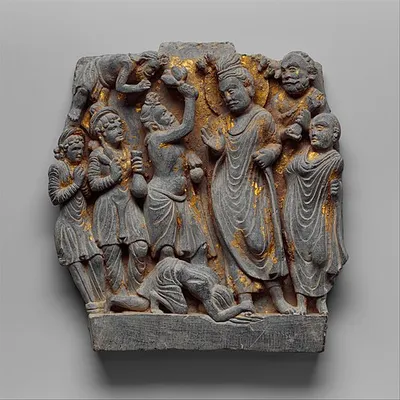
The Bodhisattva vow, a pledge to achieve enlightenment for the sake of all beings, has roots in early Buddhist traditions. Texts like the Theravada Buddhavaṃsa and Mahāvastu recount the story of Sakyamuni Buddha's past life as Sumedha, who vowed to become a Buddha after encountering the previous Buddha, Dīpankara. In early schools, it was believed that making a vow before a living Buddha and receiving a prediction was the exclusive method for becoming a bodhisattva. The Mahāvastu records vows made by Sumedha (later Sakyamuni) under past Buddhas, expressing a desire to gain insight, ensure their vows are fulfilled, and benefit all living beings by setting the wheel of Dharma in motion. These early vows already contained the essence of altruistic aspiration for Buddhahood.
Mahayana Sutras and the Fourfold Vow
Mahayana sutras significantly expanded upon the Bodhisattva vow, often presenting it in formalized structures. The Lalitavistarasutra and the Aṣṭasāhasrikā Prajñāpāramitā sutra describe the bodhisattva's commitment to placing themselves and all beings into "Suchness" (tathatā) and leading them to Nirvana. A prominent formulation is the "fourfold vow," found in various Mahayana texts such as the Ugraparipṛcchā Sūtra and the Lotus Sūtra. This vow typically entails commitments to rescue the unrescued, liberate the unliberated, comfort the uncomforted, and cause those not yet in paranirvana to attain it. Similar vows also appear in earlier texts, suggesting an evolution from descriptions of the Buddha's own activities and teachings.
Ritual and Later Developments
In later Indian Mahayana Buddhism and continuing into modern practice, the Bodhisattva vow is formally undertaken in ceremonial settings. Rituals such as the "seven part worship" (saptāṇgapūjā), which includes acts of reverence, taking refuge, confession, rejoicing, and prayers, are employed. The Avataṃsaka Sūtra presents ten vows for "enlightening beings," covering aspects like developing beings to maturity, practicing virtues, serving the Buddhas, protecting the Dharma, and comprehending reality. Notably, the ten vows of Samantabhadra, originating from the Avataṃsaka Sūtra, are influential in East Asian Buddhism and are even recommended by the philosopher Śāntideva in his Śikṣāsamuccaya, highlighting their enduring importance in the Mahayana path.
Key Ideas
- Bodhisattva vow: A commitment to achieve enlightenment for the benefit of all sentient beings.
- Six perfections: The core practices for a bodhisattva (giving, moral discipline, patience, effort, concentration, wisdom).
- Bodhicitta: The altruistic aspiration to attain Buddhahood for all.
- Fourfold vow: A common formulation of the Bodhisattva vow with four key commitments.
- Ritual practice: Ceremonial settings and practices for taking the Bodhisattva vow.
Notable Quotes
“By the merit I have formerly laid up in store, may I have insight into all things. May not my vow come to naught, but may what I vow come to pass.”
“May my store of the root of merit be great enough for all living beings. Whatever evil deed has been done by me, may I alone reap its bitter fruit.”
“So may I run my course through the world as He whose mind is rid of attachments does. May I set rolling the wheel of dharma that has not its equal, and is honoured and revered of devas and men.”
“May I in some future time become a Tathāgata, an Arhan, a perfect Buddha, proficient in knowledge and conduct, a Sugata, an unsurpassed knower of the world, a driver of tameable men, and a teacher of devas and men, as this exalted Samitāvin now is. May I become endowed with the thirty-two marks of a Great Man, and my body adorned with his eighty minor characteristics. May I have the eighteen distinctive attributes of Buddhahood, and be strong with the ten powers of a Tathāgata, and confident with the four grounds of self-confidence, as this exalted perfect Buddha Samitāvin now is. Having crossed over, may I lead others across; comforted, may I comfort others; emancipated, may I emancipate others. May I become so for the benefit and welfare of mankind, out of compassion for the world, for the good of the multitude, for the welfare and benefit of devas and men.”
“As I lay upon the ground this was the thought of my heart, if I wished it I might this day destroy within me all human passions. But why should I in disguise arrive at the knowledge of the Truth? I will attain omniscience and become a Buddha, and (save) men and devas. Why should I cross the ocean resolute but alone? I will attain omniscience, and enable men and devas to cross. By this resolution of mine, I a man of resolution, will attain omniscience, and save men and devas, cutting off the stream of transmigration, annihilating the three forms of existence, embarking in the ship of the Truth, I will carry across with me men and devas.”
Books by Śāntideva
0 free public domain books · Read online or download
