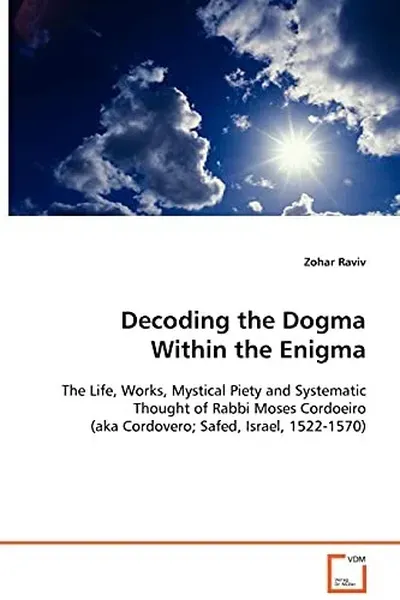
Zohar Raviv
Zohar Raviv is an author whose work focuses on the historical and textual analysis of pivotal events, particularly the Bar Kokhba Revolt.
Zohar Raviv's writings delve into the complexities of the Bar Kokhba Revolt (132–136 CE), the final major Jewish uprising against the Roman Empire. This conflict, led by Simon bar Kokhba, resulted in the establishment of an independent Jewish state that was ultimately suppressed, leading to severe depopulation and displacement in Judea. The revolt was a response to Roman policies, including Emperor Hadrian's plans for Jerusalem and potential religious prohibitions, which fueled preparations for armed resistance.
The aftermath of the revolt had profound and lasting consequences for the Jewish population. Roman reprisals were severe, involving mass casualties, enslavement, and the renaming of the province to sever its historical Jewish ties. These events also led to significant shifts within Jewish society, including a move towards rabbinic Judaism adopting a less revolutionary stance and a geographical shift of Jewish life northward. Reconstructing the history of this period is challenging due to fragmented sources, requiring analysis of rabbinic literature, Greco-Roman and Christian writings, and archaeological findings.
The Bar Kokhba Revolt: Context and Course
The Bar Kokhba Revolt, also known as the Bar Kokhba War, was the last significant Jewish rebellion against Roman rule, occurring between 132 and 136 CE. It stemmed from deep-seated resentment towards Roman governance and nationalistic aspirations that persisted after the First Jewish Revolt. Emperor Hadrian's intentions to transform Jerusalem into a Roman colony, Aelia Capitolina, and possible bans on practices like circumcision, intensified these tensions. In response, preparations for a guerrilla war were made, including the creation of extensive underground facilities. Simon bar Kokhba emerged as the leader, declared 'prince' of Israel, and his administration issued its own currency and standardized weights, signifying a move towards independent statehood. The Roman response, initially led by Tineius Rufus and later reinforced by a substantial military force under Sextus Julius Severus, was systematic and brutal. The conflict culminated in the fall of the stronghold of Betar and the death of Bar Kokhba, followed by the pursuit and subjugation of rebels hiding in desert caves.
Consequences and Historical Repercussions
The Bar Kokhba Revolt resulted in catastrophic losses for Judea's Jewish population, with ancient and contemporary accounts estimating hundreds of thousands killed, enslaved, or displaced. The Roman Empire imposed severe religious restrictions, including prohibitions on circumcision, Torah study, and Sabbath observance, though some of these were later relaxed. A significant cultural and political impact was the renaming of the province from Judaea to Syria Palaestina, an attempt to erase its Jewish historical identity, and the exclusion of Jews from Jerusalem. This period marked a turning point for Jewish society, leading to the adoption of a non-revolutionary approach by Rabbinic Judaism and a more abstract form of Jewish messianism. The center of Jewish life gradually shifted north to Galilee, while diaspora communities, particularly in Babylonia, grew in importance.
Sources and Scholarly Reconstruction
Understanding the Bar Kokhba Revolt relies on piecing together fragmented evidence from various sources, as no single comprehensive contemporary account exists, unlike the First Jewish-Roman War documented by Josephus. Scholars consult rabbinic literature, Greco-Roman and Christian writings, and archaeological findings, each presenting unique perspectives and limitations. Cassius Dio's Roman History provides a detailed, though epitomized, Roman military perspective. Eusebius, a 4th-century bishop, offers a Christian interpretation, framing the events through a theological lens but also providing unique details like the names of key figures and locations. The Historia Augusta offers a brief mention, potentially drawing from reliable earlier sources. Rabbinic literature, particularly its narrative sections (aggadah), offers insights into the Jewish experience, preserving stories and traditions that, despite their theological framing, often contain historical memory. Archaeological discoveries, especially the papyri and coins found in the Judaean Desert, have been crucial in illuminating the administration, military organization, and objectives of the rebel state.
Books by Zohar Raviv
2 free public domain books · Read online or download