M. L. Tyler
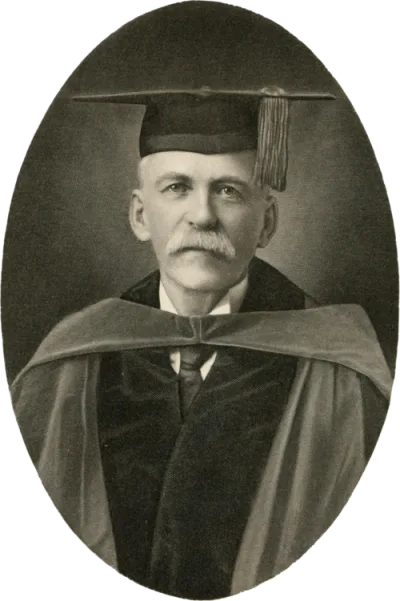
Lyon Gardiner Tyler Sr. was an educator, historian, and president of William & Mary, known for his historical research and controversial views on Lincoln.
Lyon Gardiner Tyler Sr. (1853–1935) was an American educator, politician, genealogist, and historian, and the 17th president of the College of William & Mary. The son of U.S. President John Tyler, he dedicated much of his life to historical research and the preservation of Virginia's past. Tyler served in the Virginia House of Delegates before becoming president of William & Mary in 1888, where he served for over three decades. During his tenure, he restored the college's finances, expanded its faculty and buildings, and initiated the William and Mary Quarterly. He was also a proponent of historical preservation, advocating for the copying of colonial records and supporting institutions like the Virginia Historical Society. In his later years, Tyler became known for his strong criticism of Abraham Lincoln, publishing numerous articles and pamphlets that defended the Confederacy and argued against the anti-slavery movement.
Tyler's work significantly contributed to the recognition of Jamestown and Williamsburg as historically important sites. He was a prolific author, with major works including "The Letters and Times of the Tylers" and "The Cradle of the Republic: Jamestown and the James River." Despite his contributions to education and historical preservation, his later views, particularly his defense of the Confederacy and criticism of Lincoln, led to a reevaluation of his legacy, resulting in the renaming of institutions at William & Mary that had previously honored him. He died in 1935, leaving behind a complex historical and academic footprint.
Educational Leadership and Historical Preservation
As the 17th president of the College of William & Mary from 1888 to 1919, Lyon Gardiner Tyler Sr. played a pivotal role in the institution's revival. He successfully restored its financial stability, which had been severely impacted by the Civil War and subsequent neglect. Under his leadership, the college saw significant growth in enrollment, faculty, and infrastructure, with twelve buildings renovated or constructed. Tyler also championed the college's transition to a public institution. Beyond administration, he was deeply involved in academic pursuits, chairing the history department and founding the "William and Mary Quarterly." His commitment extended to historical preservation across Virginia; he tirelessly researched and campaigned for the protection of local records, persuading the Virginia General Assembly to fund the copying of 17th-century court documents, a landmark initiative for public funding of historical preservation.
Historical Scholarship and Critical Stance
Tyler's extensive historical research and writing aimed to illuminate Virginia's past and, in some interpretations, rehabilitate his father's political legacy. He authored multiple volumes on the Tyler family history and Virginia's colonial era, including "The Letters and Times of the Tylers" and "The Cradle of the Republic: Jamestown and the James River." His work spurred recognition of the historical significance of Jamestown and Williamsburg. However, his historical philosophy, suggesting ancestry's value lay in its reflection upon descendants, now appears dated. In his later life, Tyler gained notoriety for his sharp criticism of President Abraham Lincoln. He argued that Lincoln opposed the self-determination of Confederate states and, in a pamphlet titled "A Confederate Catechism," contended that the "vindictive, intemperate anti-slavery movement" was the root cause of the nation's troubles, a view that resonated with Confederate heritage groups.
Key Ideas
- Advocacy for historical research and preservation of Virginia's colonial records.
- Belief that the anti-slavery movement, rather than slavery itself, was the primary cause of the Civil War.
- Criticism of Abraham Lincoln's role in the Civil War and his opposition to Confederate states' self-determination.
Notable Quotes
“Ancestry is only of public interest as it reflects credit upon descendants”
“Both from the standpoint of the Constitution and sound statesmanship, it was not slavery, but the vindictive, intemperate anti-slavery movement that was at the bottom of all the troubles.”