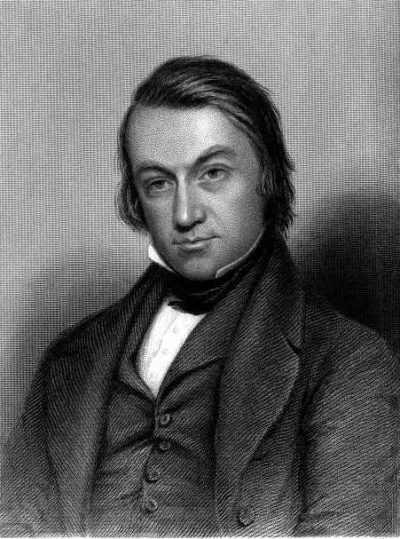
Charles Mackay
Charles Mackay was a Scottish poet and journalist known for his book on popular delusions and his extensive writings on various subjects.
Charles Mackay, born in Perth in 1814, was a prolific Scottish writer whose career spanned poetry, journalism, and authorship. He received his education in London and Brussels, and began his writing career in Belgium before returning to London. Mackay worked as a journalist for several prominent publications, including The Morning Chronicle and The Illustrated London News, eventually becoming an editor. He also traveled to North America and reported on his experiences.
Mackay's literary output was diverse, encompassing poetry collections, histories, novels, and song lyrics. He is most famously remembered for his 1841 work, "Extraordinary Popular Delusions and the Madness of Crowds." While he also explored etymology, his linguistic theories were met with skepticism by his contemporaries. Mackay's songs achieved considerable popularity, with some being set to music. He passed away in London in 1889.
Early Life and Education
Charles Mackay was born in Perth, Scotland, on March 27, 1814. His father was George Mackay, a member of the Royal Artillery, and his mother, Amelia Cargill, passed away shortly after his birth. Mackay's early education took place at the Caledonian Asylum in London. In 1828, his father sent him to a school in Brussels, where he studied languages. By 1830, he was working as a private secretary to ironmaster William Cockerill near Liège, Belgium. During this period, he began writing in French for the Courrier belge and submitting English poems to a local newspaper called The Telegraph. He also visited Paris in the summer of 1830 and spent time in Aix-la-Chapelle in 1831 before returning to London in 1832, where he initially found work teaching Italian.
Journalistic Career
Mackay established a career in journalism in London. He began as an occasional contributor to The Sun in 1834. From 1835 to 1844, he served as an assistant sub-editor for The Morning Chronicle. During a holiday in Scotland in 1839, he witnessed the Eglintoun Tournament and wrote about it for the Chronicle, also making new connections in Edinburgh. In the autumn of 1844, Mackay relocated back to Scotland to become the editor of the Glasgow Argus, a position he held until 1847. He then moved to The Illustrated London News in 1848, taking on the role of editor in 1852.
Later Life and Notable Works
In the 1850s, Charles Mackay journeyed to North America, documenting his observations in his 1859 book, "Life and Liberty in America: or Sketches of a Tour of the United States and Canada." He returned to the United States during the American Civil War as a correspondent for The Times, notably being the first to report on the Fenian conspiracy. Mackay received an LL.D. from the University of Glasgow in 1846 and was associated with the Percy Society. His literary output included "Songs and Poems" (1834), "A History of London," and "The Thames and its Tributaries" (1840). His most enduring work is "Extraordinary Popular Delusions and the Madness of Crowds" (1841), which examines historical instances of collective irrationality. He also published a historical romance, "Longbeard," and explored etymology in works like "Gaelic Etymology of the Languages of Western Europe," though his linguistic theories were considered fanciful by contemporaries. Mackay's songs, such as "Cheer Boys Cheer," achieved significant popularity. He died in London in 1889.
Key Ideas
- Analysis of historical mass hysteria and irrational behavior.
- Exploration of the etymology of languages, particularly Scottish Gaelic, though with unconventional theories.
- Observation and commentary on life and society in North America.