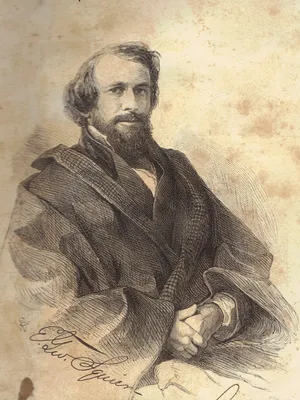
William H Stiebing
Gunnar Heinsohn explored economics, demography, genocide, and ancient chronology, challenging conventional theories.
Gunnar Heinsohn (1943–2023) was a German author, sociologist, and economist who held a professorship in social pedagogy at the University of Bremen. His academic career spanned diverse fields, including economics, where he co-developed a credit theory of money that challenged the traditional barter paradigm. He also extensively researched demography, linking population dynamics, particularly 'youth bulges,' to social unrest, war, and genocide. His work delved into the historical roots of genocide and antisemitism, proposing unique theories on Hitler's motivations and the origins of sacrifice in ancient societies. Furthermore, Heinsohn significantly revised conventional ancient chronologies, proposing a drastic re-dating of early civilizations based on his interpretation of stratigraphic evidence and a critique of biblical synchronisms. He was also a vocal critic of established historical timelines, drawing inspiration from Immanuel Velikovsky but proposing even more radical alterations. His interdisciplinary approach sought to connect economic structures, population trends, and historical events.
Economic Theories
In collaboration with Otto Steiger, Heinsohn proposed a property-based credit theory of money, diverging from the conventional view of money as a medium for barter. Their model emphasized the critical role of secure property titles, contract enforcement, and liability in creating transferable debt instruments that central banks could accept. They posited that interest is a property premium and sought to provide institutional foundations for Keynesian monetary theories. This approach, which drew from economic anthropology and questioned the 'homo oeconomicus' concept, aimed to explain differences in economic innovation and progress between ancient and modern societies. Their work was discussed in post-Keynesian circles and drew criticism from some economists.
Demographic and Genocide Studies
Heinsohn utilized demographic patterns to analyze historical phenomena, notably linking 'youth bulges'—an excess of young adult males—to increased social unrest, war, and terrorism. He theorized that such demographic imbalances naturally lead to competition and conflict, often rationalized through ideology or religion. This theory was applied to explain various historical events, including European colonialism, Fascism, and contemporary conflicts. His research also explored the historical demography of Europe, offering an interpretation of the early modern witch hunts as a pro-natalist policy by the Catholic Church to repopulate areas affected by the Black Death, an interpretation that met with mixed scholarly reception. His work on genocide and antisemitism included a generalized youth bulge theory and a novel perspective on the Holocaust, suggesting Hitler's aim was to eradicate Jewish ethics from Western civilization to remove moral constraints on conquest.
Revision of Ancient Chronology
Building upon Immanuel Velikovsky's work, Heinsohn proposed a significant revision of ancient chronologies. He argued that current timelines were established based on biblical synchronisms and the fourth-century work of Eusebius, rather than rigorous scientific investigation. Heinsohn contended that archaeologists had constructed a 'phantom' history by dating key figures and civilizations incorrectly. He interpreted stratigraphic evidence to suggest that major civilizations like Egypt and Mesopotamia emerged around 1200 BCE, rather than the commonly accepted 3200 BCE. His radical re-dating proposals, introduced in the journal Kronos, garnered support from a small group of writers and academics sympathetic to Velikovsky's ideas but faced considerable criticism from other scholars in the field of chronological revisionism.
Key Ideas
- Credit theory of money based on property rights and contract enforcement.
- Youth bulge theory linking demographic imbalances to social unrest and conflict.
- Interpretation of witch hunts as a pro-natalist policy.
- Theory of Holocaust motivation as the eradication of Jewish ethics.
- Radical revision of ancient chronologies based on stratigraphic evidence and critique of biblical synchronisms.
Books by William H Stiebing
0 free public domain books · Read online or download
