✍️ Author Biography
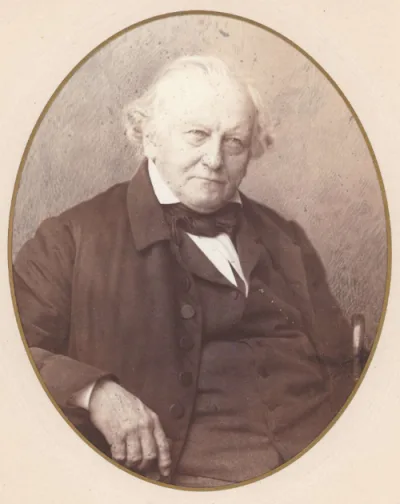
William George Benham
🌍 English
📚 2 free books
⭐ Known for: Some Chapters in the History of the Royal ...
William Gurney Benham was a former pupil of Colchester Royal Grammar School, which has a long history dating back to the 12th century.
William Gurney Benham is noted as a former student of Colchester Royal Grammar School (CRGS). The school itself boasts a significant historical lineage, with evidence suggesting its origins can be traced back to the early 12th century. It received royal charters from Henry VIII in 1539 and Elizabeth I in 1585, which established conditions for its continued operation and funding. Historically a boys' school, CRGS has evolved over centuries, undergoing substantial changes, particularly from the early 1900s onwards with reforms by Headmaster Percy Shaw Jeffrey. These reforms included expanding the curriculum, building new facilities, and establishing various school activities. The school has consistently achieved high academic results and has been recognized nationally for its performance. In recent times, it has transitioned to academy status and has also addressed issues related to student welfare and safeguarding. The school's site includes buildings named in honor of former pupils and staff, including Gurney Benham House, named after William Gurney Benham.
Historical Context of Colchester Royal Grammar School
Colchester Royal Grammar School (CRGS) traces its origins to 1128, with documentary evidence pointing to foundations in 1206 and even earlier in 1132. The school received significant royal patronage through charters granted by Henry VIII in 1539 and Elizabeth I in 1585. The charter from Henry VIII stipulated that revenues be granted to the town of Colchester for the founding of a school, while Elizabeth I's charter required a specific annual sum for the schoolmaster. These arrangements were later reconfirmed and by 1750, the revenues supported scholarships for two boys to attend Cambridge University. For much of its existence, the school was relatively small, operating largely from the headmaster's residence until the construction of the "big school" in 1852. During this period, secondary education in northern Essex was limited, and the school faced challenges due to friction between its leadership and the town's Corporation, leading to a decline in student numbers.
Reforms and Expansion in the 20th Century
The appointment of Percy Shaw Jeffrey as headmaster in 1900 marked a turning point for Colchester Royal Grammar School. Taking over a school with minimal staff and few boarders, Jeffrey implemented comprehensive reforms that revitalized the institution. He introduced day boys, established a preparatory school, and fostered a vibrant extracurricular life, including a cadet corps, orchestra, and theatrical performances. Jeffrey was also a pioneer in modern language instruction, employing foreign teachers and facilitating study abroad opportunities. His efforts led to academic success and enabled significant expansion of school facilities, including the acquisition of Mansfield House (renamed Gilberd House) and the construction of new buildings designed by Newman, Jacques and Round, which opened in 1910. The school also acquired extensive playing fields and developed amenities like tennis courts and a rifle range. A distinctive purple blazer was adopted to differentiate the school from its peers.
Academic Achievements and Modern Developments
Colchester Royal Grammar School has a consistent record of academic excellence, frequently topping national A-level league tables and achieving success at GCSE level. In 2004, it was recognized by the BBC as the top state school in the country. The school's achievements have drawn attention from national leaders, including Prime Minister Tony Blair, who invited the headmaster to discuss educational improvements. The school offers classical studies, including Latin, Greek, and Classical Civilisation at A-Level, being the first in the country to teach the latter. In recent decades, the school has undergone further development, including new art and technology facilities, and science building extensions. It became grant-maintained in the 1980s and converted to an academy in 2012. While facing challenges and inspections related to safeguarding in 2020, subsequent monitoring visits indicated significant improvements, with pupils reporting the school as a safe and enjoyable environment.