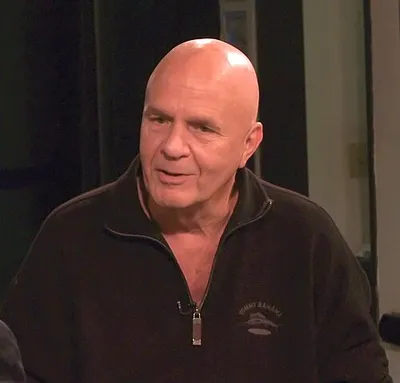
Wayne W. Dyer
Wayne W. Dyer was a self-help author and motivational speaker whose work evolved from psychological themes to spirituality.
Wayne Walter Dyer, born May 10, 1940, was an American author and motivational speaker known for his contributions to the self-help genre. Initially focusing on psychological principles like motivation and self-actualization, his work later shifted toward spirituality and the "power of intention." Dyer earned advanced degrees in psychology and counseling from Wayne State University, beginning his career as a high school counselor before transitioning to academia and private practice.
His breakthrough came with the publication of his first book, "Your Erroneous Zones" (1976), which launched a prolific career. Throughout his life, Dyer authored over 20 best-selling books, produced PBS specials, and gained widespread recognition through media appearances. He drew inspiration from various philosophical and spiritual traditions, including Abraham Maslow, Albert Ellis, Swami Muktananda, and Advaita Vedanta. Despite initial resistance to spiritual labels, his later works embraced themes of higher consciousness and spiritual solutions, reflecting a profound personal evolution. Dyer passed away on August 29, 2015.
Early Career and Literary Breakthrough
Wayne W. Dyer began his professional life in education, serving as a high school guidance counselor and later as a professor of counseling psychology at St. John's University. He also maintained a private therapy practice. His lectures, which centered on positive thinking and motivational techniques, gained significant traction with students. This academic and therapeutic background provided the foundation for his literary endeavors. A pivotal moment occurred when a literary agent encouraged him to compile his theories into a book. The result was "Your Erroneous Zones" (1976), a work that became a runaway success and established Dyer's career as a prominent self-help author and speaker. He left his teaching position to promote the book, embarking on extensive publicity tours.
Evolution of Thought: Psychology to Spirituality
Dyer's early literary output was heavily influenced by psychological thinkers such as Abraham Maslow and Albert Ellis, with his initial works exploring themes of motivation, self-actualization, and assertiveness. However, by the 1990s, his focus began to shift towards spirituality. Inspired by figures like Swami Muktananda and the New Thought movement, Dyer increasingly incorporated spiritual concepts into his teachings, notably the "power of intention." He collaborated with figures like Deepak Chopra and frequently appeared on platforms like the Oprah Winfrey Show. His later books, such as "Real Magic" and "Your Sacred Self," delved into higher consciousness and spiritual solutions to life's challenges, marking a significant evolution in his philosophical and spiritual outlook.
Philosophical Influences and Key Concepts
Dyer's work drew from a diverse range of spiritual and philosophical traditions. He cited Nisargadatta Maharaj and Swami Muktananda as significant influences, particularly referencing the Advaita Vedanta philosophy. He also acknowledged Abraham Maslow's concept of self-actualization and drew inspiration from figures like Saint Francis of Assisi and Lao Tzu. Dyer's personal philosophy emphasized kindness and love over rigid religious dogma, encouraging readers to emulate spiritual figures rather than adhere strictly to organized religion. He advocated for self-reliance and criticized the imposition of guilt, promoting a focus on present well-being and personal empowerment as pathways to a fulfilling life.
Key Ideas
- Self-actualization and personal empowerment
- The "power of intention" and manifesting desires
- Spiritual solutions to everyday problems
- Critique of guilt and external societal pressures
- Emulating spiritual figures rather than adhering to religious dogma
Notable Quotes
“My beliefs are that the truth is a truth until you organize it, and then it becomes a lie. I don't think that Jesus was teaching Christianity, Jesus was teaching kindness, love, concern, and peace. What I tell people is don't be Christian, be Christ-like. Don't be Buddhist, be Buddha-like.”
“Religion is orthodoxy, rules and historical scriptures maintained by people over long periods of time. Generally, people are raised to obey the customs and practices of that religion without question. These are customs and expectations from outside the person and do not fit my definition of spiritual.”
Books by Wayne W. Dyer
0 free public domain books · Read online or download