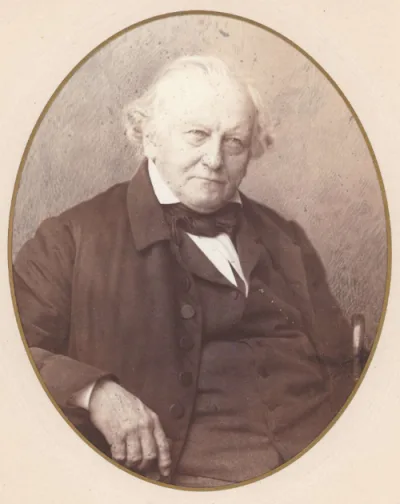
Walter Pater
Walter Pater was an English essayist and critic, known for his influential work 'The Renaissance' and his advocacy of intense inner experience.
Walter Pater, born in 1839, was an English essayist, critic, and fiction writer celebrated for his distinctive prose style. His early life included schooling in London and Canterbury, where the beauty of the cathedral left a lasting impression. His reading of John Ruskin's work fostered a lifelong interest in art and elegant writing. At Oxford, Pater pursued literary and philosophical studies, exploring German thinkers and developing a skepticism towards Christian doctrine, which led him away from a clerical career.
Pater's career was significantly shaped by his time at Oxford and his travels in Europe. He began writing essays on art and literature, contributing to various reviews. His seminal work, 'Studies in the History of the Renaissance' (later 'The Renaissance: Studies in Art and Poetry'), published in 1873, explored artists like Leonardo da Vinci and Botticelli. The book's conclusion, advocating for a life of intense, discriminating experience and the pursuit of 'gem-like flame,' became a touchstone for the Aesthetic movement but also drew considerable criticism for perceived amorality.
Early Life and Education
Walter Horatio Pater was born in London in 1839. His father, a physician serving the poor, died when Walter was very young, leading the family to move to Enfield. He attended grammar school and received private tutoring. His secondary education at The King's School, Canterbury, exposed him to the aesthetic impact of the cathedral. The death of his mother in 1854 preceded his entry into Queen's College, Oxford, in 1858. At Oxford, Pater was a dedicated 'reading man,' delving into literature and philosophy beyond his coursework. He developed an interest in German philosophy, reading Hegel, and was mentored by scholar Benjamin Jowett. Despite an early inclination towards the clergy, his faith wavered at Oxford, and he did not pursue ordination, instead taking a Second in Classics. After graduating, he remained in Oxford, teaching and preparing for a university career.
The Renaissance and Aestheticism
Pater's influential book, 'Studies in the History of the Renaissance,' first published in 1873 and later retitled 'The Renaissance: Studies in Art and Poetry,' examined figures like Leonardo da Vinci, Sandro Botticelli, and Michelangelo. His essays explored art, poetry, and intellectual idealism, contributing to a revival of interest in artists like Botticelli. The work famously included a meditation on the Mona Lisa and the maxim that 'all art constantly aspires towards the condition of music,' highlighting the unity of form and subject. The book's 'Conclusion' became particularly renowned and controversial, proposing a philosophy of intense, fleeting experience and perpetual self-creation in the face of life's transient nature. This advocacy for 'burning always with this hard, gem-like flame' was seen by many as a foundational text of the Aesthetic movement.
Reception and Later Career
Pater's 'The Renaissance' faced significant criticism from conservative circles, with accusations of promoting hedonism and amorality. His former mentors and religious figures voiced disapproval, and critics like Margaret Oliphant and George Eliot condemned its principles. In the 1870s, Pater experienced personal difficulties, including a strained relationship with Benjamin Jowett, which reportedly impacted him deeply. A satirical portrayal in W. H. Mallock's novel 'The New Republic' further complicated his public image. Despite these challenges, Pater continued his academic career and literary output, publishing works like 'Marius the Epicurean' and 'Imaginary Portraits,' solidifying his reputation as a significant stylist and a central figure in late Victorian intellectual life.
Key Ideas
- Advocacy for an intense inner life and the pursuit of fleeting, exquisite experiences.
- The idea that 'all art constantly aspires towards the condition of music,' emphasizing the unity of form and subject.
- A philosophy of life as a continuous flux, requiring sharp observation and discrimination to maximize experience.
- The concept of 'burning always with this hard, gem-like flame' as a measure of success in life.
Notable Quotes
“All art constantly aspires towards the condition of music”
“every moment some form grows perfect in hand or face; some tone on the hills or the sea is choicer than the rest; some mood of passion or insight or intellectual excitement is irresistibly real and attractive for us, – for that moment only.”
“get as many pulsations as possible into the given time”
“To burn always with this hard, gem-like flame, to maintain this ecstasy, is success in life.”
“While all melts under our feet, we may well catch at any exquisite passion, or any contribution to knowledge that seems by a lifted horizon to set the spirit free for a moment, or any stirring of the senses, or work of the artist's hands. Not to discriminate every moment some passionate attitude in those about us in the brilliancy of their gifts is, on this short day of frost and sun, to sleep before evening.”
Books by Walter Pater
2 free public domain books · Read online or download