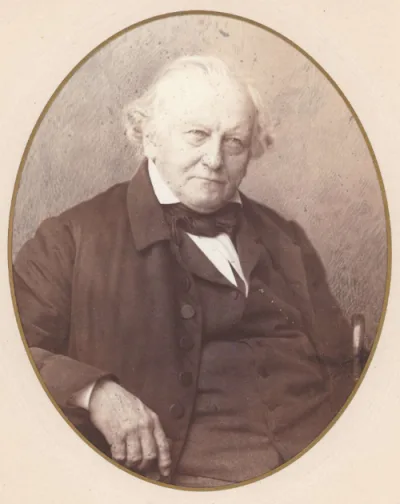
Wallace Notestein
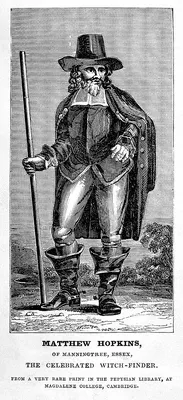
Matthew Hopkins was an English witch-hunter during the Civil War, known for his methods and significant number of convictions.
Matthew Hopkins (c. 1620 – 1647) was a prominent English witch-hunter active primarily in East Anglia during the English Civil War. Despite claiming the title of Witchfinder General, this office was never officially granted by Parliament. He and his associate John Stearne were responsible for more executions for witchcraft than had occurred in the preceding 160 years.
Hopkins's methods were heavily influenced by King James I's "Daemonologie" and detailed in his own book, "The Discovery of Witches." While torture was legally prohibited, Hopkins employed tactics like sleep deprivation and the "swimming test" to elicit confessions. He also searched for the "Devil's mark," often using pricking to find imperceptible signs. His activities were costly to local communities and drew opposition from figures like John Gaule, leading to scrutiny by legal authorities. Hopkins's techniques were later influential in the New England colonies.
Early Life and Background
Information about Matthew Hopkins's life before 1644 is scarce. Born in Great Wenham, Suffolk, he was the son of a Puritan clergyman. His father, James Hopkins, served as vicar of St John's of Great Wenham. The family held property in Framlingham. Matthew was one of six children, and his birth could not have occurred before 1619, suggesting he was relatively young at the time of his death. Around the early 1640s, Hopkins relocated to Manningtree, Essex. Tradition suggests he used an inheritance to establish himself and purchase an inn. While some speculate he may have had legal training due to his trial presentations, concrete evidence for this is limited.
Witch-Hunting Career and Methods
Hopkins commenced his career as a witch-finder in March 1644, reportedly after overhearing women discussing meetings with the Devil. He and John Stearne operated mainly in East Anglia, an area with strong Puritan and Parliamentarian sentiment. Their work focused on proving a witch's covenant with the Devil, rather than just acts of maleficium, framing witchcraft as a form of heresy. This approach, influenced by King James I's "Daemonologie," led to confessions being paramount, as the Devil would not confess himself. Hopkins employed methods such as sleep deprivation, using a blunt knife to search for marks (which were not expected to bleed), and the "swimming test," where suspects were thrown into water to see if they would be rejected by it. These practices, though often coercive, were controversial and eventually led to the abandonment of the swimming test.
Opposition and Legacy
The activities of Hopkins and his associates were not without opposition. John Gaule, vicar of Great Staughton, was a notable critic, publishing "Select Cases of Conscience touching Witches and Witchcrafts" and delivering sermons against witch-hunting. Hopkins and Stearne faced questioning from justices regarding their methods and fees, with concerns raised about the use of torture and whether the investigators themselves were engaging in unlawful practices. By 1647, both had retired from active witch-hunting. Hopkins's book, "The Discovery of Witches," published in 1647, outlined his methods. These practices subsequently influenced witch trials in the New England colonies, contributing to events like the New England witch hunt (1648–1663) and the later Salem witch trials.
Key Ideas
- Focus on proving a witch's covenant with the Devil as a form of heresy.
- Use of coercive interrogation techniques, including sleep deprivation and physical examination for the "Devil's mark."
- The "swimming test" as a method to identify witches.
- The influence of his methods on later witch hunts in colonial America.
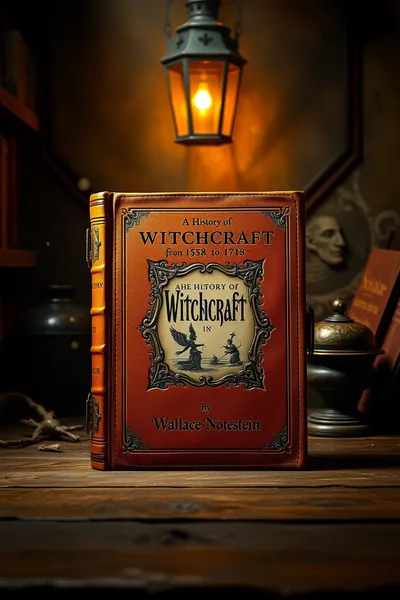
Books by Wallace Notestein
2 free public domain books · Read online or download