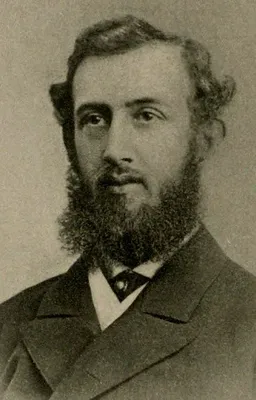
W Winwood Reade
William Winwood Reade was a British historian and philosopher known for his secular history 'The Martyrdom of Man' and his travels in Africa.
William Winwood Reade (1838–1875) was a British historian, explorer, novelist, and philosopher. Though from a wealthy family, he struggled in conventional paths, leading him to explore Africa. His travels resulted in books like 'Savage Africa' and 'The African Sketch-Book', the latter contributing information used by Charles Darwin. Reade's most significant work, 'The Martyrdom of Man' (1872), presented a secular, universal history of Western civilization. It was controversial for its critique of Christian dogma and was seen by some as a secular alternative to the Bible. Despite initial negative reviews, it gained popularity and influenced many prominent figures. Reade also wrote the novel 'The Outcast' and explored themes related to Druidism and ancient mysteries in earlier works.
Philosophical and Historical Contributions
Reade's 'The Martyrdom of Man' offered a sweeping secular history of the Western world, structured around themes of war, religion, liberty, and intellect. He presented civilization's development in terms analogous to natural science, advocating for liberalism and social Darwinism. The book's stark critique of Christian beliefs led to significant controversy, with some condemning it as irreligious. Reade himself was not an atheist but believed in an unknowable Creator, championing science as the engine of future progress over outdated institutions like war, slavery, and religion. His work highlighted the suffering inherent in evolutionary processes and was recognized for its relatively sympathetic portrayal of African history by Victorian standards.
Exploration and Anthropological Interests
Reade's early life included a brief, unsuccessful academic career and a failed attempt at a conventional writing career. He then turned to geographical exploration, funded partly by his family and the Royal Geographical Society. His travels in Africa, particularly in Angola, Gambia, and Senegal, led to his first book, 'Savage Africa'. This work, despite stylistic criticisms, contained anthropological observations and prescient remarks about Africa's future division between European powers. Reade joined the Anthropological Society of London, where he engaged in debates, notably challenging the notion of distinct human species (polygenism) and attributing the state of African peoples to environmental factors and disease. His later expeditions to West Africa, though hampered by instrument failures and imprisonment, provided material for 'The African Sketch-Book' and direct information for Charles Darwin's 'The Descent of Man'.
Esoteric and Early Works
Before his major historical and travel writings, Reade explored more esoteric themes. His work 'The Veil of Isis or Mysteries of the Druids' (1861) delved into ancient Druidic practices and their perceived influence on Freemasonry and Roman Catholic ceremony, suggesting a continuity of mystical traditions. He also published novels, including 'Charlotte and Myra: A Puzzle in Six Bits' (1859) and 'Liberty Hall, Oxon.' (1860), and a later novel, 'The Outcast' (1875), which dealt with themes of rejection and loss within a secular framework. Reade utilized the pseudonym Francesco Abati for his 1865 novel 'See-Saw'.
Key Ideas
- Secular universal history
- Critique of religious dogma
- Social Darwinism
- Anthropological inquiry
- Exploration of ancient mysteries (Druidism)
Notable Quotes
“From Nebula to Nation”
“the individual man is an insoluble puzzle, in the aggregate he becomes a mathematical certainty. You can, for example, never foretell what any one man will do, but you can say with precision what an average number will be up to. Individuals vary, but percentages remain constant. So says the statistician”
Books by W Winwood Reade
0 free public domain books · Read online or download
