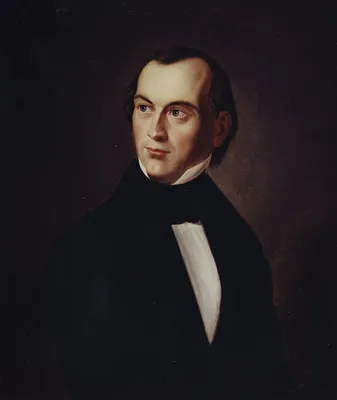
W O E Oesterley
Karl Otfried Müller was a German classical scholar whose work on Greek myth and art influenced later studies.
Karl Otfried Müller was a prominent German scholar specializing in classical Greek studies, born in 1797. Educated at Breslau and Berlin, he was significantly influenced by August Böckh, which steered his focus towards Greek literature, art, and history. Müller's academic career began with an appointment at the Magdaleneum in Breslau and later as an adjunct professor at the University of Göttingen, where he lectured on ancient art's archaeology and history.
His scholarly approach to Greek myth diverged from Enlightenment views, proposing that myths arose from the unique character of a people interacting with their specific historical context. This perspective, while emphasizing cultural distinctiveness, led him to reject the notion of Egyptian influence on Greek art. Müller's later years were marked by political unrest, prompting him to travel, eventually reaching Greece where he began excavations at Delphi. He died in Athens in 1840 from an illness contracted during his travels.
Müller's extensive work aimed to provide a comprehensive understanding of ancient Greek life. His significant contributions include foundational texts on Greek tribal and city histories, Etruscan antiquities, and the scientific investigation of mythology. He also played a role in the study of ancient art through his handbooks and was involved in the popularization of the term 'pornography' in German. His posthumously published history of Greek literature remained a key resource for many years.
Scholarly Approach to Myth and Culture
Müller developed a distinct methodology for understanding Greek myth, moving away from Enlightenment perspectives that viewed myths as nascent forms of universal religion. Instead, he posited that myths were the product of a specific people's character interacting with their unique historical circumstances. This viewpoint underscored the inherent distinctiveness of each culture. However, this conviction also led him to argue against the prevailing idea, even in his time, that Egyptian art had influenced Greek art. His work laid groundwork for treating myths as organic outcomes of cultural and historical forces, rather than allegorical representations of universal truths.
Contributions to Classical Archaeology and Art History
Beyond mythology, Müller made substantial contributions to the study of ancient art and archaeology. His 'Handbuch der Archäologie der Kunst' and 'Denkmäler der alten Kunst,' the latter co-authored with Carl Oesterley, served as important academic resources. The 'Handbuch' is notable for introducing the German term 'pornographie,' which subsequently gained international currency. These works aimed to systematically document and analyze the artistic heritage of antiquity, influencing subsequent generations of scholars in the field. His efforts helped establish more rigorous standards for the study of ancient visual culture.
Pioneering Work in Mythology and Philology
In his 'Prolegomena zu einer wissenschaftlichen Mythologie,' Müller advocated for a scientific approach to the study of myths, departing from earlier speculative theories. He explored the 'internal idea' of myths and proposed methods for dating them based on literary references. A significant aspect of his work involved discerning the original mythic elements from later poetic and prose alterations. He also examined the relationship between epic poets like Homer and Hesiod and their traditional sources. This was a remarkable achievement given the limited understanding of oral transmission and archaeological evidence available during his time.
Key Ideas
- Myths as outcomes of specific cultural character and historical setting
- Emphasis on the unique nature of each culture
- Advocacy for a scientific approach to mythology
- Methods for dating myths and separating original elements from later modifications
Notable Quotes
“A democracy likes a large mass and hates all divisions.”
Books by W O E Oesterley
0 free public domain books · Read online or download
