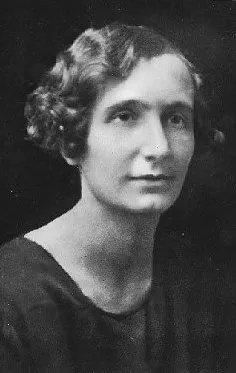
W A Cummins
Geraldine Cummins was an Irish medium and author who channeled messages on Christian history, the afterlife, and Jesus's life.
Geraldine Dorothy Cummins (1890–1969) was an Irish writer and spiritualist medium. Initially a novelist and playwright documenting Irish life, she later focused on channeling spiritual messages. Her early creative works, including plays for the Abbey Theatre and novels like "The Land they Loved," depicted naturalistic scenes of Irish society. As her interest in mediumship grew, she began producing 'psychic writings,' purportedly dictated by spirits. These works primarily explored early Christian history, offering channelled material on figures like Cleophas and Saint Paul, and delving into the life of Jesus.
Cummins also produced writings on the afterlife, such as "The Road to Immortality," which she claimed came from Frederic W. H. Myers. Her later career involved collaborations with psychiatrists on using spiritualism for mental health treatment and investigating unexplained disappearances, notably Colonel Fawcett. Her automatic writing and channeled material were met with skepticism by some researchers, who suggested subconscious influence or the use of natural means to acquire information. Despite these critiques, her extensive body of work spanned both literary fiction and esoteric spiritual communication.
Early Life and Literary Career
Born in Cork, Ireland, Geraldine Dorothy Cummins was the daughter of a physician. In her youth, she excelled as an athlete, playing for the Irish Women's International Hockey Team, and was involved in the suffragette movement. Initially aspiring to study medicine, her mother's objection led her to pursue a literary path. She began as a journalist and playwright, co-authoring several plays, including "Fox and Geese," with Suzanne R. Day for the Abbey Theatre. Her novel "The Land they Loved" (1919) offered a naturalistic portrayal of working-class Irish life. While her focus later shifted to mediumship, she continued to publish creative works, including the play "Till Yesterday Comes Again" and the short story collection "Variety Show" (1959).
Psychic Writings and Mediumship
Cummins became a spiritualist medium under the guidance of Hester Dowden and E. B. Gibbes, utilizing automatic writing to receive messages from her spirit guide, 'Astor.' Her prolific psychic works include "The Scripts of Cleophas" (1928), which presented channelled information about early Christian history, purportedly from Cleophas, a follower of Paul. This was followed by "Paul in Athens" (1930) and "The Great Days of Ephesus" (1933). She also published "The Road to Immortality" (1932), detailing the afterlife, and "Unseen Adventures" (1951), a spiritual autobiography. Additionally, she produced several books on the life of Jesus, based on communications from the spirit world.
Later Work and Investigations
During World War II, Cummins reportedly served as a British agent, leveraging her connections to identify pro-Nazi elements within the Irish Republican movement. She also channeled messages from spirits to aid the Allied war effort. In the 1940s and 1950s, she collaborated with psychiatrists, including 'R. Connell,' on models for treating mental illness through spiritualism, as seen in "Perceptive Healing" (1945) and "Healing the Mind" (1957). This involved interpreting objects to uncover ancestral traumas or 'race memories.' She also explored mysteries such as the disappearance of Colonel Fawcett, claiming psychic contact with him, and documented her automatic writing sessions with the spirit of Mrs. Willett in "Swan on a Black Sea" (1965).
Reception and Critical Analysis
The channeled and automatically written material produced by Geraldine Cummins faced scrutiny from psychical researchers. Some, like Harry Price, suggested that much of the automatic writing was a product of the subconscious mind. Others, such as Eric Dingwall and Simeon Edmunds, pointed to inaccuracies in her channeled scripts and suggested that Cummins might have acquired information through conventional means, potentially drawing from published works or personal connections, rather than solely through psychic channels. For instance, her insights into Colonel Fawcett's disappearance were questioned due to her prior familiarity with his writings. E. R. Dodds noted her work as a cataloguer at the National Library of Ireland, suggesting access to information that could have influenced her writings on ancient history.
Key Ideas
- Automatic writing and channeling of spirit messages
- Exploration of early Christian history through psychic communication
- Descriptions of the afterlife and spiritual enlightenment
- Application of spiritualism in mental health treatment
- Investigation of mysteries through psychic insights
Books by W A Cummins
0 free public domain books · Read online or download
