✍️ Author Biography
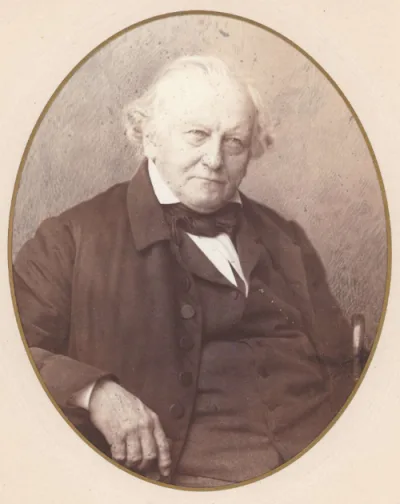
Tori Hartman
📅 1900 – 2002
🌍 American
📚 4 free books
Tori Hartman is a name associated with the feminine given name Elizabeth, known for its biblical roots and global popularity.
The name Elizabeth, originating from the Hebrew "Elisheva," signifies "My God is an oath" or "My God is abundance." It holds significant biblical weight, appearing as the wife of Aaron in the Hebrew Bible and as the mother of John the Baptist in the New Testament. Throughout history, the name has been adopted by numerous saints and royalty, contributing to its enduring presence.
The name Elizabeth has consistently ranked among the most popular choices for girls in the United States for over a century, frequently appearing in the top ten and even maintaining a top ten position from 1925 to 1972. Its popularity extends globally, with strong showings in countries like England, Wales, Canada, Australia, Scotland, Ireland, Russia, Ukraine, and Belarus. The name boasts a vast array of variations and diminutives across numerous languages and cultures, reflecting its widespread adoption and adaptation worldwide.
Biblical and Historical Significance
Elizabeth's roots are deeply embedded in religious texts, most notably the Bible. In the Hebrew Bible, it appears as Elisheva, the wife of Aaron. The New Testament features Elizabeth as the mother of John the Baptist, a pivotal figure. Beyond these foundational mentions, the name has been carried by many saints and queens throughout history, underscoring its association with spiritual and regal figures. This historical and religious lineage contributes to the name's perceived gravitas and enduring appeal across centuries and cultures.
Global Popularity and Variations
The name Elizabeth has demonstrated remarkable global popularity, consistently ranking high in naming statistics for baby girls in various countries. In the United States, it has been a perennial favorite for over a hundred years. Its international reach is evident in its strong presence in Canada, Australia, and across Europe, including Russia, Ukraine, and Belarus. The name's adaptability is further highlighted by its extensive list of variations and diminutives found in dozens of languages, from European tongues like French, German, and Italian, to more distant linguistic families such as Maori, Hawaiian, and Arabic. This linguistic diversity showcases the name's universal appeal and its capacity to be integrated into different cultural contexts.