Teichmann Frank
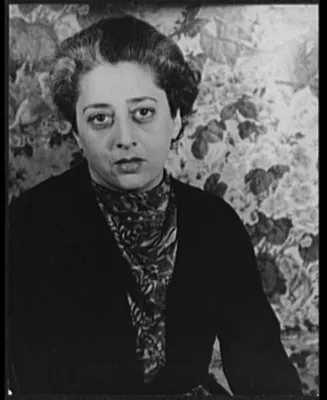
Beatrice Bakrow Kaufman was a notable editor and writer, influential in shaping American culture, known for her wit and literary contributions.
Beatrice Bakrow Kaufman (1895-1945) was an American editor, writer, and playwright, recognized for her sharp intellect and significant influence on American taste and culture during the early twentieth century. Though often remembered as the wife of playwright George S. Kaufman, she carved out a distinguished career in her own right.
Born in Rochester, New York, to parents of German Jewish heritage, Beatrice attended Wellesley College and the University of Rochester, though she did not complete her studies. She married George S. Kaufman in 1917 and moved to New York City. Her career began in 1918 as an assistant to a press agent for silent film actresses. She later joined Boni & Liveright, where for five years she headed the editorial department, overseeing works by prominent literary figures such as T.S. Eliot, William Faulkner, and Ernest Hemingway, notably editing Hemingway's first published collection. In the 1930s, she held editorial positions at Harper's Bazaar and Viking Press, and worked for producer Samuel Goldwyn.
Beyond her editorial achievements, Kaufman published short stories, primarily in The New Yorker, and co-authored two successful plays. She and her husband were known for their sophisticated social life and were part of the Algonquin Round Table, associating with many leading literary and entertainment figures. Their personal lives were marked by public extramarital affairs. Kaufman passed away in 1945 after a period of ill health.
Editorial Influence
Beatrice Bakrow Kaufman established herself as a significant force in the publishing world. During her tenure as head of the editorial department at Boni & Liveright, she was instrumental in shaping the careers of numerous influential writers. Her editorial oversight extended to major figures like T.S. Eliot, William Faulkner, e.e. cummings, John Steinbeck, Eugene O’Neill, Djuna Barnes, and her husband, George S. Kaufman. A key achievement was her championing of Ernest Hemingway's first published work, the short story collection 'In Our Time,' convincing reluctant publishers to release it. Later, in the 1930s, her editorial expertise was sought after by prestigious publications and producers, serving as fiction editor for Harper's Bazaar and Viking Press, and as Eastern story editor for Samuel Goldwyn. Her husband reportedly placed immense value on her critical judgment of his work, with Kaufman herself stating she was always the first reader of his plays and offered her candid opinions.
Literary Contributions and Social Acumen
While her editorial work garnered significant recognition, Beatrice Bakrow Kaufman also made her mark as a writer. She contributed short stories to publications, most notably The New Yorker, showcasing her literary talents beyond the editorial desk. Additionally, she ventured into playwriting, co-authoring two successful theatrical productions: 'Divided by Three,' with Margaret Leech, and 'The White-Haired Boy,' with Charles Martin. Socially, the Kaufmans were figures of considerable renown, known for their sophisticated lifestyle and vibrant gatherings. They were integral members of the Algonquin Round Table, a celebrated group of New York's literary and theatrical elite. This association placed them in close proximity to many of the era's most prominent artists and performers, cementing their status within the cultural landscape of the time.
Notable Quotes
“I’ve been rich, and I’ve been poor. Rich is better.”
Books by Teichmann Frank
0 free public domain books · Read online or download
