Vajrayāna, or Tantric Buddhism, is a Mahāyāna tradition using esoteric practices for rapid spiritual awakening, originating in India around the 7th century.
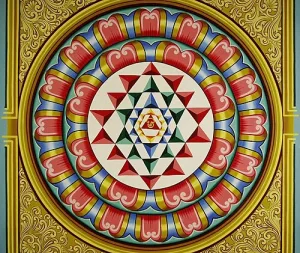
Vajrayāna, also known as the "Diamond Vehicle" or "Mantra Vehicle," is a branch of Mahāyāna Buddhism that emerged in India between the 5th and 7th centuries CE. It is characterized by its emphasis on esoteric rituals and practices designed to accelerate spiritual awakening. Key techniques include the use of mantras, sacred sounds; dhāraṇīs, mnemonic codes; mudrās, symbolic gestures; mandalās, spiritual diagrams; and the visualization of deities. These methods aim to transform everyday experiences into a path toward enlightenment by engaging with emotions and desires in a structured, ritualistic manner.
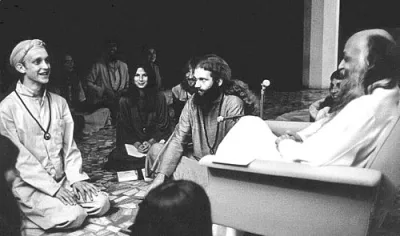
A central tenet of Vajrayāna is the direct transmission of teachings from a guru to a student through initiations, maintaining an unbroken lineage purportedly tracing back to the Buddha. Practitioners often engage in deity yoga, meditating on oneself as an enlightened being, and acknowledge the importance of feminine energies, venerating female Buddhas and ḍākiṇīs. This tradition spread across Asia, influencing Tibetan Buddhism, Japanese Shingon Buddhism, and Chinese Esoteric Buddhism, adapting its core principles to various cultural contexts while preserving its esoteric focus.
Origins and Development
Vajrayāna Buddhism developed from pre-existing Tantric traditions within Hinduism, which influenced South Asian Mahāyāna Buddhism. Emerging around the 7th century CE in medieval India, it rapidly expanded throughout Asia. Early Buddhist Tantras, some dating back to the 6th century, initially focused on worldly benefits like healing and wealth through mantras and dhāraṇīs. Later texts, such as the Tattvasaṃgraha Tantra, shifted focus to liberation. The tradition evolved through various classes of tantras, including Mahāyoga, Yogini tantras, and the Kalachakra tantra, the latter incorporating astrological and messianic themes. The rise of Tantric Buddhism is seen as a response to the social structures of early medieval India, employing metaphors of divine rule and imperial power within its practices.
Esoteric Practices and Symbolism
Vajrayāna employs a rich array of esoteric practices aimed at spiritual transformation. These include the use of sacred sounds (mantras), mnemonic codes (dhāraṇīs), symbolic hand gestures (mudrās), spiritual diagrams (mandalās), and deity visualization. A core practice is deity yoga, where practitioners identify with enlightened beings to alter their perception of reality. The tradition emphasizes lineage-based transmission through initiation ceremonies, ensuring teachings are passed directly from master to student. The vajra, a ritual object symbolizing indestructibility and the union of wisdom and compassion, is central. It is often used with a bell, representing the integration of male and female principles. Wrathful deities and challenging conventional norms are also utilized as aids to confront inner obstacles and transcend dualistic thinking.
Transmission and Adaptation
The transmission of Vajrayāna teachings relies heavily on direct, esoteric communication from teacher to student, often through initiation rites. This lineage-based approach is believed to preserve the integrity of the practices. The tradition acknowledges the role of feminine spiritual forces, including female Buddhas and ḍākiṇīs. As Vajrayāna spread across Asia, it adapted to local cultures. In Tibet, it became the dominant form of Buddhism, integrating indigenous beliefs. In Japan, it influenced the Shingon school, emphasizing mantras and rituals. Chinese Esoteric Buddhism also emerged, though its distinct identity later merged with mainstream Buddhism. Western occult writers adopted the term 'Esoteric Buddhism' in the late 19th century to describe their interpretations of Buddhist doctrines.
Key Ideas
- Vajrayāna as the 'Diamond Vehicle' or 'Mantra Vehicle'
- Emphasis on esoteric practices and rituals for rapid spiritual awakening
- Use of mantras, dhāraṇīs, mudrās, mandalās, and deity visualization
- Direct teacher-to-student transmission through initiation (esoteric lineage)
- Deity yoga as a meditative practice
- Integration of feminine spiritual energies
- Symbolism of the vajra (indestructibility, wisdom, compassion)
- Transformation of negative emotions ('poisons') into wisdom
Books by
1 free public domain book · Read online or download