Sylvia Abraham
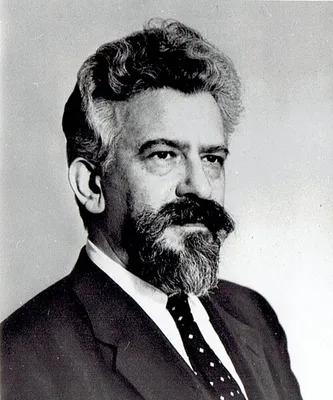
Abraham Joshua Heschel was a 20th-century Polish-American rabbi, theologian, and philosopher known for his work on Jewish mysticism and civil rights.
Abraham Joshua Heschel, born in Warsaw in 1907, was a prominent Polish-American rabbi, theologian, and philosopher of the 20th century. He held a professorship in Jewish mysticism at the Jewish Theological Seminary of America. Heschel's intellectual journey included traditional yeshiva studies, doctoral work at the University of Berlin, and rabbinic ordination from the Hochschule für die Wissenschaft des Judentums. His early life was marked by the loss of his father and later, the tragic deaths of several siblings during the Holocaust, events that deeply impacted his perspective.
Heschel's scholarly contributions spanned medieval Jewish philosophy, Kabbalah, and Hasidic thought, with a particular emphasis on spirituality and the human religious experience. He viewed Judaism as a religion of time, famously contrasting the sanctity of the Sabbath with the demands of modern technological civilization. Beyond his academic pursuits, Heschel was a significant figure in the U.S. civil rights movement, advocating for social justice and speaking out against war. His influential writings, including "Man Is Not Alone" and "God in Search of Man," explored profound questions of faith, the divine, and humanity's search for meaning. He passed away in 1972.
Philosophical and Theological Contributions
Abraham Joshua Heschel's intellectual work delved deeply into various facets of Jewish thought, including medieval philosophy, Kabbalah, and Hasidic traditions. He was recognized for his focus on spirituality and the profound human experience of religious encounter, often emphasizing this over purely textual analysis. Heschel's philosophy posited a reciprocal relationship between God and humanity, challenging views that posited an entirely independent divine being. He saw Kabbalah not merely as a historical or metaphysical study, but as a rich source for understanding the mystical dimensions of religious life and the human role in actualizing divine plans. His perspective on Kabbalah highlighted its continuity with classical rabbinic sources and its focus on the lived, mystical experience of the individual.
Theology and Interreligious Dialogue
Heschel's theological writings, such as "Man Is Not Alone" and "God in Search of Man," explored fundamental questions about faith, doubt, and humanity's yearning for the divine. He articulated the Jewish understanding of God as radically distinct from human beings, yet accessible through an "ineffable" encounter. A central theme in his work is the experience of "radical amazement" in the face of the sacred. Heschel's views extended beyond Judaism; he believed that no single religious community held a monopoly on truth and that religious experience was a universal human impulse. His advocacy at the Second Vatican Council was instrumental in fostering improved relations between the Catholic Church and Judaism, persuading the Church to revise liturgical passages that were critical of Jews.
Social Activism and Civil Rights
Beyond his academic and theological contributions, Abraham Joshua Heschel was a fervent advocate for social justice and a key participant in the American Civil Rights Movement. He famously stated, "Some are guilty, but all are responsible," in reference to racial segregation. Heschel actively marched alongside leaders like Dr. Martin Luther King Jr., notably participating in the Selma to Montgomery march. His commitment to civil rights stemmed from his belief that the teachings of the Hebrew prophets served as a call to action for contemporary social issues. He also voiced opposition to the Vietnam War. His active engagement in these movements underscored his conviction that religious faith must translate into tangible efforts for human dignity and equality.
Key Ideas
- Judaism as a religion of time, not space
- The concept of "radical amazement" in religious experience
- The interconnectedness of God and humanity
- The prophetic call for social action
- The importance of spiritual experience in Kabbalah
Notable Quotes
“Some are guilty, but all are responsible”
“If I should go to Poland or Germany, every stone, every tree would remind me of contempt, hatred, murder, of children killed, of mothers burned alive, of human beings asphyxiated.”
Books by Sylvia Abraham
3 free public domain books · Read online or download