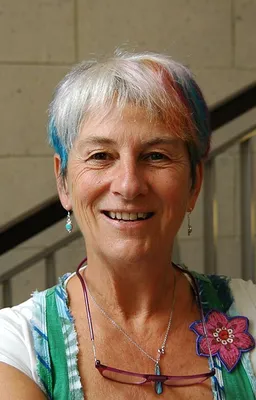
Susan J Blackmore
Susan Blackmore is a writer and researcher known for her work on consciousness, memetics, and a shift from paranormal belief to skepticism.
Susan Blackmore is a British writer, lecturer, and researcher whose academic journey began with degrees in psychology and physiology, followed by an MSc and PhD in parapsychology. Her early career involved research into paranormal phenomena, including experiments with her daughter and an out-of-body experience that initially convinced her of psychic realities. However, extensive research led her to a skeptical viewpoint, a transition she documented in her writings. She is recognized for her contributions to the study of consciousness and memetics, particularly her book 'The Meme Machine', which explores memes as evolutionary replicators. Blackmore has held academic positions and contributed to numerous scholarly articles and books, also engaging in public discourse through broadcasting and debates.
Blackmore's work has evolved from exploring the paranormal to critically examining belief systems. She has conducted large-scale studies on experiences often labeled 'paranormal', finding many to be instances of sleep paralysis. Her interest in memes, conceptualized by Richard Dawkins, led her to propose 'temes'—memes residing in technological artifacts. While critical of religious dogma, she acknowledges the value of mystical traditions and rituals, advocating for the integration of valuable cultural heritage within secular frameworks. She identifies as an atheist humanist and a practitioner of Zen, emphasizing a scientific understanding of consciousness and viewing phenomenal consciousness as an illusion.
Evolution of Thought: From Parapsychology to Skepticism
Susan Blackmore's academic path initially delved deeply into parapsychology, earning her PhD with a thesis on extrasensory perception. Her early research included experiments investigating potential psychic abilities in her infant daughter and personal experiences, such as a profound out-of-body experience, which initially fueled her belief in phenomena beyond conventional scientific explanation. She taught at the University of the West of England until 2001. However, through continued investigation and experimentation, her perspective shifted dramatically. After years of research, Blackmore concluded that phenomena she had once considered paranormal were better explained by psychological factors like wishful thinking, self-deception, and experimental error. This led her to become a prominent skeptic and a Fellow of the Committee for Skeptical Inquiry, even receiving their Distinguished Skeptic Award.
Memetics and the Replication of Ideas
A significant focus of Susan Blackmore's work is memetics, the study of information and culture as replicators. Her influential book, 'The Meme Machine', posits that memes—units of cultural information—function similarly to genes, undergoing evolutionary processes. She views imitation as a key mechanism for cultural replication, suggesting that specific human neural structures facilitate this. Blackmore expanded on this concept by introducing 'temes,' a category of memes that exist within technological objects rather than solely in human minds. Her analysis of religion through a memetic lens acknowledges the spread of infectious ideas, while also recognizing the potential value in mystical insights and communal rituals, leading her to moderate earlier views on religion as purely a 'virus of the mind'.
Consciousness and the Illusion of Self
In the field of consciousness studies, Susan Blackmore is known for her 'illusionist' perspective. She posits that our subjective experience of consciousness, the feeling of what it's like to be something, is a kind of 'grand delusion' or illusion generated by the brain. Her textbook, 'Consciousness: An Introduction', provides a comprehensive overview of the subject, exploring various theories and research findings. Blackmore's approach emphasizes understanding consciousness through scientific inquiry, moving away from supernatural or dualistic explanations. Her work in this area aligns with her broader skeptical stance, seeking naturalistic explanations for complex phenomena.
Key Ideas
- Memes as evolutionary replicators in culture.
- Temes as memes residing in technology.
- The illusionist view of consciousness.
- The transition from belief in the paranormal to skepticism.
- Critique and appreciation of religious traditions through a memetic lens.
Notable Quotes
“Within a few weeks I had not only learned a lot about the occult and the paranormal, but I had an experience that was to have a lasting effect on me—an out-of-body experience (OBE).”
“It was clear to me that the doctrine of astral projection, with its astral bodies floating about on astral planes, was intellectually unsatisfactory. But to dismiss the experience as "just imagination" would be impossible without being dishonest about how it had felt at the time. It had felt quite real. Everything looked clear and vivid, and I was able to think and speak quite clearly.”
“It was just over thirty years ago that I had the dramatic out-of-body experience that convinced me of the reality of psychic phenomena and launched me on a crusade to show those closed-minded scientists that consciousness could reach beyond the body and that death was not the end. Just a few years of careful experiments changed all that. I found no psychic phenomena—only wishful thinking, self-deception, experimental error and, occasionally, fraud. I became a sceptic.”
“All kinds of infectious memes thrive in religions, in spite of being false, such as the idea of a creator god, virgin births, the subservience of women, transubstantiation, and many more. In the major religions, they are backed up by admonitions to have faith not doubt, and by untestable but ferocious rewards and punishments.”
“...most religions include at least two aspects which I would be sorry to lose. First is the truths that many contain in their mystical or spiritual traditions; including insights into the nature of self, time and impermanence [...] The other is the rituals that we humans seem to need, marking such events as birth, death, and celebrations. Humanism provides a non-religious alternative and I have found the few such ceremonies I have attended to be a refreshing change from the Christian ones of my upbringing. I am also glad that these ceremonies allow for an eclectic mixture of songs, music and words. In spite of my lack of belief I still enjoy the ancient hymns of my childhood and I know others do too. We can and should build on our traditions rather than throwing out everything along with our childish beliefs.”
Books by Susan J Blackmore
0 free public domain books · Read online or download
