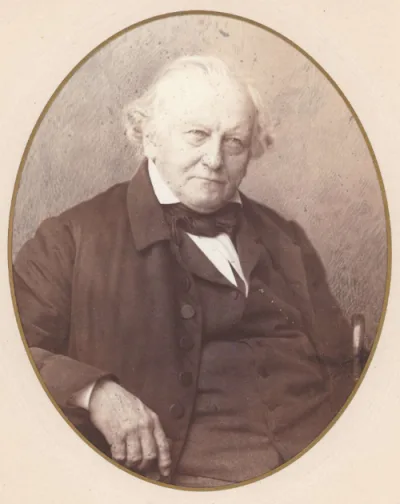
Stephen R. Covey
Stephen R. Covey was an educator and author known for 'The 7 Habits of Highly Effective People,' blending Latter-day Saint values with secular principles.
Stephen R. Covey (1932-2012) was an American educator, author, and speaker, widely recognized for his seminal work, 'The 7 Habits of Highly Effective People.' Born in Salt Lake City, Utah, Covey's intellectual development was shaped by his academic pursuits, including degrees from the University of Utah and Harvard Business School, as well as his affiliation with The Church of Jesus Christ of Latter-day Saints. His philosophy drew inspiration from figures like Peter Drucker and Carl Rogers, and his doctoral research focused on American self-help literature. Covey's work is often described as a secular interpretation of Latter-day Saint values, emphasizing a 'Character Ethic' based on universal principles over a 'Personality Ethic.'
His most famous book, 'The 7 Habits of Highly Effective People,' published in 1989, sold millions of copies and advocated for a progression from dependence to interdependence through a series of habits. Covey also authored sequels and related works, including 'The 8th Habit: From Effectiveness to Greatness' and 'The Leader in Me,' which applied his principles to educational settings. He held academic positions at Brigham Young University and Utah State University. Covey passed away in 2012 following a cycling accident.
Philosophical Foundations and Key Ideas
Stephen R. Covey's intellectual framework was significantly influenced by thinkers such as Peter Drucker and Carl Rogers. His doctoral research into American self-help literature provided further foundational insights. A key aspect of his thought was the integration of his affiliation with The Church of Jesus Christ of Latter-day Saints, with his seminal work, 'The 7 Habits of Highly Effective People,' being characterized as a secular distillation of Latter-day Saint values. Covey distinguished between principles and values, viewing principles as external, natural laws and values as subjective internal beliefs. He argued that while values guide behavior, principles ultimately determine outcomes. His teachings are structured around a progression of habits moving from dependence to independence and finally to interdependence.
Notable Works and Their Impact
Covey's literary contributions span several influential books. His most celebrated work, 'The 7 Habits of Highly Effective People' (1989), achieved global acclaim, selling over 65 million copies and its audio version becoming a bestseller. This book challenged the prevalent 'Personality Ethic' in self-help, promoting instead the 'Character Ethic' grounded in timeless principles. Following this success, he authored 'The 8th Habit: From Effectiveness to Greatness' (2004), which addressed the evolving demands of the 'Knowledge Worker Age' and encouraged individuals to find their voice and inspire others. His book 'The Leader in Me: How Schools and Parents Around the World Are Inspiring Greatness, One Child at a Time' (2008) detailed how his principles could be integrated into educational systems to foster leadership skills in children, inspired by successful implementations in elementary schools.
Academic and Religious Contributions
Beyond his popular writings, Stephen R. Covey made significant contributions to academia and religious life. He served as a professor at Brigham Young University's Marriott School of Management, where he helped establish the Master of Organizational Behavior program, and also acted as an assistant to the university president. Later in his career, he returned to academia as a professor at Utah State University's Huntsman School of Business. As a devout member of The Church of Jesus Christ of Latter-day Saints, Covey served missions in England and as the first president of the church's Irish Mission. He also served as a mission representative for the Quorum of the Twelve, overseeing missionary training. His religious writings include devotional works aimed at Latter-day Saint readers, such as 'Spiritual Roots of Human Relations' and 'The Divine Center.'
Key Ideas
- The 7 Habits of Highly Effective People: A framework for personal and professional effectiveness based on principles.
- The Personality Ethic vs. The Character Ethic: A contrast between superficial self-help approaches and a principle-centered approach.
- Principles as natural laws: Covey's view of principles as external, universal truths guiding behavior and consequences.
- Dependence, Independence, Interdependence: A progression model for personal growth and relationships.
- The 8th Habit: Finding your voice and inspiring others to find theirs, moving beyond mere effectiveness to greatness.
- The Leader in Me: Applying leadership principles in educational settings to empower students.
Books by Stephen R. Covey
0 free public domain books · Read online or download