Sivananda Yoga Vedanta Centre London England Sivananda Yoga Vedanta Centre Sivananda Yoga Vedanta Center
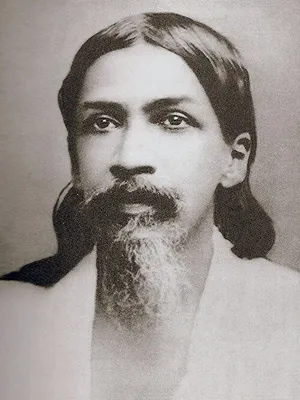
Indian philosopher and yogi Sri Aurobindo developed Integral Yoga and was a key figure in India's independence movement.
Sri Aurobindo (born Aurobindo Ghose) was a prominent Indian philosopher, yogi, and nationalist, deeply involved in the struggle for India's independence from British rule. Initially educated in England with the intention of entering the Indian Civil Service, he returned to India and worked in administrative roles before becoming a vocal advocate for autonomy through his writings and political actions. Following a period of imprisonment and subsequent acquittal, he withdrew to Pondicherry to focus entirely on spiritual pursuits.
In Pondicherry, Aurobindo developed his unique spiritual philosophy known as Integral Yoga. His work aimed to synthesize Eastern and Western thought, exploring the potential for humanity's spiritual evolution towards divinity. He produced a significant body of literary work, including philosophical treatises and epic poetry, which continue to influence spiritual and philosophical discourse.
Early Life and Education
Born Aurobindo Ghose in Calcutta in 1872, his early life was significantly shaped by his father's desire for his sons to enter the Indian Civil Service. This led to Aurobindo and his brothers being sent to England for their education, attending schools and later King's College, Cambridge. During his time in England, Aurobindo developed a strong aversion to religion and a growing disillusionment with British colonial rule, even deliberately failing to qualify for the ICS. He also began studying Bengali and joined a secret society focused on Indian freedom.
Political Activism and Spiritual Awakening
Upon returning to India in 1893, Aurobindo worked in the princely state of Baroda, holding various administrative and teaching positions. He began actively participating in the Indian independence movement, initially behind the scenes due to his official role, and later more openly after moving to Calcutta in 1906. His political involvement included connections with nationalist leaders and revolutionary groups. After facing charges of treason in the Alipore Conspiracy case and being released, he experienced a profound spiritual realization and decided to withdraw from active politics.
Integral Yoga and Literary Contributions
Following his withdrawal from public life, Aurobindo settled in Pondicherry, where he dedicated himself to spiritual practice and the formulation of Integral Yoga. This path sought a complete transformation of human consciousness, integrating the spiritual and material aspects of life. He established the Sri Aurobindo Ashram with Mirra Alfassa in 1926 to facilitate this spiritual work. Aurobindo's extensive writings articulate the philosophy and practice of Integral Yoga, synthesizing diverse philosophical, religious, and psychological traditions into a vision for humanity's spiritual evolution.
Key Ideas
- Integral Yoga: a spiritual path aiming for the transformation of human consciousness and the integration of the divine into earthly existence.
- Spiritual evolution of humanity towards divinity.
Books by Sivananda Yoga Vedanta Centre London England Sivananda Yoga Vedanta Centre Sivananda Yoga Vedanta Center
0 free public domain books · Read online or download
