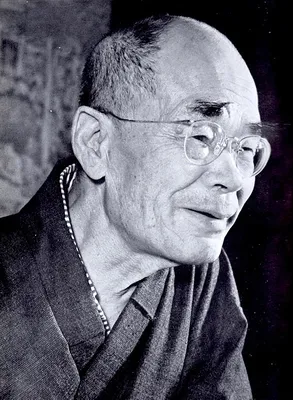
Shunry Suzuki
Daisetz Teitaro Suzuki was a Japanese scholar who introduced Zen and Mahayana Buddhism to the West through his extensive writings and lectures.
Daisetz Teitaro Suzuki, born Teitarō Suzuki in 1870, was a prominent Japanese essayist, philosopher, and religious scholar. He became a leading authority on Buddhism, particularly Zen and Shin, and played a crucial role in popularizing these traditions, along with broader Far Eastern philosophy, in Western countries. Suzuki was also adept at translating various Asian literatures. He dedicated many years to academia, holding a professorship at Ōtani University and lecturing at Western institutions. His efforts in bridging Eastern and Western thought were recognized, and he was even nominated for the Nobel Peace Prize in 1963.
Suzuki's early life in Kanazawa was marked by poverty after his father's death, leading him to seek answers in religion. His intellectual curiosity led him to study at Waseda and the University of Tokyo, where he acquired knowledge of several languages and began Zen practice. He lived and worked with scholar Paul Carus in Illinois, assisting in translating Eastern spiritual texts, which marked the beginning of his significant literary contributions to the West. His marriage to Beatrice Erskine Lane Suzuki further connected him to Western intellectual circles, and he later joined the Theosophical Society. Suzuki's extensive career involved teaching Buddhist philosophies, founding the Eastern Buddhist Society, and authoring numerous influential works that explored Zen and Mahayana Buddhism, ultimately securing his reputation as a key figure in the global dissemination of these spiritual traditions.
Introduction of Zen to the West
Daisetz Teitaro Suzuki was instrumental in introducing and explaining Zen Buddhism and Mahayana philosophy to Western audiences. He spent significant time lecturing and teaching at universities in Europe and the United States, making these complex traditions accessible. Suzuki's approach emphasized Zen's practical nature and its focus on direct experience, which resonated with Westerners interested in mysticism and alternative spiritual paths. He translated and analyzed key Chan Buddhist texts like the Blue Cliff Record and the Gateless Passage, providing Western scholars and practitioners with essential resources. His writings, such as 'Zen and Japanese Culture' and 'Essays in Zen Buddhism,' explored the historical development and cultural impact of Zen, solidifying his reputation as a leading interpreter of Eastern spirituality.
Academic and Scholarly Contributions
Suzuki's academic career spanned several decades, during which he held professorships at institutions like Ōtani University in Japan and taught at Columbia University in the United States. He was a prolific scholar, authoring numerous books and essays on Buddhist philosophy. Beyond Zen, Suzuki also explored the Jōdo Shinshū faith, the tradition of his mother, and even delved into Western Christian mysticism, drawing parallels between figures like Meister Eckhart and the Japanese Myokonin. He co-founded the Eastern Buddhist Society, which fostered scholarly discussion and publication on Mahayana Buddhism. Suzuki's work often involved detailed examinations of Buddhist texts and concepts, aiming to provide a comprehensive understanding of their philosophical underpinnings and their relevance to contemporary life. His contributions earned him significant honors, including Japan's National Medal of Culture.
Zen Training and Personal Philosophy
Suzuki underwent rigorous Zen training himself, practicing at Engaku-ji in Kamakura under masters like Kosen Roshi and Soyen Shaku. He described this training as a profound period of mental, physical, moral, and intellectual struggle, involving deep meditation and a monastic lifestyle. This personal experience informed his understanding and presentation of Zen, which he characterized by humility, labor, service, prayer, and meditation. Suzuki's perspective was that Zen enlightenment needed to be integrated with the practical demands of everyday life, a concept he attributed to the social adaptations of Buddhism in China. He believed that the 'awakening' sought in Zen was achievable through a way of life that embraced mundane tasks alongside spiritual practice, distinguishing it from earlier Indian Buddhist traditions.
Key Ideas
- Zen Buddhism as a practical religion emphasizing direct experience
- The integration of enlightenment with everyday life and mundane tasks
- The unique development of Buddhism in China, adapting to social circumstances
- The common essence of religious sentiment found in Zen and Western mysticism
Notable Quotes
“Suzuki in his later years was not just a reporter of Zen, not just an expositor, but a significant contributor to the development of Zen and to its enrichment.”
Books by Shunry Suzuki
0 free public domain books · Read online or download
