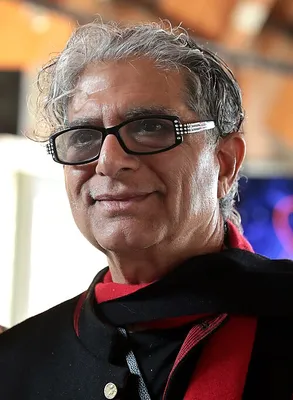
Shengyan
Zen is a Mahayana Buddhist tradition originating in China, emphasizing meditation and direct insight into Buddha-nature.
Zen, known as Chan in China, Thiền in Vietnam, and Seon in Korea, is a school of Mahayana Buddhism that emerged in China during the Tang dynasty. It developed by integrating Indian Buddhist philosophies, particularly Yogacara and Madhyamaka, with Chinese Taoist thought. Traditionally, its introduction to China is attributed to the monk Bodhidharma. The practice central to Zen is meditation, aiming for direct insight into one's inherent Buddha-nature and its expression in daily life. While some Zen traditions de-emphasize formal study, favoring direct experience through meditation and guidance from a master, many also incorporate traditional Buddhist practices like chanting, rituals, and scriptural study.
Zen's philosophical underpinnings draw from various Buddhist sources, including Sarvāstivāda meditation techniques, Mahayana teachings on bodhisattvas, Yogachara, Tathāgatagarbha texts, and the Huayan school. The Prajñāpāramitā literature and Madhyamaka philosophy significantly shaped Zen's often apophatic and iconoclastic approach. The term 'Zen' itself derives from the Sanskrit word 'dhyāna,' meaning meditative absorption. The tradition also refers to itself as the 'Buddha-mind school,' highlighting the concept of an innate, pure mind within all beings.
Origins and Development
Zen originated in China as the Chan school, a synthesis of Indian Mahayana Buddhism and Chinese Taoist philosophy, particularly Neo-Daoism. It is believed to have been brought to China by the Indian monk Bodhidharma. From China, Chan spread to other East Asian countries, becoming Thiền in Vietnam, Seon in Korea, and Zen in Japan. The tradition emphasizes direct, intuitive understanding of one's inherent Buddha-nature, often through intensive meditation practice. While rooted in Mahayana Buddhism, its unique development involved incorporating indigenous Chinese thought, leading to distinct practices and philosophical nuances.
Core Practices and Philosophy
The cornerstone of Zen practice is meditation, particularly sitting meditation (zazen). The goal is direct insight into one's true nature, often described as Buddha-nature or 'seeing the mind.' Some Zen lineages prioritize this direct experiential approach, sometimes downplaying scriptural study or conventional rituals, and emphasizing the role of a qualified teacher. However, many Zen schools also maintain traditional Buddhist practices such as chanting, observing precepts, and scriptural study. Key philosophical concepts include intrinsic enlightenment and sudden awakening, drawing from texts like the Laṅkāvatāra Sūtra and the Huayan school.
Meditation Techniques and Approaches
Early Chinese meditation practices, influenced by Indian texts translated by figures like An Shigao and Kumārajīva, formed the basis for Chan meditation. These included mindfulness of breathing and contemplation of various Buddhist doctrines. While drawing on classical methods, Zen developed unique approaches, such as 'maintaining mind' or 'viewing the mind,' which focus directly on the nature of awareness itself, rather than external objects or specific techniques. This direct approach, sometimes described as 'sudden,' emphasizes realizing Buddha-nature without gradual steps or prerequisites, often using metaphors like a mirror or the sun obscured by clouds.
The Concept of 'No-Mind' and Emptiness
To prevent the reification of the mind or Buddha-nature, Zen rhetoric also incorporates concepts like 'no-mind' (wuxin) and 'no-mindfulness' (wunian). This negating approach, influenced by Madhyamaka philosophy, emphasizes emptiness and absence as central themes of contemplation. This dialectic between the positive realization of Buddha-mind and the negative or apophatic emphasis on emptiness has been crucial in shaping Zen theory and practice throughout its history, fostering a non-conceptual understanding that transcends language and fixed ideas.
Key Ideas
- Buddha-nature: The inherent potential for enlightenment within all beings.
- Direct insight: Emphasis on experiential understanding rather than intellectual study.
- Sudden awakening: The concept of immediate enlightenment.
- No-mind (Wuxin): A state of non-conceptual awareness, transcending attachment to mental states.
- Meditation (Dhyana/Chan/Zazen): Central practice for cultivating insight.
Books by Shengyan
9 free public domain books · Read online or download