Shannon Kaiser
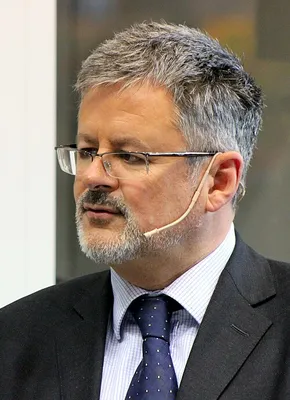
Christopher Clark is a distinguished Australian-born historian known for his work on modern European history, particularly Prussia and the origins of WWI.
Christopher Clark, born in 1960, is an Australian historian residing in the UK and Germany, holding the prestigious Regius Professorship of History at the University of Cambridge. Educated at Sydney Grammar School and the University of Sydney, he earned his PhD from Cambridge. His academic career has focused on modern European history, with early research concentrating on Prussia, including aspects of Pietism and Judaism within the Prussian state, and the power struggles between church and state, notably the Kulturkampf.
Clark gained significant recognition for his best-selling history of Prussia, "Iron Kingdom: The Rise and Downfall of Prussia, 1600–1947." This work challenged traditional views on German history, particularly the concept of a unique German historical path (Sonderweg). He also explored Christian-Jewish relations in Prussia in "The Politics of Conversion." His influential book "The Sleepwalkers: How Europe Went to War in 1914" re-examined the causes of World War I, arguing against sole German responsibility and highlighting diplomatic failures and miscalculations. For his contributions to Anglo-German relations, he was knighted in 2015.
Academic Career and Focus
Christopher Clark's academic journey began with a focus on Prussian history, delving into subjects like Pietism, Judaism in Prussia, and the Kulturkampf, the conflict between Bismarck's state and the Catholic Church. His research scope has since expanded to encompass the broader dynamics of religious institutions and state power in modern Europe. He has held various positions at the University of Cambridge, progressing from lecturer to reader, and ultimately becoming the Regius Professor of History. His time living in West Berlin in the mid-1980s provided him with direct insight into German society and history during a pivotal period.
Key Works and Historical Interpretations
Clark's extensive work includes "Iron Kingdom: The Rise and Downfall of Prussia, 1600–1947," which received numerous awards and brought him widespread acclaim. In this book, he posits that Germany's destiny was not fulfilled by Prussia but rather led to its downfall, challenging the Sonderweg theory that emphasizes Germany's unique historical trajectory. His study on the origins of World War I, "The Sleepwalkers: How Europe Went to War in 1914," questioned the long-held notion of German war guilt, instead presenting a complex interplay of diplomatic misjudgments and governmental strategies. He also authored "The Politics of Conversion: Missionary Protestantism and the Jews in Prussia, 1728–1941," examining Christian-Jewish relations within the Prussian context.
Recognition and Influence
Clark's scholarly contributions have been widely recognized through numerous awards, including the Wolfson History Prize, the German Historians' Prize (Deutscher Historikerpreis), the Cundill Prize, and the Los Angeles Times Book Prize. He was knighted in 2015 for his services to Anglo-German relations. His work has significantly influenced historical discourse, particularly regarding German history and the causes of World War I, by offering nuanced interpretations that move beyond traditional narratives and emphasizing comparative European perspectives. He has also contributed to documentary filmmaking and edited scholarly series.
Key Ideas
- Critique of the Sonderweg theory in German historiography.
- Emphasis on comparative European history to understand national developments.
- Reinterpretation of the causes of World War I, focusing on diplomatic failures and shared responsibilities.
- Exploration of the complex relationship between state power and religious institutions in Prussian and modern European history.
Books by Shannon Kaiser
2 free public domain books · Read online or download