Seung Sahn was a Korean Seon master who founded the Kwan Um School of Zen, teaching Zen to Western audiences.
Seung Sahn, born Duk-In Lee in 1927, was a Korean Seon master and the seventy-eighth Patriarch in his lineage. He founded the international Kwan Um School of Zen, significantly contributing to the spread of Zen Buddhism in the West. Known for his charismatic and direct teaching style, he adapted Zen principles for a Western audience, utilizing methods like "dharma combat" and memorable phrases such as "only don't know." He established numerous temples and practice groups globally, including many in the United States after his arrival in 1972. In recognition of his lifetime achievements and the establishment of the Kwan Um School of Zen worldwide, he was awarded the honorific title Dae Jong Sa by the Jogye Order in 2004. He passed away in Seoul, South Korea, in November 2004.
His early life involved participation in a resistance movement against Japanese occupation, followed by imprisonment. After his release, he studied Western philosophy before becoming inspired to ordain as a monk after reading the Diamond Sutra. He underwent rigorous solitary retreats and studied with various masters, receiving dharma transmission from multiple teachers. Seung Sahn served in the Republic of Korea Army before establishing temples in Hong Kong and Japan. Upon settling in the United States, he worked to learn English and began teaching, eventually founding the Kwan Um School of Zen in 1983, which introduced unique practices such as allowing lay teachers to wear monastic robes. He also faced personal challenges, including admitting to sexual relationships with students, which led to the development of an ethics policy within the school.
Founding the Kwan Um School of Zen
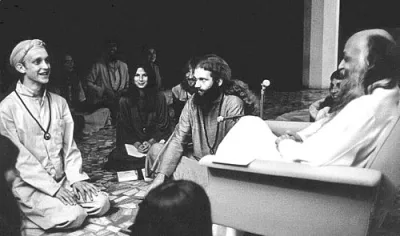
Seung Sahn established the Kwan Um School of Zen in 1983, a significant development in bringing Korean Seon Buddhism to the West. Unlike traditional Korean practices, his school allowed lay practitioners to wear monastic robes and permitted lay Dharma teachers to don long robes, a move that caused some consternation within the Jogye Order. The school's rituals blended traditional Seon and Zen practices with elements found in Pure Land, Chan, and Huayan Buddhism. Seung Sahn also created unique teaching tools, such as the "Twelve Gates" koan study program, which included both ancient cases and his own compositions. He appointed numerous Dharma heirs and created the title Ji Do Poep Sa Nim (JDPSN) for those capable of teaching at a high level without full dharma transmission. His approach emphasized "together action," encouraging students to engage in communal practice and consider the lineage's centers as their homes.
Teaching Methods and Philosophy
Seung Sahn was renowned for his charismatic and direct teaching style, which he adapted to resonate with Western students. He employed simple language and memorable phrases like "only go straight" and "only don't know," even referring to his teachings as "Don't Know Zen." He viewed correspondence with students through letters as a vital teaching method, enabling a form of "dharma combat" via mail and increasing his accessibility. This engagement with students, coupled with his encouragement of communal practice, demonstrated his skillful adaptation of traditional Buddhist teachings to contemporary Western culture. He also emphasized the importance of zazen, incorporating it more frequently into his teachings after early students highlighted its significance in the Western understanding of Zen.
Later Life and Recognition
In his later years, Seung Sahn's health declined, marked by cardiac issues and diabetes, leading to hospitalizations and a reduced presence at his residence. Despite these challenges, he continued to travel and teach, including trips to the Soviet Union at the invitation of Mikhail Gorbachev, which resulted in the establishment of a practice center there. His international influence extended to Israel, where he visited throughout the 1990s, culminating in the opening of the Tel Aviv Zen Center in 1999. In June 2004, the Jogye Order bestowed upon him the highest honor, Dae Jong Sa, translating to "Great Lineage Master," in recognition of his extensive accomplishments and the global establishment of the Kwan Um School of Zen. He passed away later that year in Seoul.
Key Ideas
- Don't Know Zen: Emphasizing a mind free from fixed concepts and preconceptions.
- Only Go Straight: A teaching encouraging direct, unadulterated action and intention.
- Together Action: Promoting communal practice and mutual support within the sangha.
Books by
4 free public domain books · Read online or download