Scarlett St Clair
Mt. Lebanon is a historic Pennsylvania township that evolved from a farming community into a streetcar suburb of Pittsburgh.
Mt. Lebanon, Pennsylvania, is a township with home rule status located in Allegheny County, just south of Pittsburgh. Originally established as a farming community in 1912, its development was significantly influenced by the arrival of streetcar lines in the early 20th century, transforming it into a commuter suburb. The opening of the Liberty Tunnel further enhanced its accessibility by automobile. The township adopted a home rule charter in 1975, becoming one of the first in Pennsylvania to do so, and officially abbreviated its name to Mt. Lebanon. Its history includes European settlement dating back to the late 18th century and a naming origin tied to the landscape's similarity to Mount Lebanon in the Middle East, rather than specific trees planted there.
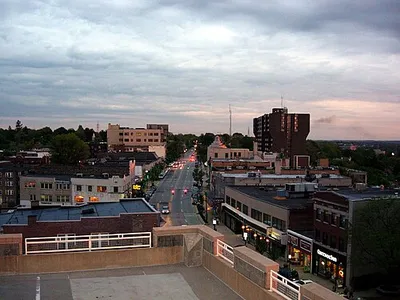
The area is characterized by its distinct neighborhoods and commercial districts, with Uptown Mt. Lebanon serving as the central business hub. The township boasts a significant historic district listed on the National Register of Historic Places, preserving a substantial portion of its early suburban development architecture. Mt. Lebanon offers extensive parks and recreational facilities for its residents. The community is governed by a commission and served by its own school district. The population has grown substantially since its early 20th-century development, reaching over 34,000 residents by 2020.
Historical Development and Naming
The area that became Mt. Lebanon was first settled by Europeans in the late 18th century. It was incorporated as a First Class Township in 1912, having previously been part of Scott Township. The name 'Mt. Lebanon' was adopted due to perceived landscape similarities to the actual Mount Lebanon, rather than from two cedar trees planted in the area. The community's transformation from a rural farming area to a suburban hub was driven by the introduction of streetcar lines starting in 1901, which facilitated daily commutes to Pittsburgh. This development led to the first real estate subdivision in November 1901. The subsequent opening of the Liberty Tunnel in 1924 improved automobile access, leading to a significant population increase between the 1920 and 1930 censuses.
Governance and Demographics
In 1975, Mt. Lebanon officially adopted a home rule charter, a move that positioned it as one of Pennsylvania's earliest municipalities to operate outside the standard Township Code. The government is structured as a commission of five members, each representing one of the township's wards. As of the 2020 census, the population was 34,075. The demographic makeup in 2020 was predominantly White (87.15%), with smaller percentages of Black, Asian, and other racial groups, and 3.32% identifying as Hispanic or Latino. The age distribution shows a relatively balanced spread across different adult age groups, with 24.9% of the population under 18.
Cultural and Recreational Landscape
Mt. Lebanon features a significant historic district recognized on the National Register of Historic Places, encompassing over 3,300 contributing buildings and sites that reflect its development from the late 19th century through the mid-20th century. Architectural styles found in neighborhoods like Virginia Manor and Hoodridge include Colonial Revival, Tudor Revival, and Craftsman. The township provides extensive recreational amenities, including fifteen parks covering over 200 acres, an Olympic-size swimming pool, an ice rink, and a public golf course. The Mt. Lebanon School District's sports teams, known as the Blue Devils, are an integral part of the community's cultural life.
Books by Scarlett St Clair
0 free public domain books · Read online or download
