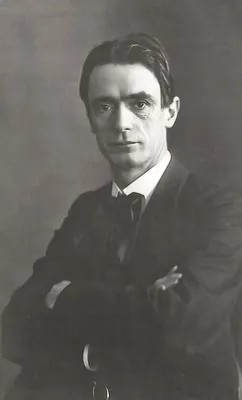
Rudolf Steiner Max Gysi
Rudolf Steiner was an Austrian philosopher who founded anthroposophy, a spiritual movement influencing education, agriculture, and medicine.
Rudolf Steiner (1861-1925) was an Austrian philosopher, esotericist, and social reformer who developed the spiritual movement known as anthroposophy. Initially recognized for his literary criticism and works like "The Philosophy of Freedom," Steiner established anthroposophy in the early 20th century, drawing from German idealism and theosophy. His teachings, influenced by Gnosticism, aimed to synthesize spirituality and science through a method he called "spiritual science," applying rigorous thinking to mystical concepts. Steiner's work evolved through distinct phases, moving from philosophical exploration to collaborative artistic endeavors, including the construction of the Goetheanum, and later to practical applications such as Waldorf education and biodynamic agriculture.
Steiner's intellectual journey began with a strong foundation in mathematics and natural sciences, alongside studies in philosophy and literature. He held a deep interest in the works of Goethe, editing his scientific writings and publishing analyses of his worldview. Steiner's doctoral dissertation focused on Fichte's concept of the ego, later expanded into "Truth and Knowledge." His seminal work, "The Philosophy of Freedom," explored epistemology and ethics, proposing a path for human spiritual development. Despite periods of academic isolation and controversial associations, Steiner's ideas have had a lasting impact on various fields.
Foundations of Anthroposophy
Rudolf Steiner founded anthroposophy, a spiritual philosophy rooted in German idealism and theosophy. He sought to bridge the gap between the material and spiritual worlds, developing a method he termed "spiritual science." This approach aimed to apply the clarity and rigor of Western philosophical thinking to the exploration of spiritual realities, distinguishing it from what he perceived as vaguer mystical traditions. Steiner's early philosophical work, particularly "The Philosophy of Freedom," laid the groundwork for his later spiritual insights, offering a pathway for individuals to achieve spiritual self-awareness and freedom. His teachings incorporated elements influenced by Gnosticism, and he proposed that human knowledge could transcend perceived limitations.
Evolution of Steiner's Work
Steiner's intellectual and spiritual work progressed through distinct phases. The initial phase was primarily philosophical, focusing on epistemology and ethics. Around 1907, his work entered a second phase characterized by collaborative artistic expression, encompassing drama, dance, and architecture, which culminated in the creation of the Goetheanum, a cultural center. Following World War I, a third phase saw Steiner engage in applied projects. These included the development of Waldorf education, a pedagogical approach, and biodynamic agriculture, a method of farming. Steiner also contributed to anthroposophical medicine, demonstrating a commitment to applying his spiritual insights to practical societal needs.
Early Life and Intellectual Development
Born in Austria, Rudolf Steiner's early life was marked by his family's movements due to his father's career as a telegraph operator. He received early education at home and later attended village schools and the realschule. His academic pursuits led him to the Vienna Institute of Technology, where he studied mathematics, physics, chemistry, botany, zoology, and mineralogy, while also auditing literature and philosophy courses. During this time, he developed a profound interest in Immanuel Kant and Johann Wolfgang von Goethe. A significant early experience involved a childhood vision of a deceased aunt, which he later interpreted as evidence of spiritual perception, akin to geometric certainty.
Literary and Philosophical Career
Steiner gained recognition as a literary critic and author, publishing "The Philosophy of Freedom" (Die Philosophie der Freiheit) in 1894, a work he considered to contain the essence of his later anthroposophical teachings. He worked as an editor for Goethe's scientific writings at the Goethe archives in Weimar, an experience that solidified his understanding of Goethe's worldview and epistemology. Steiner also engaged with the philosophies of thinkers like Fichte and Schopenhauer, earning a doctorate in philosophy for his dissertation on Fichte's concept of the ego. His early intellectual stance was individualistic and freethinking, though he later shifted towards a more explicitly spiritual orientation.
Key Ideas
- Spiritual science: applying rigorous thinking to spiritual concepts
- Anthroposophy: a spiritual philosophy synthesized from idealism and theosophy
- Ethical individualism: a spiritual approach to personal development
- Spiritual clairvoyance: the capacity to perceive spiritual realities
Notable Quotes
“thinking...is no more and no less an organ of perception than the eye or ear. Just as the eye perceives colours and the ear sounds, so thinking perceives ideas.”
Books by Rudolf Steiner Max Gysi
0 free public domain books · Read online or download
