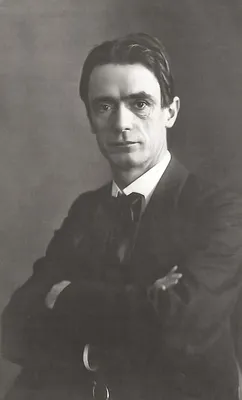
Rudolf Steiner Gysi Max
Rudolf Steiner was an Austrian philosopher and esotericist who founded anthroposophy, a spiritual movement influencing education, agriculture, and medicine.
Rudolf Steiner (1861-1925) was an Austrian philosopher, occultist, and esotericist who established anthroposophy, a spiritual philosophy with roots in German idealism and theosophy. Initially recognized as a literary critic and author of works like 'The Philosophy of Freedom,' Steiner later developed 'spiritual science,' aiming to apply rigorous thinking to spiritual inquiry. His work evolved through distinct phases: an initial philosophical focus, a collaborative artistic period culminating in the Goetheanum, and a later phase dedicated to applied projects such as Waldorf education and biodynamic agriculture. Steiner's teachings, influenced by Gnosticism, are sometimes described as pseudoscientific or pseudohistorical, yet he sought to demonstrate the boundless potential of human knowledge through an epistemological approach based on Goethe's ideas of thinking as a form of perception.
Philosophical and Spiritual Development
Rudolf Steiner's intellectual journey began with a focus on philosophy and literary criticism, leading to works like 'The Philosophy of Freedom,' which he considered foundational for his later ideas. He sought a synthesis between scientific thought and spiritual understanding, developing his concept of "spiritual science." This approach aimed to apply the clarity of Western philosophical thinking to spiritual matters, distinguishing it from more nebulous mystical traditions. Steiner's thought was influenced by German idealism, theosophy, and Gnosticism. His epistemological framework, inspired by Goethe, viewed thinking as an organ of perception capable of grasping ideas, thereby asserting that human knowledge has no inherent limits.
Founding of Anthroposophy and Artistic Engagement
Around 1907, Steiner shifted towards a more collaborative and artistic expression of his ideas, founding the esoteric spiritual movement known as anthroposophy. This period saw him engage in various art forms, including drama, dance, and architecture. The culmination of this phase was the construction of the Goetheanum, a cultural center designed to be a hub for the arts. Anthroposophy, as developed by Steiner, sought to provide a spiritual understanding of the world and humanity's place within it, drawing on both philosophical traditions and his own perceived clairvoyant abilities.
Applied Anthroposophy and Later Work
Following World War I, Steiner's work entered a third phase, characterized by the practical application of anthroposophical principles. This led to the development of influential initiatives such as Waldorf education, which emphasizes a holistic approach to child development; biodynamic agriculture, a form of organic farming based on spiritual principles; and anthroposophical medicine, which integrates spiritual insights into healing practices. These applied projects aimed to bring spiritual understanding into tangible, everyday life, reflecting Steiner's belief in the practical relevance of his spiritual research.
Key Ideas
- Spiritual Science: Applying rigorous thinking to spiritual questions.
- Anthroposophy: A spiritual philosophy with roots in German idealism and theosophy.
- Thinking as Perception: The idea that thinking is a cognitive faculty akin to sensory perception.
- Ethical Individualism: A focus on individual spiritual development and freedom.
- Waldorf Education: A pedagogical approach based on anthroposophical principles.
- Biodynamic Agriculture: An agricultural system based on ecological and spiritual principles.
Books by Rudolf Steiner Gysi Max
0 free public domain books · Read online or download
