Rosicrucians
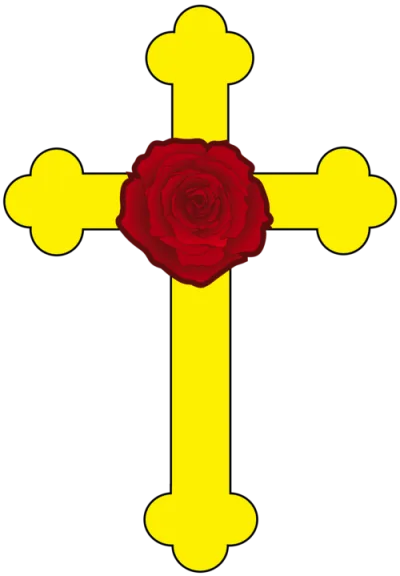
Rosicrucianism is a spiritual movement originating in 17th-century Europe, symbolized by the Rose Cross, influencing esoteric thought and inspiring various organizations.
Rosicrucianism emerged in early modern Europe during the early 17th century, spurred by the publication of anonymous manifestos like the Fama Fraternitatis and Confessio Fraternitatis. These texts announced a secret society, the Brotherhood of the Rosy Cross, and promised a universal reformation of mankind through esoteric knowledge derived from ancient wisdom, Qabalah, Hermeticism, alchemy, and Christian mysticism. The movement, symbolized by the Rose Cross, quickly gained attention and sparked considerable debate about its existence and nature, with some viewing it as a hoax and others as a metaphorical representation of a real, albeit differently formed, movement. Johann Valentin Andreae, though potentially linked to the Chymical Wedding of Christian Rosenkreutz, later distanced himself from the Rosicrucian claims, calling it a "ludibrium" or parody, though some scholars suggest this was to protect his career. Despite this, the Rosicrucian ideas profoundly influenced contemporary occult philosophers and continued to inspire subsequent esoteric organizations throughout history.
Origins and Manifestos
The Rosicrucian movement officially began with the anonymous publication of manifestos in Germany between 1614 and 1617, including the Fama Fraternitatis Rosae Crucis (1614), the Confessio Fraternitatis (1615), and the Chymical Wedding of Christian Rosenkreutz (1616). The Fama Fraternitatis introduced the legend of "Father Brother C.R.C.," a mystic philosopher born in 1378, who supposedly traveled the Middle East and founded a secret brotherhood. This brotherhood, initially small and composed of learned, celibate men, aimed to heal the sick and disseminate hidden knowledge when the intellectual climate was ready. The manifestos extensively referenced Qabalah, Hermeticism, alchemy, and Christian mysticism, attracting intellectuals interested in esoteric truths and a "universal reformation of mankind."
Reception and Controversy
The Rosicrucian manifestos generated significant excitement and controversy across Europe, particularly during the "Rosicrucian furore" of the early 17th century. While many were drawn to the promise of spiritual transformation and esoteric knowledge, the nature of the Brotherhood of the Rosy Cross was widely debated. Some interpreted the manifestos literally, believing in the existence of the secret order, while others viewed them as allegorical or even a deliberate hoax. Johann Valentin Andreae, linked to the Chymical Wedding, later described it as a "ludibrium" (parody), and some scholars believe he sought to distance himself from the movement to protect his clerical career, considering the manifestos a "reprehensible hoax." Nevertheless, these texts inspired numerous pamphlets and discussions, and mysterious posters appearing in Paris in 1622 further fueled the public fascination.
Influence and Legacy
The Rosicrucian ideas significantly impacted early modern esoteric thought and inspired a generation of occult philosophers. Figures like Michael Maier, Robert Fludd, and Thomas Vaughan engaged with the Rosicrucian worldview, with Maier describing it as stemming from a "primordial tradition" with ancient Egyptian, Brahmin, Eleusinian, and Persian roots. The movement's core tenets, particularly its emphasis on esoteric science and spiritual reformation, resonated with many intellectuals during a period of religious and political turmoil. In later centuries, numerous esoteric societies claimed lineage from the original Rosicrucians, including the Hermetic Order of the Golden Dawn and the Rosicrucian Order, AMORC, solidifying Rosicrucianism's enduring legacy in the Western esoteric tradition.
Key Ideas
- A secret brotherhood dedicated to esoteric knowledge and spiritual reformation.
- The pursuit of "universal reformation of mankind" through hidden wisdom.
- Integration of Qabalah, Hermeticism, alchemy, and Christian mysticism.
- Symbolism of the Rose Cross (Rosy Cross).
Notable Quotes
“"We speak unto you by parables, but would willingly bring you to the right, simple, easy, and ingenuous exposition, understanding, declaration, and knowledge of all secrets."”
“"We, the Deputies of the Higher College of the Rose-Croix, do make our stay, visibly and invisibly, in this city (...)"”
“"The thoughts attached to the real desire of the seeker will lead us to him and him to us."”
“Our origins are Egyptian, Brahminic, derived from the mysteries of Eleusis and Samothrace, the Magi of Persia, the Pythagoreans, and the Arabs”
“The Chymical Wedding, with its fertile brood of monsters, a ludibrium which surprisingly some esteem and explicate with subtle investigations, is plainly futile and betrays the vanity of the curious”
Books by Rosicrucians
3 free public domain books · Read online or download