Ronald A Havens
Commonplace books are personal compilations of information, evolving from ancient practices to a Renaissance tool for knowledge management and intellectual development.
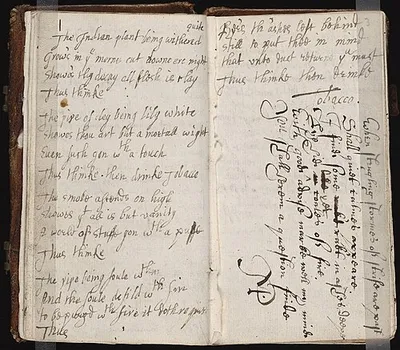
Commonplace books, originating from the Latin 'locus communis' meaning 'general place', are personal notebooks compiled by individuals to collect diverse information. These entries, unlike journals, are typically organized by subject matter and can include proverbs, quotes, professional references, and personal observations. They served as a vital tool for learning, memory, and intellectual organization for readers, writers, students, and scholars throughout history, particularly gaining significance in Early Modern Europe.
The practice dates back to antiquity, with philosophers like Aristotle and Cicero exploring the concept of 'commonplaces' in rhetoric and argumentation. Over centuries, this evolved into personal collections, with figures like Aulus Gellius credited for the genre's development. By the Renaissance, commonplace books were embraced by scholars, scientists, and even women excluded from formal education as a means of intellectual cultivation. The invention of printing made some commonplace books accessible to a wider public, and influential works like John Locke's treatise in the late 17th century further systematized their creation and use, leading to commercially printed blank versions.
Philosophical and Rhetorical Origins
The concept of commonplace, derived from Greek and Latin terms for a general or common place, has roots in ancient philosophy and rhetoric. Aristotle, in his 'Topica' and 'Rhetoric', distinguished forms of argumentation and suggested their use in examining propositions. Cicero further developed these ideas, applying them to public speaking and compiling lists of wise sayings or quotations. Quintilian expanded on this in his treatise on rhetoric education, advocating for the memorization of commonplaces and imbuing them with moral and ethical dimensions. Early writers like Seneca the Younger encouraged the collection of ideas and sayings, likening the process to a bee gathering pollen to create honey-like words. By late antiquity, the use of commonplaces in rhetorical settings was well-established, with figures like Stobaeus compiling extensive excerpts from lost works.
Evolution into Personal and Scholarly Tools
The practice of keeping commonplace books evolved significantly through the centuries. By the eighth century, the concept was adapted for religious contexts by preachers and theologians, who compiled excerpts from the Bible and Church Fathers, initially arranged by order of appearance and later by thematic headings, forming 'florilegia'. Precursors to the modern commonplace book include the personal records of ancient philosophers like Marcus Aurelius and the anecdotal and poetic collections of figures like Sei Shonagon. During the Renaissance, scholars like Leonardo da Vinci and Jean Bodin utilized notebooks structured like commonplace books for organizing vast amounts of information. The Italian 'zibaldone' emerged in the 15th century as a vernacular form of personal compilation, often containing a diverse mix of texts, sketches, and practical information, reflecting a developing secular culture.
Information Management and Modern Relevance
In the early eighteenth century, commonplace books became sophisticated information management devices. Individuals stored quotations, observations, and definitions, using them to collate ethical, informative, or practical texts like recipes. For women, these books served as crucial repositories of intellectual references, especially given their exclusion from formal higher education. Scientists, such as Carl Linnaeus, employed commonplacing techniques for organizing complex systems like his nomenclature for 'Systema Naturae'. The method extended beyond books, with thinkers carrying notes in various forms. The underlying principles of categorized note-keeping continue to resonate, with modern information technology offering software applications that perform similar functions to these historical paper-based systems.
Key Ideas
- Personal compilation of information organized thematically
- Tool for memory, learning, and intellectual organization
- Evolution from ancient rhetorical concepts to Renaissance scholarly practice
- Information management system predating modern technology
- Role in intellectual development for scholars and women
Books by Ronald A Havens
0 free public domain books · Read online or download
