Robert Bauval, Graham Hancock
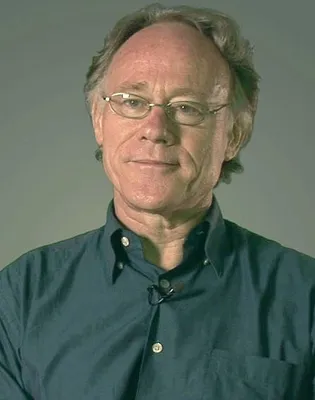
Graham Hancock is a British author known for theories about an advanced Ice Age civilization and its influence on ancient cultures.
Graham Hancock, born in 1950, is a British author whose work explores theories about a lost advanced civilization from the last Ice Age. He posits that survivors of a cataclysm around 12,900 years ago shared their advanced knowledge, including spiritual and technological insights, with emerging cultures in places like Egypt, Sumer, and Mesoamerica. Hancock's background includes journalism, where he reported on international development and wrote a critical book on the aid system before shifting his focus to ancient history and prehistory.
Scholars often categorize Hancock's work as pseudoarchaeology and pseudohistory, noting that his interpretations of archaeological evidence, myths, and historical texts are seen as biased and selective, often ignoring contradictory information. His ideas are described as a modern mythic narrative, sometimes involving concepts of psychic abilities and communication with nonphysical entities. Hancock presents his work as a challenge to academic dogma and a path to understanding spiritual elements dismissed by materialist science, though his writings have not undergone scholarly peer review.
Early Career and Shift to Speculative History
Born in Edinburgh in 1950, Graham Hancock studied sociology at Durham University. He began his career as a journalist for various British newspapers and magazines, including The Times and The Economist, where he served as East Africa correspondent. His initial books, such as 'Lords of Poverty' (1989), focused on international development and offered a critical perspective on the global aid system. However, in 1992, with the publication of 'The Sign and the Seal,' Hancock transitioned to more speculative inquiries into human prehistory and ancient civilizations, a direction that would define his subsequent published works.
Theories on Lost Civilizations and Ancient Knowledge
Hancock's central thesis, notably in 'Fingerprints of the Gods,' suggests that a highly advanced global civilization existed during the last Ice Age. He proposes that this civilization was destroyed by comet impacts, triggering events like the Younger Dryas. According to Hancock, survivors disseminated their sophisticated knowledge, encompassing astronomical understanding and architectural principles, to nascent societies across the globe, influencing the development of early civilizations. His work often interprets ancient monuments and myths as remnants of this lost epoch and its teachings.
Esoteric Interpretations and Academic Reception
Hancock's explorations delve into concepts that touch upon the esoteric and spiritual. He has suggested that members of the proposed Ice Age civilization possessed psychic abilities and communicated with 'powerful nonphysical beings,' sometimes through psychedelic use. This aspect of his work, alongside his interpretations of ancient sites like the Giza pyramids and the Sphinx as encoded messages from this lost era, positions his theories within a broader interest in hidden knowledge and spiritual realities. Academically, his research is often met with criticism, labeled as pseudoarchaeology and pseudohistory due to perceived biases and a lack of scholarly rigor.
Key Ideas
- An advanced global civilization existed during the last Ice Age.
- Cataclysmic events (e.g., comet impacts) led to the destruction of this civilization.
- Survivors of this civilization transmitted advanced knowledge to early cultures.
- Ancient monuments and myths are evidence of this lost civilization.
- The Ice Age civilization possessed spiritual and potentially psychic abilities.
Notable Quotes
“a whacking big dose of amateur scholarship alloyed with a fervid imagination.”
“that the Lost Ark of the Covenant really exists”
“that an advanced society perished at the end of the last Ice Age and that its survivors transmitted astronomical and architectural knowledge to later cultures.”
“a predetermined conclusion while ignoring their historical contexts.”
“nothing original.”
Books by Robert Bauval, Graham Hancock
2 free public domain books · Read online or download