Richard MacDonald
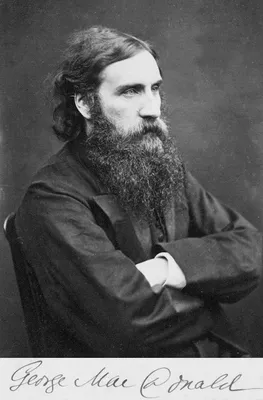
George MacDonald was a Scottish author, poet, and minister, a pioneer of modern fantasy and a significant influence on later writers.
George MacDonald, born in 1824 in Scotland, was an influential author, poet, and Congregational minister. He is widely recognized as a foundational figure in modern fantasy literature and served as a mentor to Lewis Carroll. Beyond his imaginative tales, MacDonald also authored works on Christian theology, including collections of sermons.
MacDonald's upbringing was marked by a strong intellectual and literary environment, with family members involved in Celtic scholarship and classical education. Despite early health struggles, including recurring lung issues that affected him throughout his life, he pursued theological training. His ministerial career, beginning in 1850, was characterized by sermons emphasizing universal love and redemption, which did not always find favor with his congregations, leading him to eventually focus more on his writing.
His literary output includes seminal fantasy novels like "Phantastes" and "The Princess and the Goblin," as well as fairy tales. MacDonald's approach to writing, which he described as being for the "child-like," aimed to explore the human condition through fantasy. His work profoundly impacted subsequent generations of authors, including C. S. Lewis and J. R. R. Tolkien. He also contributed to realistic Scottish literature, founding the "kailyard school."
Literary Innovation and Influence
George MacDonald is predominantly celebrated as a pioneer of modern fantasy literature. His imaginative works, such as "Phantastes," "At the Back of the North Wind," "The Princess and the Goblin," and "Lilith," along with his fairy tales, established a new path for the genre. He articulated that his writing was intended for "the child-like, whether they be of five, or fifty, or seventy-five," suggesting a universal appeal to innocence and wonder. MacDonald's profound exploration of the human condition through fantastical narratives significantly influenced a generation of writers. C. S. Lewis, in particular, considered MacDonald his "master," acknowledging a deep intellectual and spiritual debt to his work and theological writings. Other notable authors who cite MacDonald's influence include J. R. R. Tolkien, Madeleine L'Engle, and David Lindsay. MacDonald also played a role in founding the "kailyard school" of Scottish writing with his realistic novels.
Theological and Philosophical Underpinnings
Beyond his imaginative fiction, George MacDonald was also a theologian whose sermons and writings explored Christian doctrine. His theological perspective, as described by biographer William Raeper, focused on rediscovering God as Father and encouraging an intuitive connection with God and Christ. MacDonald's concept of universalism, while not suggesting automatic salvation for all, aligned with the idea of God's persistent love and the potential for redemption, drawing parallels to thinkers like Gregory of Nyssa. His sermons, often delivered in collections like "Unspoken Sermons," were seen by contemporaries such as C. S. Lewis as offering profound spiritual guidance, blending "terror and comfort" and providing indispensable help towards faith. His approach emphasized a Christ-like union of tenderness and severity, aiming to quicken readers' spirits through scripture and their perception of nature.
Life and Early Influences
Born in Scotland in 1824, George MacDonald's early life was shaped by a highly literate and intellectually diverse environment. His family connections included Celtic scholars and individuals with classical educations. Despite suffering from chronic lung conditions like asthma and bronchitis, which necessitated travel in search of better air throughout his life, he pursued higher education, earning a degree in chemistry and physics. After a period of grappling with his life's direction and matters of faith, MacDonald began theological training in 1848. His early ministerial career, starting in 1850, was marked by sermons that promoted universal love and redemption, but these views were not always well-received, leading to a reduction in his stipend and his eventual resignation from pastoral duties. He later engaged in ministerial work in Manchester and briefly taught at the University of London.
Key Ideas
- Pioneering figure in modern fantasy literature
- Exploration of the human condition through fantasy
- Theological emphasis on God as Father and universal love
- Founding figure of the "kailyard school" of Scottish writing
Books by Richard MacDonald
2 free public domain books · Read online or download