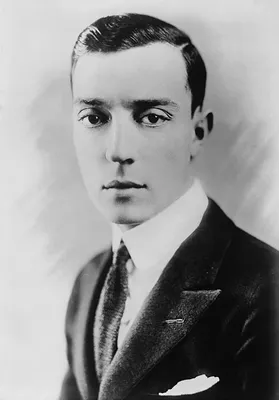
Richard L Hittleman
Buster Keaton was a pioneering silent film comedian and filmmaker known for his physical stunts and deadpan expression.
Joseph Frank "Buster" Keaton (1895–1966) was a significant figure in American cinema, celebrated for his work in silent films during the 1920s. Emerging from a vaudeville background as part of "The Three Keatons," he developed a unique style characterized by daring physical comedy and inventive stunts, often performed with a stoic, deadpan expression that earned him the moniker "The Great Stone Face." Keaton transitioned from short films to features, creating enduring works like "Sherlock Jr." and "The General," which are still highly regarded for their cinematic innovation and comedic brilliance.
His career faced a downturn after signing with Metro-Goldwyn-Mayer in 1928, leading to a loss of creative control and personal struggles with alcoholism. Despite this decline, Keaton eventually found recovery and continued to work as a performer, making notable cameos in later films and television. He received an Academy Honorary Award in 1959, acknowledging his lasting impact on the film industry. Critics and institutions have consistently recognized his extraordinary talent, with some hailing him as one of the greatest actor-directors in film history.
Early Life and Vaudeville Beginnings
Born into a vaudeville family in Kansas in 1895, Joseph Frank Keaton began performing at a very young age. His parents, Joe and Myra Keaton, featured him in their traveling act, "The Three Keatons." The act involved a rough-and-tumble physical comedy style where the young Keaton was thrown, tumbled, and landed safely, leading to him being billed as "The Little Boy Who Can't Be Damaged." This rigorous training instilled in him a remarkable ability for physical stunts and a knack for safe landings. It was during these performances that Keaton, noticing his laughter reduced audience reaction, adopted his signature deadpan expression. Despite legal challenges regarding child labor laws, Keaton became a well-recognized performer. His early experiences in vaudeville profoundly shaped his later comedic approach and his mastery of physical storytelling.
Transition to Film and Silent Comedy Mastery
Keaton's move from vaudeville to filmmaking began in 1917 when he met Roscoe "Fatty" Arbuckle. He quickly demonstrated a natural talent for the medium, even disassembling and reassembling a camera to understand its mechanics. He appeared in numerous Arbuckle shorts before establishing his own production unit. Keaton then focused on feature-length films, where he honed his unique blend of physical comedy, intricate gags, and innovative filmmaking. Works like "Sherlock Jr." (1924), "The Navigator" (1924), and "The General" (1926) showcase his directorial vision and his willingness to perform dangerous stunts, often conceived by himself. "The General," a Civil War epic, is particularly noted for its ambitious scale and integration of trains, though it initially received mixed reviews before gaining recognition as a masterpiece.
Later Career and Enduring Legacy
Keaton's artistic independence waned after he signed with Metro-Goldwyn-Mayer in 1928, a period marked by personal difficulties, including alcoholism. His career as a leading man in features effectively ended when he was dismissed from MGM in 1933. However, he experienced a personal recovery in the 1940s and continued to engage with his craft, appearing in cameos in films such as "Sunset Boulevard" and "Limelight," and in various television programs. In 1959, he was honored with an Academy Honorary Award, recognizing his significant contributions. Keaton's work from the 1920s is widely celebrated for its physical invention and what has been described as a "philosophical grandeur," cementing his status as a legendary figure in cinema history.
Key Ideas
- Physical comedy and inventive stunts
- Deadpan facial expression (The Great Stone Face)
- Transition from vaudeville to film
- Loss of artistic control in major studios
- Resilience and continued performance after career decline
Notable Quotes
“Gee whiz, he's a regular buster!”
“The Little Boy Who Can't Be Damaged”
“The Roughest Act That Was Ever in the History of the Stage”
“The secret is in landing limp and breaking the fall with a foot or a hand. It's a knack. I started so young that landing right is second nature with me. Several times I'd have been killed if I hadn't been able to land like a cat. Imitators of our act don't last long, because they can't stand the treatment.”
“the greatest comedy ever made...and perhaps the greatest film ever made”
Books by Richard L Hittleman
0 free public domain books · Read online or download
