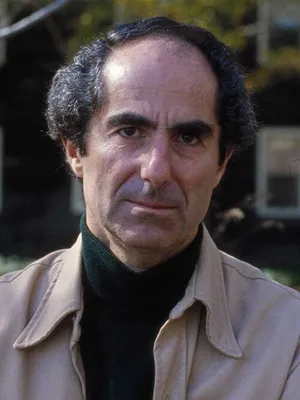
Philip M Bailey
Philip Roth was a celebrated American novelist known for his autobiographical style, exploring Jewish and American identity.
Philip Milton Roth (1933–2018) was an acclaimed American novelist and short-story writer whose works were often set in his native Newark, New Jersey. His fiction is characterized by its deeply personal nature, blurring the lines between reality and imagination, and its insightful examinations of Jewish and American identity. Roth achieved early recognition with his 1959 collection "Goodbye, Columbus," which earned him the National Book Award for Fiction. He later gained significant commercial success with the 1969 bestseller "Portnoy's Complaint." Throughout his career, Roth utilized literary devices such as an alter ego, Nathan Zuckerman, and even a fictionalized version of himself in some narratives, including "The Plot Against America."
Roth received numerous accolades, including multiple National Book Awards, the PEN/Faulkner Award, and the Pulitzer Prize for Fiction for "American Pastoral." His complete works were published by the Library of America while he was still alive, a rare honor. Critics have praised his unique style, with James Wood noting Roth's profound commitment to exploring and constructing life through language. Roth also engaged with academic life, teaching comparative literature at the University of Pennsylvania and later holding a visiting lecturer position at Bard College. Despite his prolific career, Roth expressed pessimism about the future of the novel in the digital age, predicting it would become a more niche activity.
Literary Themes and Style
Philip Roth's literary output is marked by its intensely autobiographical character, frequently drawing from his experiences in Newark, New Jersey. A central theme in his work is the philosophical and formal blurring of the distinction between reality and fiction, inviting readers to question the nature of narrative and authorial voice. Roth's style is often described as "sensual and ingenious," employing provocative explorations of Jewish and American identity. He masterfully used literary devices, including the creation of Nathan Zuckerman, a recurring alter ego, and even a fictionalized version of himself, as seen in "The Plot Against America." This self-referential approach allowed him to delve deeply into the complexities of the self and its place within broader cultural and historical contexts.
Academic and Early Career
Born in Newark, New Jersey, Roth's formative years in the Weequahic neighborhood heavily influenced his writing. After attending Rutgers University and Bucknell University, where he earned a B.A. magna cum laude, he pursued graduate studies at the University of Chicago, obtaining an M.A. in English literature. He briefly served as an instructor in the university's writing program. Roth enlisted in the army but was discharged due to a back injury. He later pursued a PhD in literature at Chicago but withdrew. His teaching career included a long tenure at the University of Pennsylvania, teaching comparative literature, and a part-time visiting lecturer role at Bard College. Roth's writing first gained notice through publications in the "Chicago Review" during his time at the university.
Notable Works and Recognition
Roth's literary career began with the 1959 short story collection "Goodbye, Columbus," which garnered him the National Book Award for Fiction. His first full-length novel, "Letting Go," was published in 1962, followed by "When She Was Good" in 1967. The 1969 novel "Portnoy's Complaint" brought him widespread acclaim and commercial success. Throughout the 1970s and beyond, Roth experimented with various genres and narrative structures, creating characters like David Kepesh and Nathan Zuckerman. His later works, such as "Sabbath's Theater" (which won his second National Book Award), "American Pastoral" (Pulitzer Prize winner), and "Everyman" (a three-time PEN/Faulkner Award recipient), solidified his reputation. He was the second author, after Eudora Welty, to have his complete works published by the Library of America during his lifetime.
Key Ideas
- Exploration of Jewish and American identity
- Blurring the lines between reality and fiction
- Intensely autobiographical narratives
- Critique of the future of the novel in the digital age
Notable Quotes
“I was being optimistic about 25 years really. I think it's going to be cultic. I think always people will be reading them but it will be a small group of people. Maybe more people than now read Latin poetry, but somewhere in that range. ... To read a novel requires a certain amount of concentration, focus, devotion to the reading. If you read a novel in more than two weeks you don't read the novel really. So I think that kind of concentration and focus and attentiveness is hard to come by—it's hard to find huge numbers of people, large numbers of people, significant numbers of people, who have those qualities”
“The book can't compete with the screen. It couldn't compete beginning with the movie screen. It couldn't compete with the television screen, and it can't compete with the computer screen. ... Now we have all those screens, so against all those screens a book couldn't measure up.”
“I'm not good at finding 'encouraging' features in American culture. I doubt that aesthetic literacy has much of a future here.”
“I wished to dazzle in my very own way and to dazzle myself no less than anyone else.”
“All you have to do is sit down and work!”
Books by Philip M Bailey
0 free public domain books · Read online or download
