The Gospel of Peter is a partially preserved ancient Christian text, notable for its unique account of Jesus's crucifixion and its later condemnation as apocryphal.
The Gospel of Peter is an ancient text written in Koine Greek that is only partially known today. It is considered a non-canonical gospel and was rejected by early church synods, contributing to the formation of the New Testament canon. Discovered in Egypt, it is the first apocryphal gospel to be rediscovered. The surviving portion primarily focuses on the Passion narrative, notably assigning responsibility for Jesus's crucifixion to Herod Antipas rather than Pontius Pilate.
The authorship of the Gospel of Peter is uncertain. While it claims to be written by Saint Peter, scholars generally consider it pseudepigraphical. The true author remains unknown, though some suggest acquaintance with the synoptic gospels and potentially the Gospel of John, possibly drawing on oral traditions. There are also theories that it was written independently of the synoptic gospels, potentially using an early proto-gospel that also influenced the canonical passion narratives. Its relationship to the "Gospel according to the Hebrews" is also noted, with suggestions that these were substantially the same work circulated under various names.
The dating of the gospel is debated, with most scholars placing it after the canonical gospels, likely in the 2nd century CE. Some theories suggest it incorporates an even earlier passion narrative source. The text was condemned as heretical around 200 AD, partly due to its alleged docetic elements. Later condemnations in the West were often based on earlier judgments rather than direct knowledge of the text. Its discovery in 1886 by Urbain Bouriant in Egypt generated significant scholarly interest.
Authorship and Relationship to Other Gospels
The Gospel of Peter explicitly claims Saint Peter as its author, presenting a brief narrative attributed to him. However, biblical scholars widely regard this claim as pseudepigraphical, meaning the text bears the name of an author who did not actually compose it. The identity of the true author remains a mystery. While parallels exist with the synoptic gospels, the author does not seem to utilize material unique to Matthew or Luke. Some scholars propose that the author was familiar with the synoptic gospels and possibly the Gospel of John, perhaps drawing upon oral traditions or church readings rather than solely written sources. Alternative theories suggest the gospel was composed independently of the synoptic gospels, possibly using an early "proto-gospel" that might have also served as a source for the passion narratives in Matthew, Luke, and Mark. The text also shows connections to the "Gospel according to the Hebrews," with some scholars believing they were essentially the same work circulated under different titles.
Dating and Historical Condemnation
Scholarly consensus places the composition of the Gospel of Peter after the writing of the four canonical gospels, with most dating it to the 2nd century CE. Some researchers propose that the gospel, as it survives, incorporates an earlier passion narrative source that predates the synoptic accounts. The precise dating is influenced by debates about whether it is the same "Gospel of Peter" that was condemned by Serapion, Bishop of Antioch, around 200 AD. Serapion initially permitted its use but later denounced it for containing heretical elements, identifying it with docetism and finding "some additions" alongside "much of the Savior's true doctrine." The gospel was condemned as apocryphal by church synods, contributing to the establishment of the New Testament canon. Later condemnations by figures like Jerome and Pope Gelasius I appear to have been based on earlier judgments rather than direct engagement with the text itself.
Unique Narrative Elements and Discovery
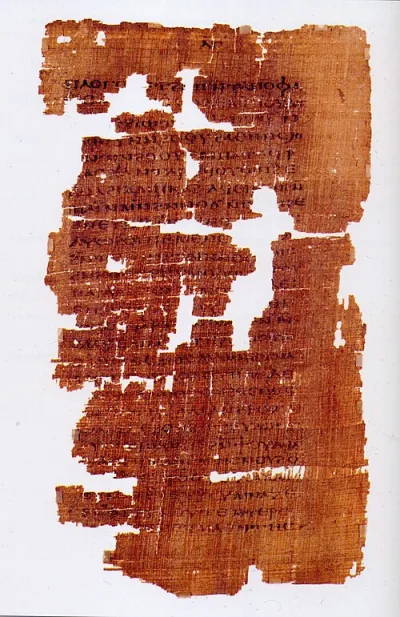
The surviving fragment of the Gospel of Peter is particularly noted for its distinctive Passion narrative. A key element is the exoneration of Pontius Pilate from responsibility for Jesus's crucifixion, with blame instead placed on Herod Antipas, the scribes, and other Jews. The text provides a more detailed account of the events following the crucifixion than the canonical gospels, including an unusual description of the watch set over Jesus's tomb and the resurrection. Jesus's final cry from the cross is also rendered differently, as "My power, my power, thou hast forsaken me," rather than the "Eli, Eli, lama sabachthani?" found in Mark and Matthew. The gospel was rediscovered in 1886 by French archaeologist Urbain Bouriant in Akhmim, Egypt, preserved in an 8th- or 9th-century manuscript. This recovery marked the first time an apocryphal gospel had been found, sparking considerable scholarly interest upon its publication in 1892.
Key Ideas
- Pseudepigraphical authorship
- Unique Passion narrative shifting blame from Pilate to Herod Antipas
- Condemnation as apocryphal and heretical (docetic elements)
- Relationship to other early Christian gospels (Synoptics, Gospel of the Hebrews)
Notable Quotes
“And I with my companions was grieved; and being wounded in mind we hid ourselves: But I Simon Peter and Andrew my brother took our nets and went to the sea;”
“My power, my power, thou hast forsaken me”
Books by
2 free public domain books · Read online or download