Pawel Maciejko
The Sabbateans were Jewish followers of Sabbatai Zevi, proclaimed Messiah in 1666, whose movement persisted despite his forced conversion to Islam.
The Sabbateans were a Jewish movement centered around Sabbatai Zevi (1626–1676), a rabbi and Kabbalist who was declared the Jewish Messiah in 1666 by Nathan of Gaza. Zevi's claims gained widespread acceptance among Jewish communities globally, even after his forced conversion to Islam later that year. His followers, known as Sabbateans or Dönmeh (meaning "converts"), continued to exist in various forms, with some radical factions seeking to alter religious prohibitions and others migrating to the Land of Israel. The movement's influence spread throughout Europe and Italy in the 18th century, facing significant opposition and leading to notable rabbinical disputes, such as the Emden-Eybeschutz controversy.
Despite Zevi's apostasy, many adherents maintained their belief, interpreting his conversion as part of a divine plan. This belief was supported by figures like Nathan of Gaza and Samuel Primo. Zevi's inner circle, including his wife and close relatives, also converted to Islam. While some Sabbateans remained hidden crypto-Jews, others developed strong anti-Islamic sentiments. The movement's legacy is complex, with scholars suggesting potential links to modern secularism and early Hasidism, while also noting its significant impact on Jewish religious discourse and opposition from rabbinic authorities.
Sabbatai Zevi and the Messianic Claim
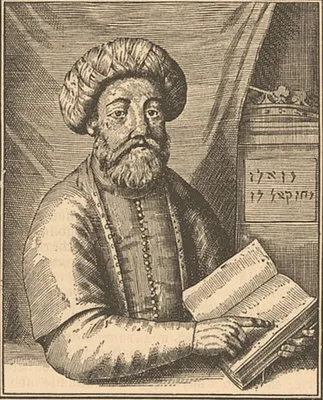
Sabbatai Zevi, an ordained Sephardic rabbi and Kabbalist from Smyrna, declared himself the long-awaited Jewish Messiah. Active across the Ottoman Empire, his proclamation in 1666 by Nathan of Gaza, a scholar close to Zevi, sparked a significant movement. Zevi's followers, who came to be known as Sabbateans or Dönmeh (meaning "converts"), accepted his messianic claims. This movement attracted vast numbers of Jewish believers throughout the diaspora, profoundly impacting Jewish communities.
Forced Conversion and Movement Persistence
In 1666, upon arrival in Constantinople, Sabbatai Zevi was imprisoned and subsequently given an ultimatum by the Ottoman Sultan: face death or convert to Islam. Zevi chose conversion, adopting Islamic attire and receiving a pension. This apostasy deeply disheartened Jewish communities worldwide, leading to ridicule from Muslims and Christians. Nevertheless, many Sabbateans tenaciously clung to their belief, interpreting Zevi's conversion as a deliberate part of his messianic mission. This interpretation was bolstered by key figures like Nathan of Gaza and Samuel Primo, who sought to sustain the movement.
Internal Developments and Opposition
Following Zevi's conversion, his close circle, including his wife Sarah and many relatives, also adopted Islam. While Nathan of Gaza remained Jewish, he was excommunicated. Within the Ottoman Empire, followers who converted to Islam but secretly maintained Jewish practices became known as the Dönmeh. The movement saw internal divisions based on leadership and geography. In Europe, particularly in Italy, missionary efforts by figures like Abraham Miguel Cardoso fueled Sabbatean activity. A radical faction emerged around 1700, seeking to abolish biblical prohibitions. The movement's persistence led to significant rabbinical opposition and controversies, such as the Emden-Eybeschutz dispute, which involved accusations of secret Sabbatean sympathies.
Later Developments and Legacy
The Sabbatean movement continued to spread through central Europe and northern Italy during the 18th century, propelled by charismatic figures. By the 19th century, overt Sabbatean groups diminished, often becoming hidden communities fearing persecution for beliefs considered heretical by Rabbinic Judaism. Some scholars suggest that the Sabbatean movement influenced later spiritual currents, potentially fostering elements that connected with modern secularism or contributed to the emergence of early Hasidism. A successor movement, Frankism, led by Jacob Frank, also arose in Eastern Europe during this period. Descendants of the Dönmeh continued to exist in Turkey into the 21st century.
Books by Pawel Maciejko
3 free public domain books · Read online or download