Pata Jali
Patañjali compiled the Yoga Sutras, a foundational text on yoga philosophy, drawing from various ancient traditions.
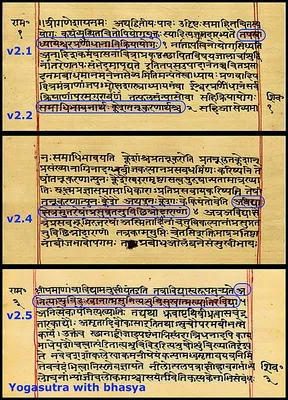
The Yoga Sutras of Patañjali is a compilation of Sanskrit aphorisms on the practice of yoga, believed to have been assembled by the sage Patañjali in the early centuries CE. The text draws heavily from Samkhya philosophy, Buddhist traditions, and older ascetic and religious speculations, integrating concepts such as purusha and prakriti, and terminology from Buddhism. While the exact authorship and dating of Patañjali are subjects of academic debate, with some scholars suggesting chapter four might be a later addition, the work is considered a cornerstone of classical Yoga philosophy.
The text, often referred to as Pātañjalayogaśāstra when including its commentary, is structured to guide practitioners towards liberation (kaivalya). It is particularly known for outlining Ashtanga Yoga, an eight-limbed path comprising yama, niyama, asana, pranayama, pratyahara, dharana, dhyana, and samadhi. The ultimate goal is the stilling of mental fluctuations (vritti nirodha) and the discernment of pure consciousness (purusha) from nature (prakriti). Despite its foundational status, its influence and prominence fluctuated historically, with a significant resurgence in the late 19th century.
Authorship and Dating Debates
The authorship of the Yoga Sutras is traditionally attributed to Patañjali. However, scholarly debate exists regarding the identity of this Patañjali, as another author of the same name is credited with a significant work on Sanskrit grammar, the Mahābhāṣya, dated to the second century BCE. Differences in subject matter, language, grammar, and vocabulary suggest these might be distinct individuals. Furthermore, some scholars propose that the fourth chapter of the Yoga Sutras may be a later addition, not originally part of Patañjali's work. The dating of the Yoga Sutras is also varied, with scholarly estimates ranging from 500 BCE to 450 CE, though later dates, around 400 CE, are more commonly accepted by academics based on comparative arguments with contemporaneous philosophical texts and historical commentary analysis.
Compilation and Philosophical Roots
The Yoga Sutras are a synthesis of knowledge from diverse ancient Indian traditions. Scholars identify three primary streams of influence: Samkhya philosophy, various Buddhist traditions, and older ascetic and religious strands of speculation. From Samkhya, the text adopts concepts like purusha (consciousness) and prakriti (nature), along with its rationalist metaphysics and methods of knowledge acquisition. Connections to Buddhism are evident in its terminology and the pursuit of altered states of awareness. The work is seen as a 'hybrid formulation,' blending these influences into a unique philosophical system. The text's structure and content suggest a compilation process, possibly with contributions from different sources over time, leading to occasional perceived inconsistencies but an overall unified focus.
Core Teachings and Esoteric Goals
The Yoga Sutras are renowned for their systematic exposition of yoga practice, particularly the Ashtanga Yoga, or eight-limbed path. This path includes ethical restraints (yama) and observances (niyama), physical postures (asana), breath control (pranayama), sensory withdrawal (pratyahara), concentration (dharana), meditation (dhyana), and absorption (samadhi). The ultimate esoteric aim is kaivalya, often translated as liberation or isolation, achieved through the stilling of the mind's fluctuations. This state allows for the clear discernment of the true self (purusha) as distinct from the material world and mental processes (prakriti). The text also explores concepts like Kriya Yoga ('action yoga') as a means to achieve these profound states of awareness and spiritual freedom.
Key Ideas
- Ashtanga Yoga (eight-limbed path)
- Kaivalya (liberation/isolation)
- Purusha (pure consciousness)
- Prakriti (nature/matter)
- Vritti nirodha (stilling of mental fluctuations)
- Kriya Yoga (action yoga)
- Samadhi (absorption/stillness)
Books by Pata Jali
0 free public domain books · Read online or download
