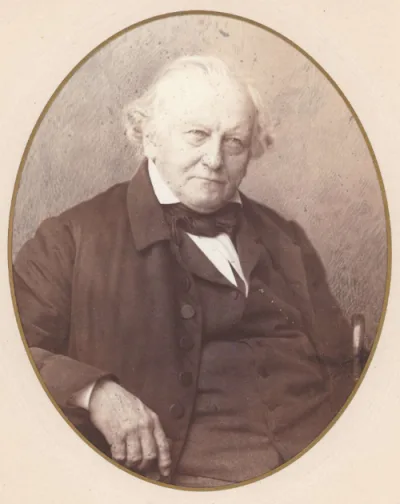
Pablo Geiger
Wikipedia is a volunteer-driven online encyclopedia, launched in 2001, that has grown into a massive, multilingual knowledge resource.
Wikipedia originated as a complementary project to Nupedia, a more formally reviewed encyclopedia, launching in January 2001 as a wiki-based platform. It quickly grew in scope and language availability, becoming the largest and most-read reference work in history. Initially conceived as a for-profit venture, its direction shifted, notably with the adoption of the .org domain and a commitment against advertising.
Over the years, Wikipedia has faced challenges related to editor retention and growth rates, with discussions about the impact of internal policies and external factors like search engine knowledge graphs. Despite these, it has become a globally significant website, recognized for democratizing knowledge and its extensive coverage. It has also faced criticism regarding systemic biases and censorship attempts by some governments, while its reliability has generally improved over time. Wikipedia has also inspired a suite of sister projects under the Wikimedia Foundation, expanding its collaborative knowledge-sharing model.
Origins and Early Development
Wikipedia was established in January 2001 as a collaborative, open-editing online encyclopedia, intended to complement the expert-driven Nupedia project. Larry Sanger proposed the wiki format as a 'feeder' for Nupedia, with the name 'Wikipedia' being a portmanteau of 'wiki' and 'encyclopedia.' Founded by Jimmy Wales and Larry Sanger, it was initially hosted by Bomis. The project quickly adopted a policy of maintaining a neutral point of view and began expanding beyond its English origins, with new language editions appearing in March 2001. Nupedia was eventually discontinued in 2003, with its content integrated into Wikipedia. The platform's commitment to remaining free of advertising was solidified when its domain changed from .com to .org, partly in response to user concerns about commercialization.
Growth, Challenges, and Evolution
Following an initial period of rapid expansion, the growth rate of Wikipedia, particularly in terms of new articles and editors, showed signs of slowing around the late 2000s. Researchers and commentators noted potential reasons ranging from increased editorial coordination and complexity to the natural exhaustion of easily accessible topics. Concerns were also raised about a decline in the number of active editors, although the platform's leadership has at times disputed the extent of this decline. In recent years, the number of active English Wikipedia editors has stabilized. Wikipedia has also seen shifts in its overall page views, with external factors like Google's Knowledge Graphs being cited as potential influences. As of early 2024, it remains one of the world's most visited websites.
Impact and Criticism
Wikipedia is widely recognized for its role in democratizing access to information and providing extensive, broad-ranging coverage of topics. Its unique collaborative structure and culture have been noted for their effectiveness. However, the encyclopedia has also faced criticism. Issues such as systemic biases, including gender and geographical imbalances, have been identified by researchers. Some national governments have also engaged in censorship of Wikipedia content, at times blocking entire sites due to political criticism or religiously sensitive material. Despite initial skepticism in the 2000s, Wikipedia's reliability has generally been seen as improving over time, particularly in the later 2010s onward, making it a valuable resource for timely information.
Sister Projects and Milestones
Beyond its core encyclopedia function, Wikipedia has inspired a family of related 'sister projects' under the umbrella of the Wikimedia Foundation. These include Wiktionary (a dictionary), Wikiquote (quotations), Wikibooks (textbooks), Wikimedia Commons (multimedia repository), Wikinews (journalism), and Wikiversity (learning materials). Other projects like Wikispecies (species catalog), Wikivoyage (travel guide), and Wikidata (knowledge base) have also been launched. Wikipedia achieved significant milestones, becoming one of the top ten most popular websites in the US by 2007 and consistently ranking among the world's most visited sites. In January 2012, the English Wikipedia participated in a large-scale protest against proposed US legislation (SOPA and PIPA) by temporarily going dark.
Key Ideas
- Democratization of knowledge
- Neutral point of view
- Open collaboration
- Wiki software
- Systemic bias (gender, geographic)
- Stigmergic accumulation
Books by Pablo Geiger
2 free public domain books · Read online or download