P M H Atwater
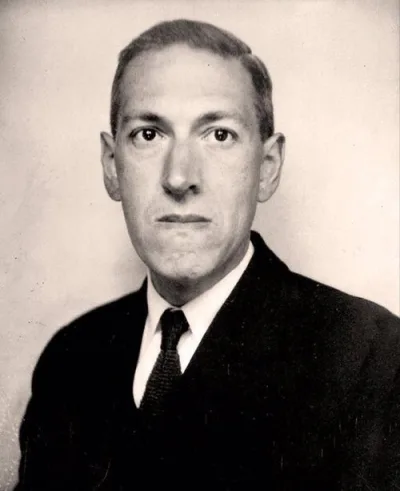
H. P. Lovecraft was an American writer known for cosmic horror, whose work explored humanity's insignificance and civilizational decline.
Howard Phillips Lovecraft (1890–1937) was an American author primarily recognized for his contributions to weird, horror, fantasy, and science fiction genres. He is most famous for originating the Cthulhu Mythos, a concept that continues to influence horror literature and fandom, giving rise to terms like "Lovecraftian horror."
Born in Providence, Rhode Island, Lovecraft's early life was marked by family tragedies and financial instability. Following his father's institutionalization and later death, and subsequently his mother's, Lovecraft lived in reduced circumstances. Despite health issues that interrupted his education, he developed a passion for astronomy and literature, writing essays and early fiction. His involvement in pulp magazines led to his participation in the speculative fiction community, where he became a central figure in the "Lovecraft Circle" and a prominent contributor to Weird Tales. Though he married and moved to New York, this period adversely affected his well-being and finances, prompting his return to Providence, where he produced many of his most celebrated works before his death at age 46.
Cosmicism and Philosophical Themes
Lovecraft's literary output is deeply rooted in his philosophy of cosmicism, which posits humanity's utter insignificance within the vastness of the universe. This worldview, which he integrated into his fiction, explores the fragility of human-centric perspectives and the limits of knowledge. His stories often feature settings in a fictionalized New England and frequently touch upon themes of civilizational decay, reflecting his belief in the decline of Western society during his era. His political views evolved over his lifetime, initially conservative and traditionalist, later shifting towards socialist leanings, though always retaining an elitist and aristocratic undertone.
Early Life and Literary Influences
Born in Providence, Rhode Island, Lovecraft's childhood was shaped by the institutionalization and subsequent death of his father and the overprotective nature of his mother. He was raised primarily by his maternal grandfather, Whipple Van Buren Phillips, who fostered his love for classical literature and original weird tales. Lovecraft's early exposure to works like "The Rime of the Ancient Mariner" and "One Thousand and One Nights," alongside his grandfather's imaginative stories, profoundly influenced his developing literary style. His grandmother's death at age six deeply affected him, contributing to recurring nightmares that later found their way into his fiction, such as the "night-gaunts."
Literary Beginnings and Career
Lovecraft began writing at a young age, producing poems and essays, and even publishing his own astronomical journal. His formal education was frequently interrupted by health concerns. His early fictional works, such as "The Beast in the Cave" and "The Alchemist," emerged during his high school years, a period also marked by financial hardship following his grandfather's death and the dissipation of family wealth. Despite significant health crises, Lovecraft continued to write and engage with the literary world, eventually gaining publication in pulp magazines and becoming a notable figure in the speculative fiction community.
Key Ideas
- Cosmicism: Humanity's insignificance in the universe.
- Fragility of anthropocentrism.
- Civilizational decline.
- Ambivalent views on knowledge.
Notable Quotes
“doing and saying strange things at times”
“permanently stricken with grief”
“centre of my entire universe”
“winged horrors”
“deep, low, moaning sounds”
Books by P M H Atwater
0 free public domain books · Read online or download
