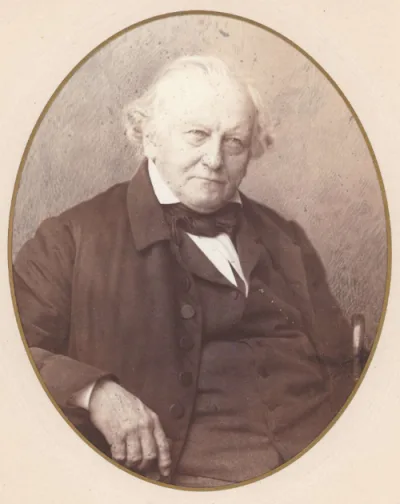
Nancy Shavick
Early laws in America rarely enforced penalties for same-sex female intimacy, while 19th-century relationships were often framed as platonic friendships.
Early American history saw attempts to legislate against same-sex female sexual activity, though these laws were seldom enacted or enforced. For instance, proposals in Massachusetts Bay and Connecticut during the 17th century did not become law. The only known legal record of sex between female English colonists in North America during the 17th century involved Sarah White Norman and Mary Vincent Hammon in Plymouth Colony, resulting in public admonishment for Norman. The 19th century saw lesbian relationships existing within societal constraints, often described as "Boston marriages" between financially independent women who shared households and were presumed asexual. Some American lesbians in the arts relocated to Rome during this period. The early 20th century brought the first published studies on lesbian activity, often based on observations within prisons, with some researchers expressing sympathy for these relationships despite moral reservations. Lesbian subcultures began to emerge in larger cities, though they faced police raids and closures of establishments. Literature also began to feature lesbian themes more prominently, with Paris serving as a haven for some expatriate writers. However, openly lesbian literature faced censorship challenges, notably with the banning and legal battles surrounding Radclyffe Hall's "The Well of Loneliness."
Legal and Social Context in Early America
In the early centuries of American history, laws proposed to penalize sexual acts between women were generally not enacted or enforced. John Cotton suggested a capital offense for same-sex acts in Massachusetts Bay in 1636, but it was not adopted. Similarly, a Connecticut law from 1655 regarding sodomy between women did not result in action. Thomas Jefferson's 1779 proposal for severe punishments, including castration for men and facial disfigurement for women, also failed to become law. The Plymouth Colony prosecuted Sarah White Norman and Mary Vincent Hammon in 1649 for "lewd behavior," with Norman being convicted and publicly warned in 1650, representing a rare instance of legal action related to lesbianism.
19th Century Relationships and Expatriation
During the 19th century, societal acceptance of lesbians often depended on concealing their orientation, with committed relationships between two unmarried women frequently interpreted as platonic friendships. The term "Boston marriage" described these partnerships, where women often lived together, were financially independent, and their relationships were assumed to be asexual, allowing them to be respected as "spinsters." Notable figures like Sarah Jewett and Annie Adams Fields, and Jane Addams and Mary Rozet Smith, are associated with this arrangement. Additionally, some American female artists, such as actress Charlotte Cushman and sculptors Emma Stebbins and Harriet Hosmer, moved to Rome. Rose Cleveland, former First Lady, also entered a relationship with Evangeline Marrs Simpson around 1890, which they rekindled later in life, eventually moving to Italy together.
Early 20th Century Studies and Community
The early 20th century witnessed the first published studies on lesbian activity, many drawing data from incarcerated women. Margaret Otis's 1913 article, "A Perversion Not Commonly Noted," while rooted in Puritanical views, displayed a notable sympathy for lesbian relationships, particularly when transcending ethnic divides. Kate Richards O'Hare's account in "In Prison" (1917) detailed harsh realities of sexual abuse and exploitation among inmates, suggesting systemic neglect by authorities. Mildred Berryman's 1930s study, "The Psychological Phenomena of the Homosexual," examined 23 lesbian women, many from Mormon backgrounds, who reported early same-sex attraction and a sense of minority identity. During the 1920s, lesbian subcultures began to form in major U.S. cities, but faced challenges like police raids, leading to the closure of venues such as Eve's Hangout.
Lesbians in Literature and Censorship Battles
The early 20th century saw an increase in lesbian representation within literature, with Paris becoming a significant center for writers like Gertrude Stein and Alice B. Toklas, who hosted salons and lived openly. Stein's works, including "Miss Furr and Miss Skeene" (1922) and "The Autobiography of Alice B. Toklas" (1933), brought lesbian themes to a wider audience. Djuna Barnes's "Nightwood" and Elsa Gidlow's "On A Grey Thread" (1923), the first volume of openly lesbian love poetry in the U.S., were also notable. However, censorship remained a significant obstacle. Radclyffe Hall's "The Well of Loneliness" faced bans and legal challenges in both England and the U.S. Despite efforts by publishers and legal defenses that highlighted literary merit and social value, the book endured significant scrutiny and legal battles before ultimately being cleared of obscenity charges in New York courts.
Key Ideas
- Early legal attempts to criminalize same-sex female relationships were largely unsuccessful.
- 19th-century "Boston marriages" represented committed relationships often perceived as platonic friendships.
- Early 20th-century studies on lesbianism were sometimes based on prison populations.
- Parisian salons provided a more open environment for lesbian writers in the early 20th century.
- Censorship of lesbian literature was a significant issue in the early 20th century.
Notable Quotes
“Unnatural filthiness, to be punished with death, whether sodomy, which is carnal fellowship of man with man, or woman with woman, or buggery, which is carnal fellowship of man or woman with beasts or fowls.”
“Whosoever shall be guilty of rape, polygamy, or sodomy with man or woman shall be punished, if a man, by castration. If a woman, by cutting thro' the cartilage of nose a hole of one half inch diameter at the least”
“lewd behavior with each other upon a bed”
“unchaste behavior”
“Sometimes the love (of one young woman for another) is very real and seems almost ennobling”
Books by Nancy Shavick
8 free public domain books · Read online or download